Kurokawa to Fukuoka, via Saga. A 2,000-year-old Yayoi settlement, a replica of the Dresden Zwinger in the mountains, and four unplanned hours in Arita's porcelain shops — followed by champon in Imari and Fukuoka's famous motsu-nabe to close out the trip.
Breakfast at Waraku
The ryokan breakfast at Waraku arrived as a full spread: steamed local vegetable salad, konnyaku sashimi, tofu, ganmodoki made from Okamoto tofu, grilled yamame fish, pickles, miso soup, and dessert. The kind of breakfast that makes you wonder how you're going to spend the rest of the day driving.
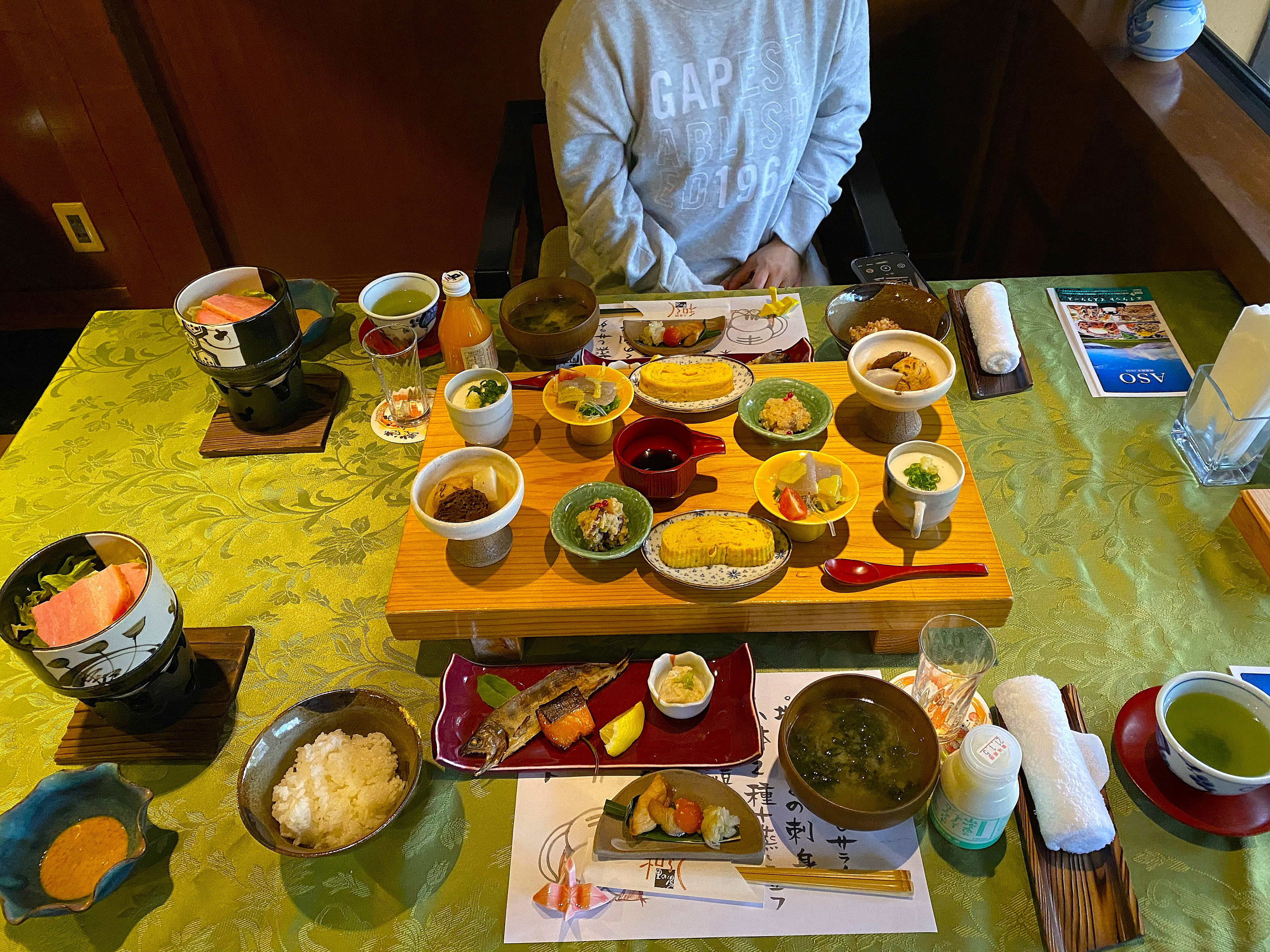
The Waraku breakfast. Every dish earned its place on the tray.
The Jersey yogurt deserves a specific mention. Made from the same Jersey cattle that produce the region's famous soft serve, it comes in a small bottle and tastes of very little except full-fat milk. No sweetener, no thickener. The label says 成分無調整 — no adjustments made. It is exactly what milk becomes when left to be itself.
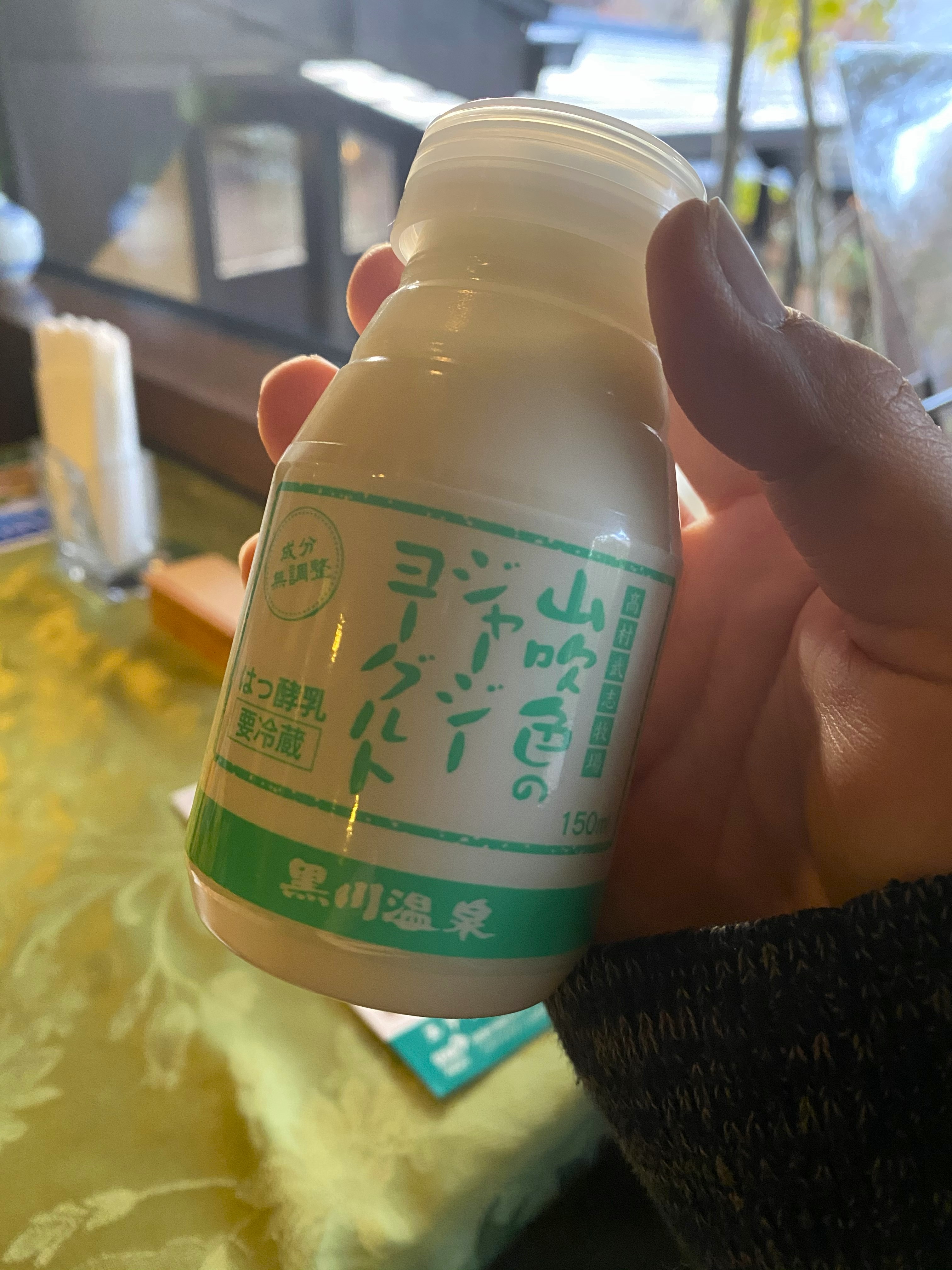
The Kurokawa Jersey yogurt (山吹色のジャージーヨーグルト). Rich, clean, nothing added. A small bottle but you remember it.
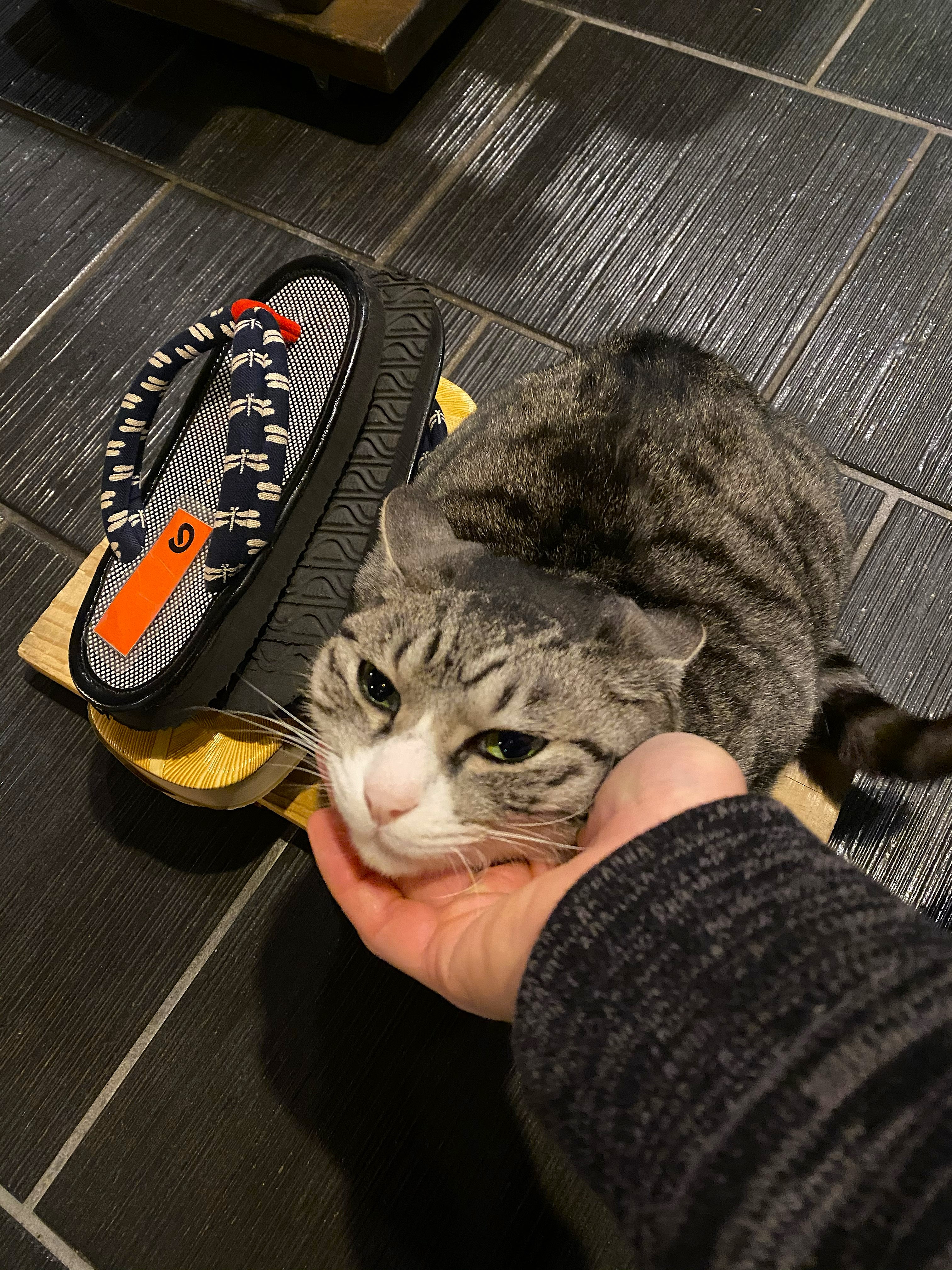
One last moment with the cat. It accepted the goodbye with characteristic indifference.
Yoshinogari Historical Park
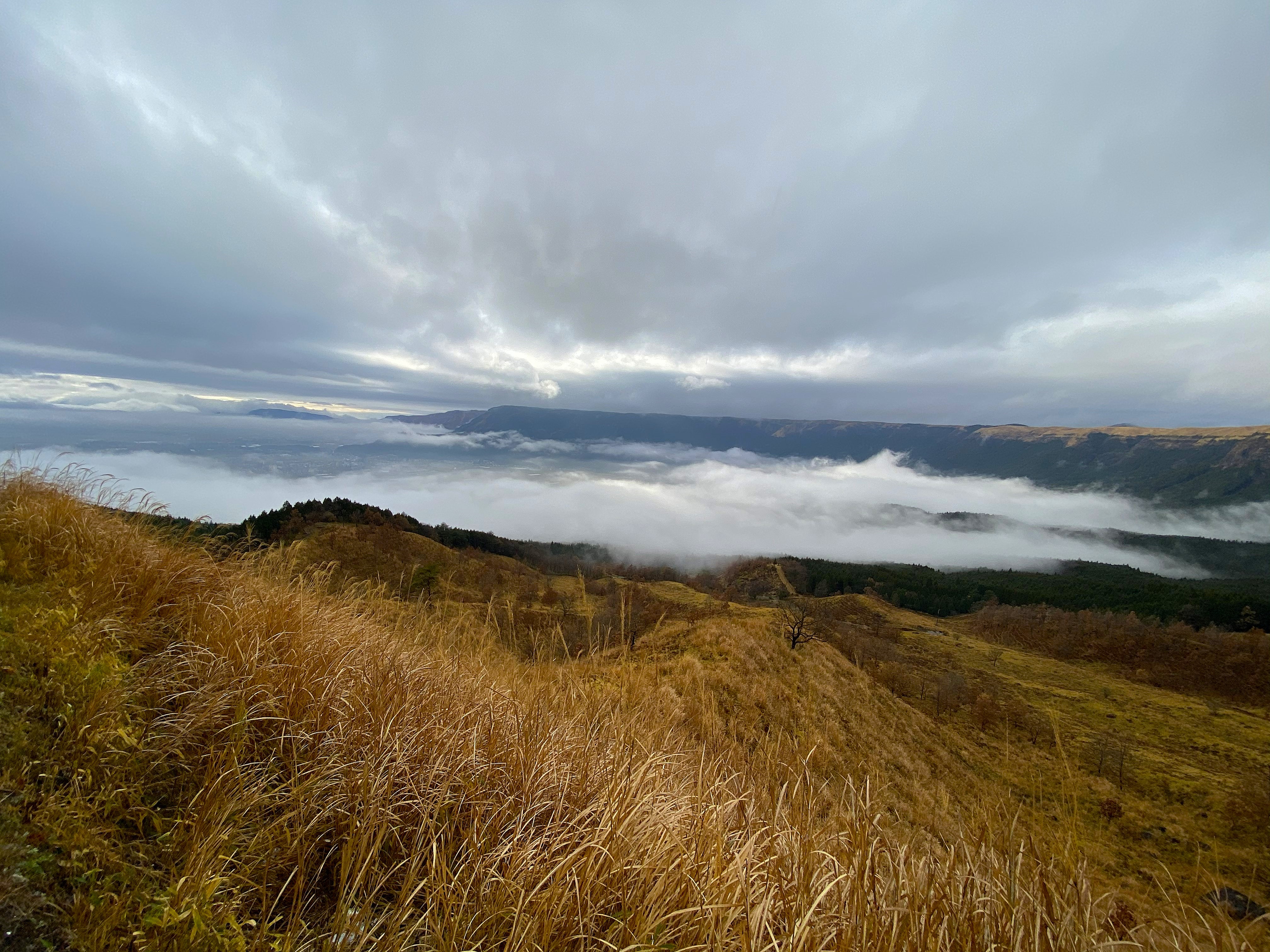
The drive from Kurokawa to Saga crosses the Aso caldera and drops into the flatlands of northern Kyushu — a different landscape entirely. The mountains give way to farmland and river plains, and somewhere along the way the road passes through one of Japan's most significant archaeological sites.
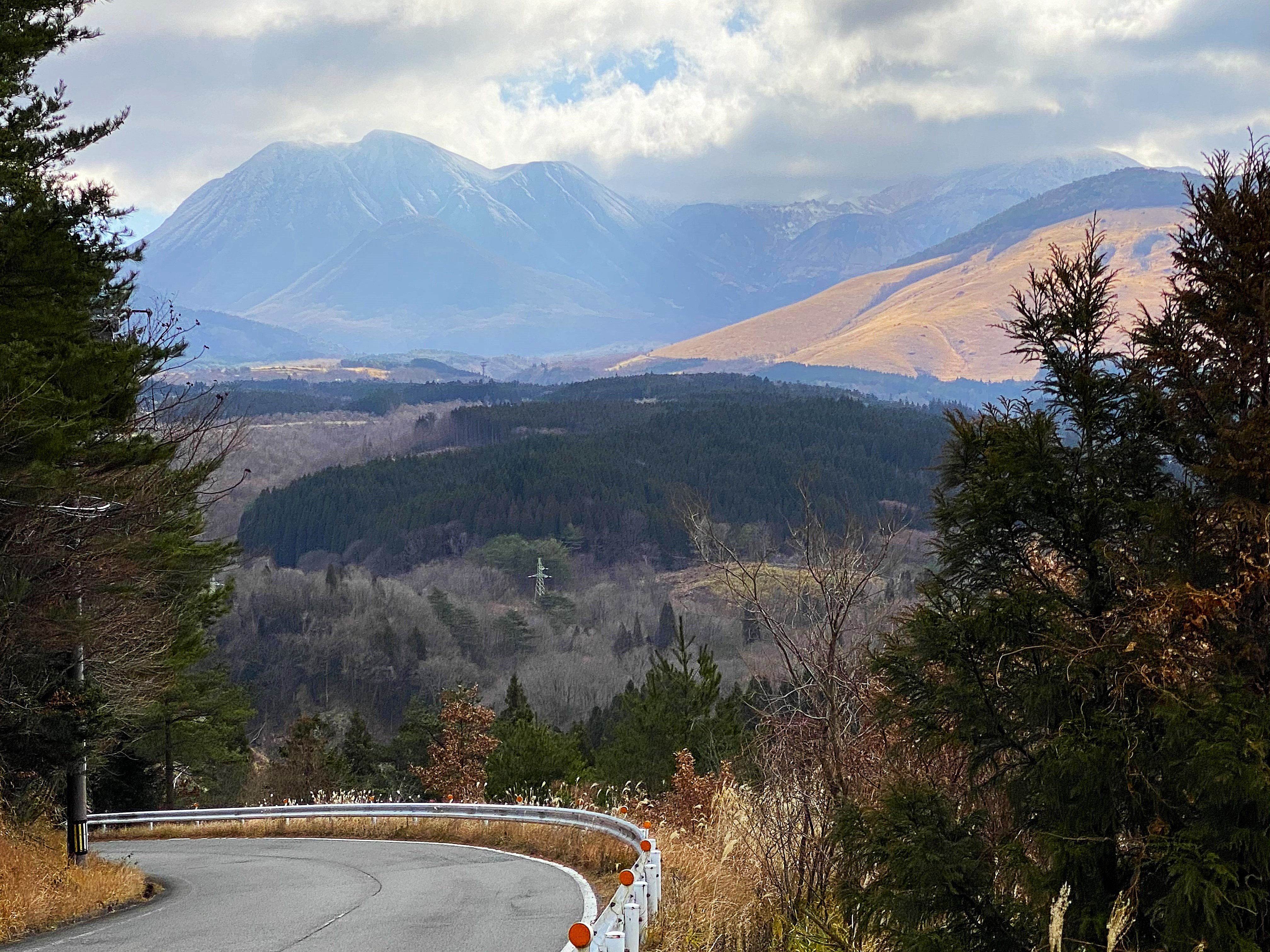
The road out of Kurokawa. The mountains hold for a while before the landscape opens into Saga's flatlands.
Yoshinogari Historical Park preserves and reconstructs a large-scale Yayoi period settlement on the site of the original excavations. The Yayoi period (roughly 300 BC to 300 AD) is when rice cultivation, bronze, and iron made their way into Japan from the Korean peninsula and continental Asia. Yoshinogari was a major settlement — surrounded by moats, protected by wooden palisades, organized around large communal buildings and watchtowers. The current park reconstructs the settlement as archaeologists believe it appeared, full-scale.
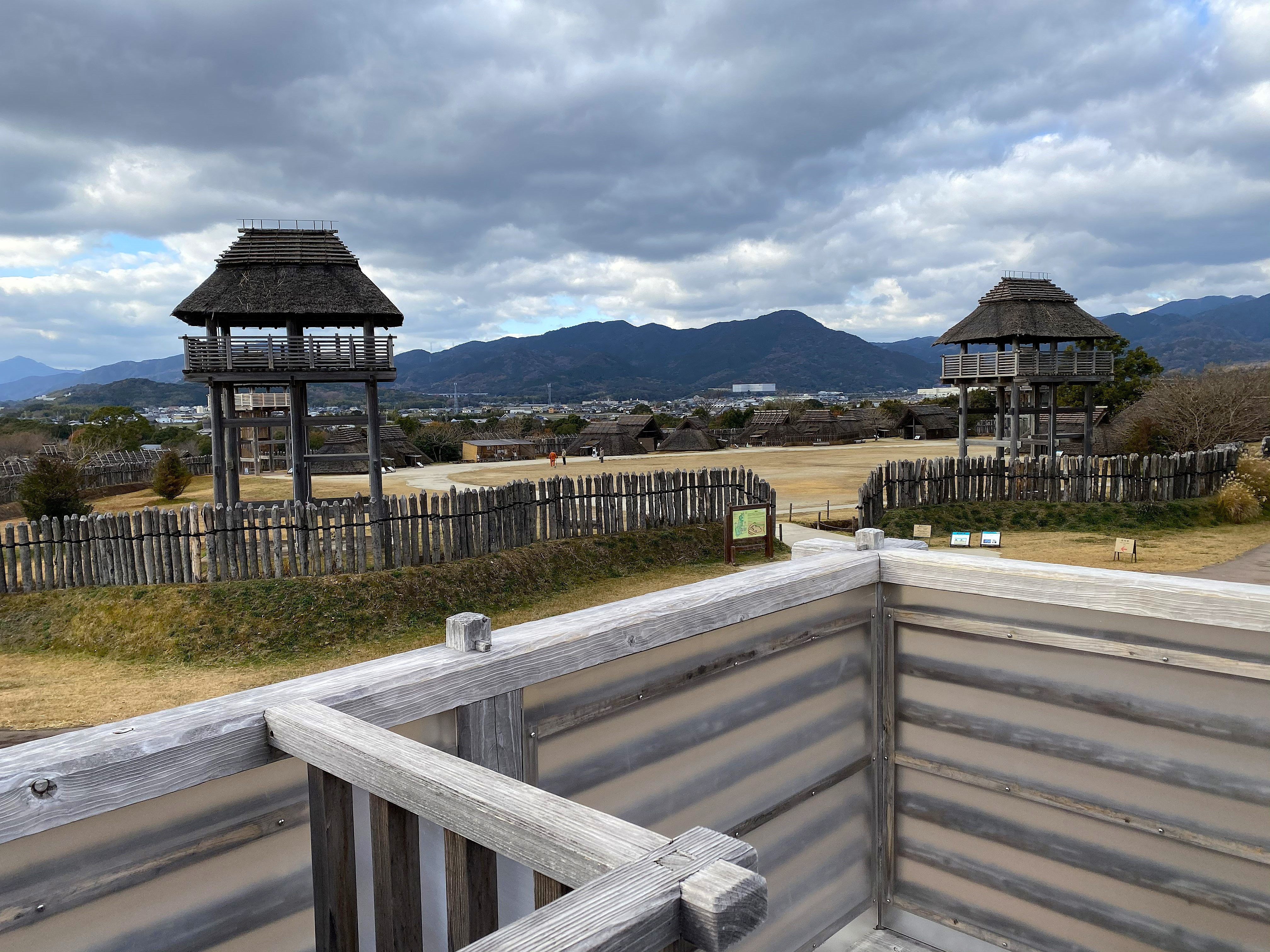
The reconstructed Yoshinogari settlement. The watchtowers are full-scale reproductions built from archaeological evidence.
Walking through it is quietly disorienting. The structures are built from wood, thatch, and earth using ancient techniques — no concrete, no glass. You walk inside the large chief's hall and the thatched ceiling is high above you, the earthen floor cool underfoot, small lights scattered where hearth fires would have burned. It feels less like a museum and more like a place.
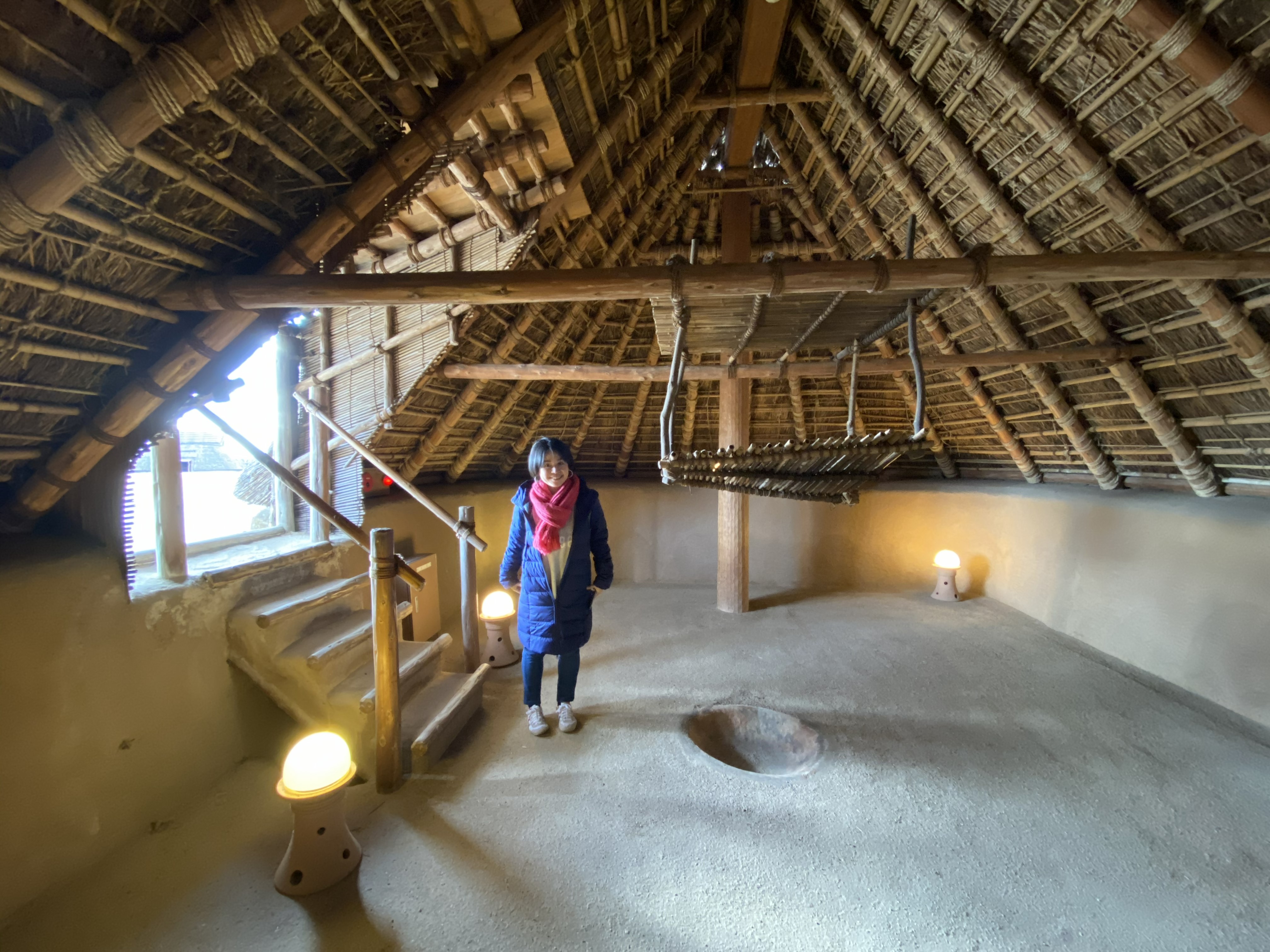
Inside the chief's hall. The thatched ceiling is several meters high. The scale surprises you.
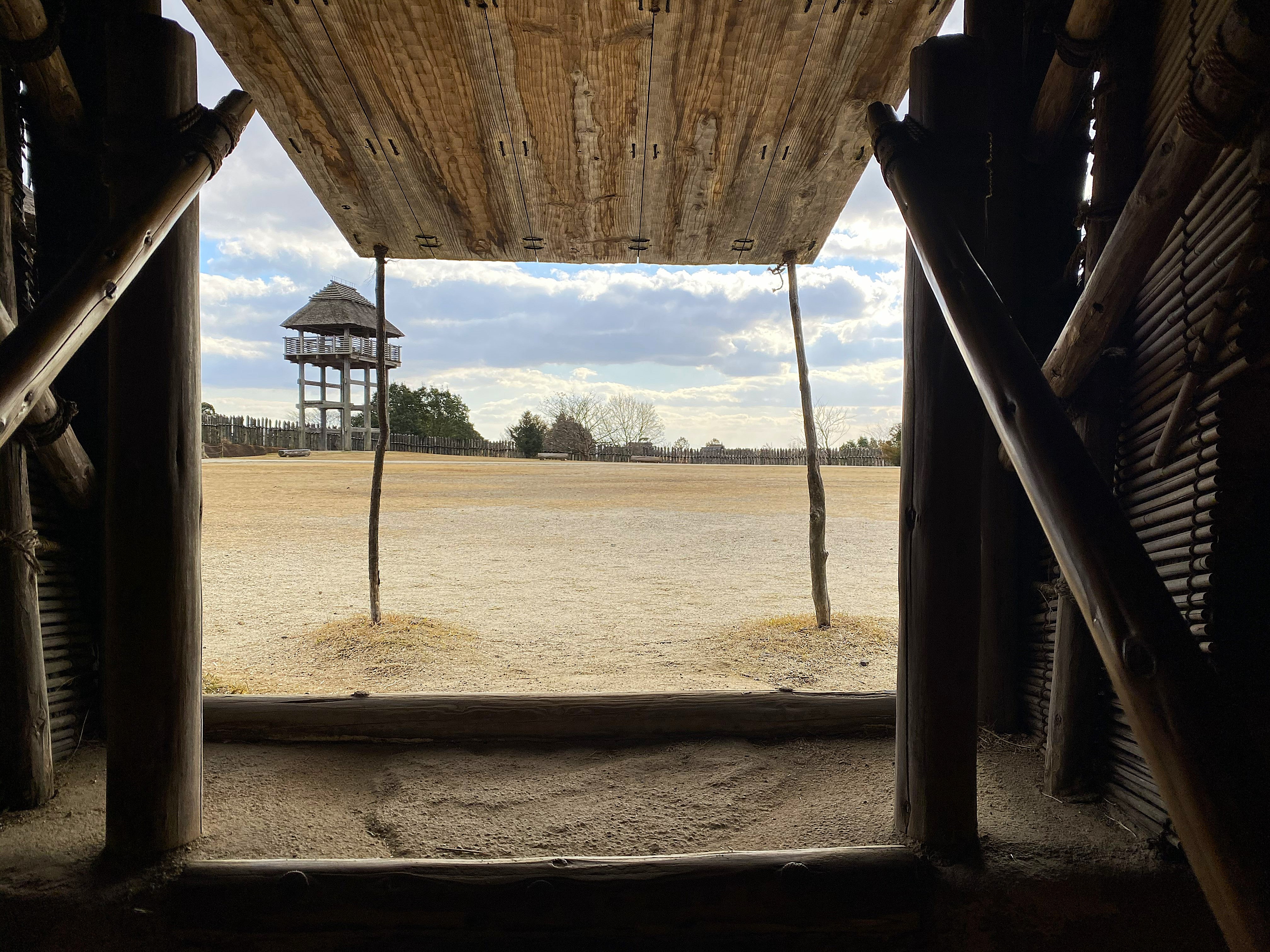
Looking out from one of the dwellings. The courtyard would have been the center of daily life.
Arita Porcelain Park
Arita is where Japanese porcelain began. In the early 1600s, kaolin clay was discovered in the hills near what is now Arita-cho in Saga Prefecture — the first time the key ingredient for true porcelain had been found in Japan. Korean potters, brought to Kyushu after the Japanese invasions of Korea, recognized the clay and began producing the first Japanese porcelain. The kilns they built eventually became the Arita style that spread across Europe through the Dutch East India Company.
Arita Porcelain Park sits just outside the town and announces itself with one of the more surreal things you will see in the Japanese countryside: a full-scale replica of the Zwinger Palace in Dresden. The original Zwinger was built in the 18th century by Augustus the Strong, Elector of Saxony, who was famously obsessed with Arita porcelain and once traded an entire regiment of dragoons for a set of Chinese vases. The replica here, built as an homage to that connection, is exact — stone façade, baroque statuary, the ornate crown gate tower.
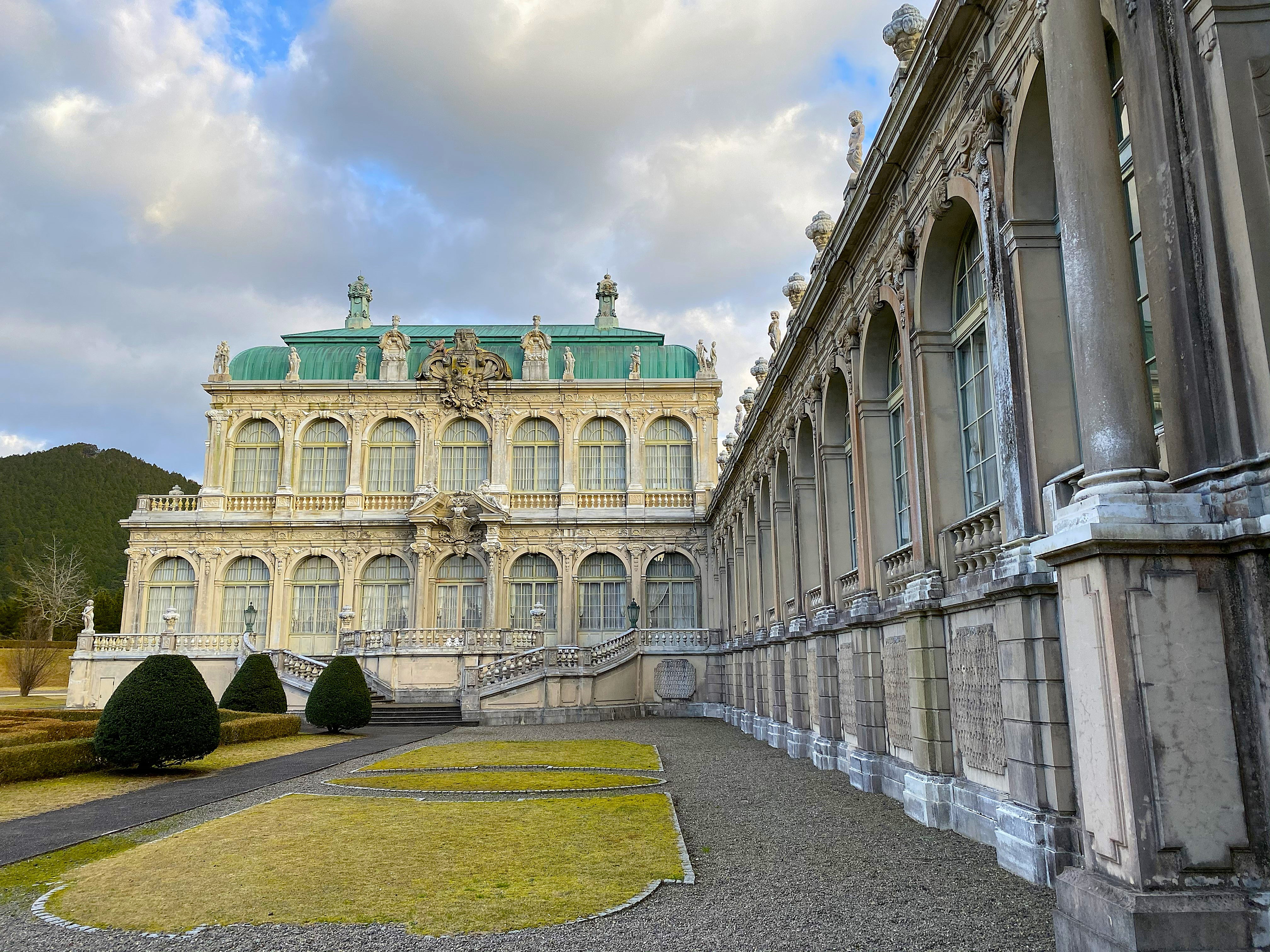
The Zwinger replica at Arita Porcelain Park. Augustus the Strong would have approved.
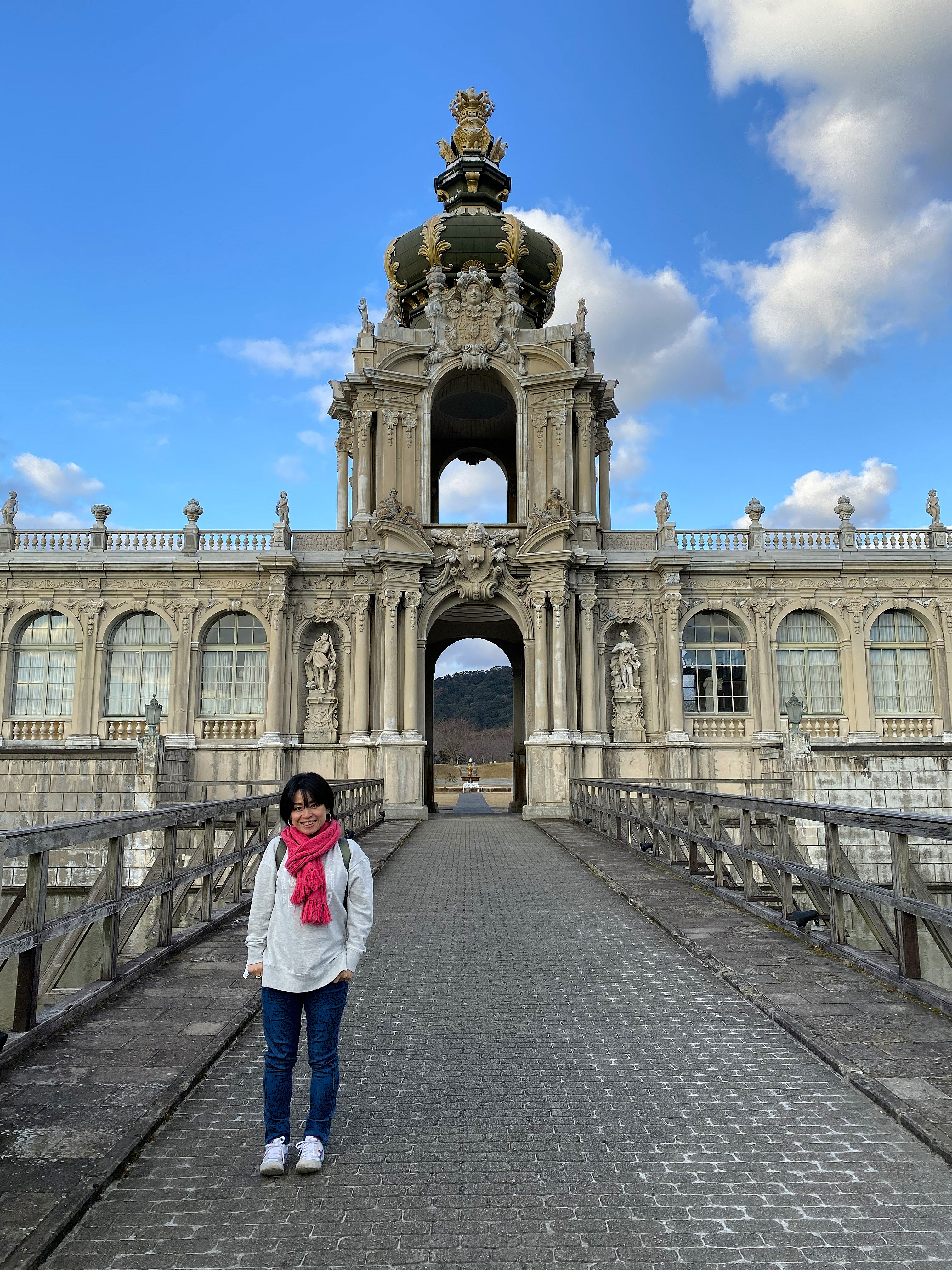
Ayumi at the crown gate. The blue sky helped.
The connection between Arita and Meissen runs deeper than most people realize. When Augustus failed to crack the secret of true porcelain himself, he imprisoned the alchemist Johann Friedrich Böttger until Böttger figured it out — founding the Meissen factory in 1710. But Meissen's early designs were heavily influenced by Arita pieces that Augustus had already collected. The two traditions borrowed from each other for centuries. The park acknowledges this history directly.
In Arita town, even the street infrastructure is made of porcelain — the lamp posts, the drainage covers, the street light shades. Blue and white patterns everywhere, on everything.
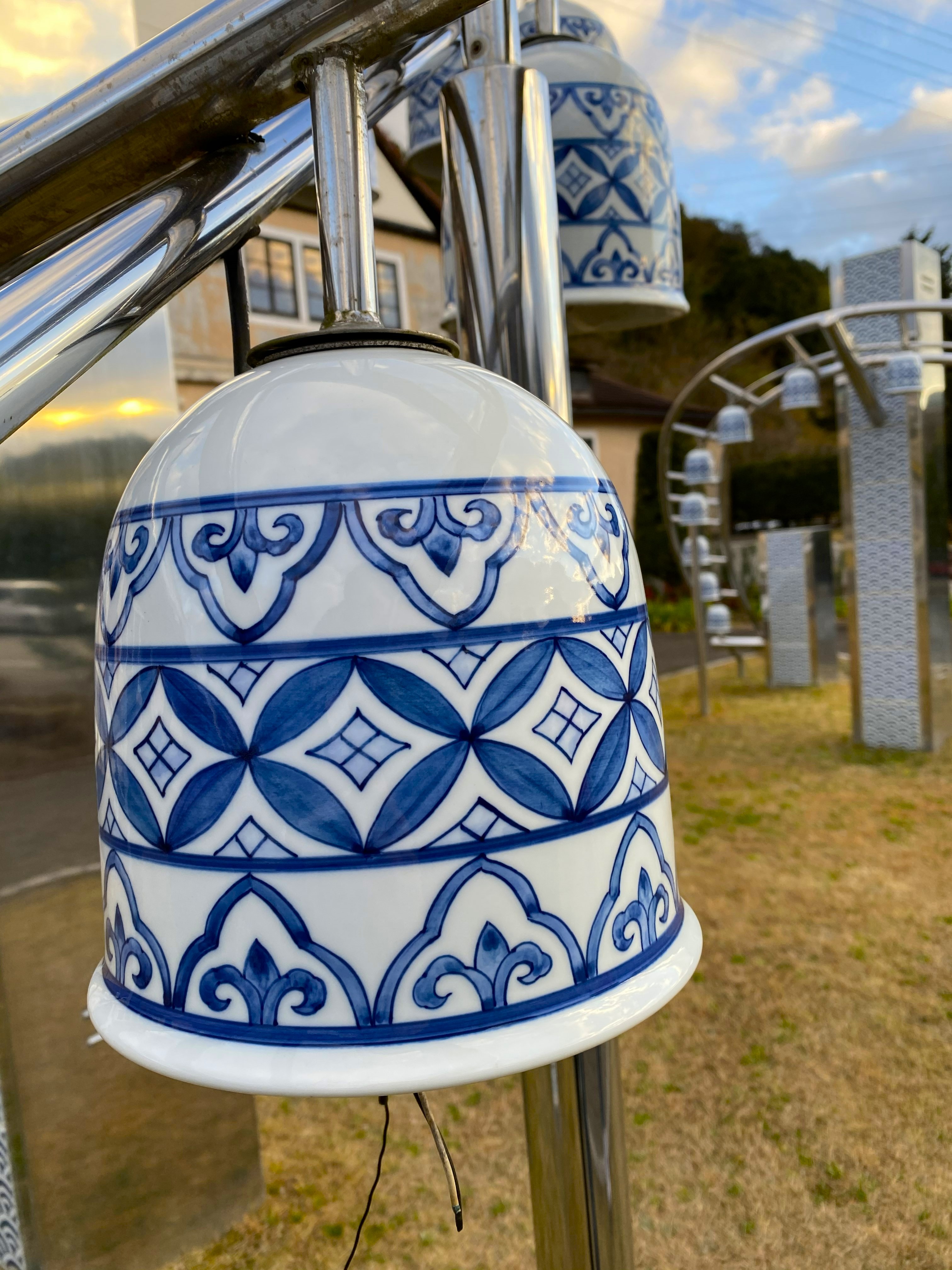
Arita's street lamps. Even the infrastructure is porcelain here.
Chidori Imari Champon
We ended the day in Imari for dinner at Chidori Imari Champon (伊万里ちゃんぽん ちどり). Champon is typically associated with Nagasaki — a thick noodle soup loaded with pork, seafood, and vegetables in a rich broth. Imari has its own version, and Chidori is the local spot for it: no-frills, brightly lit, packed with people who clearly eat there regularly. The champon was exactly what the day called for after hours of driving and walking in the cold.
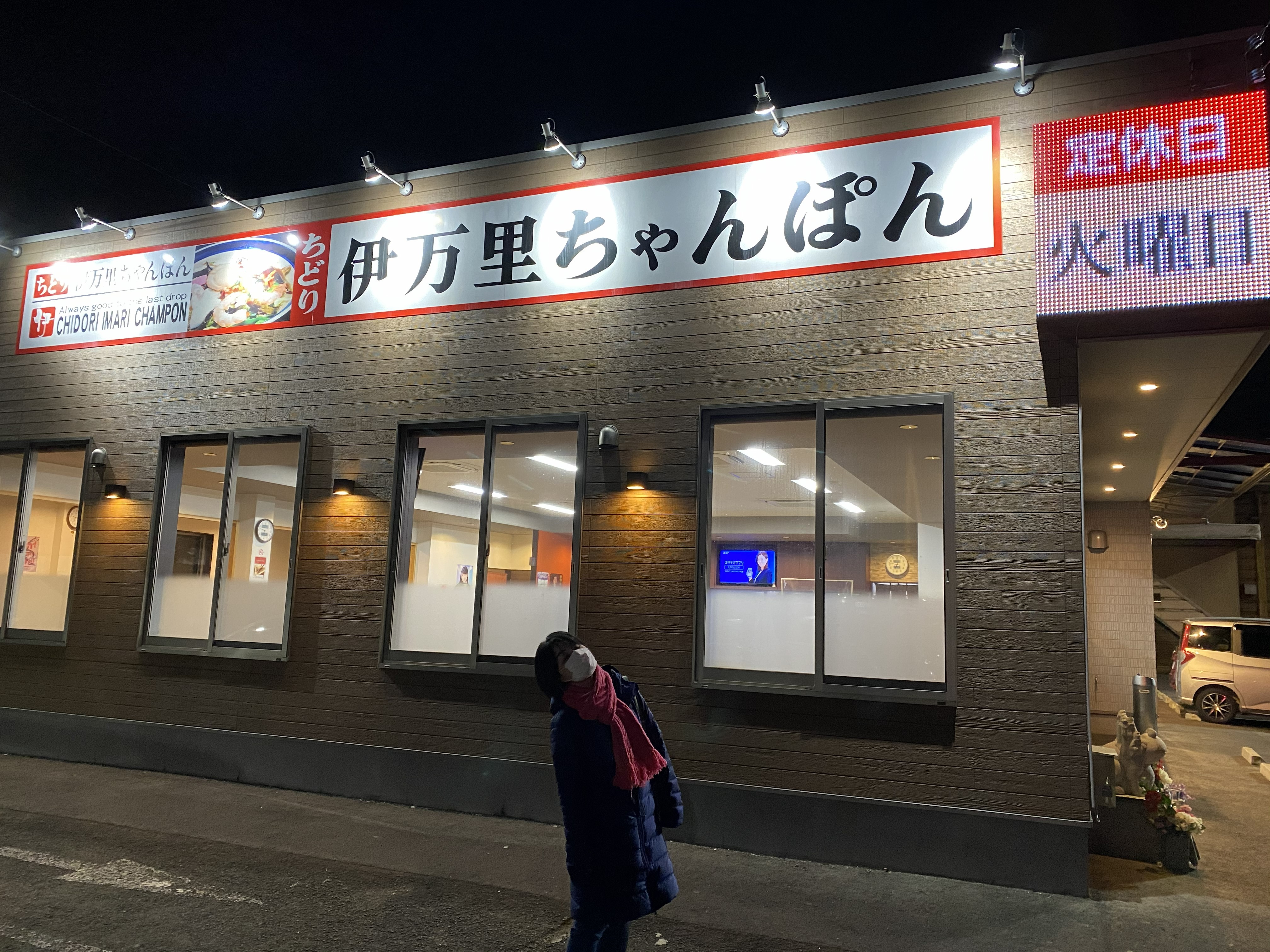
Chidori Imari Champon. The sign tells you everything you need to know.
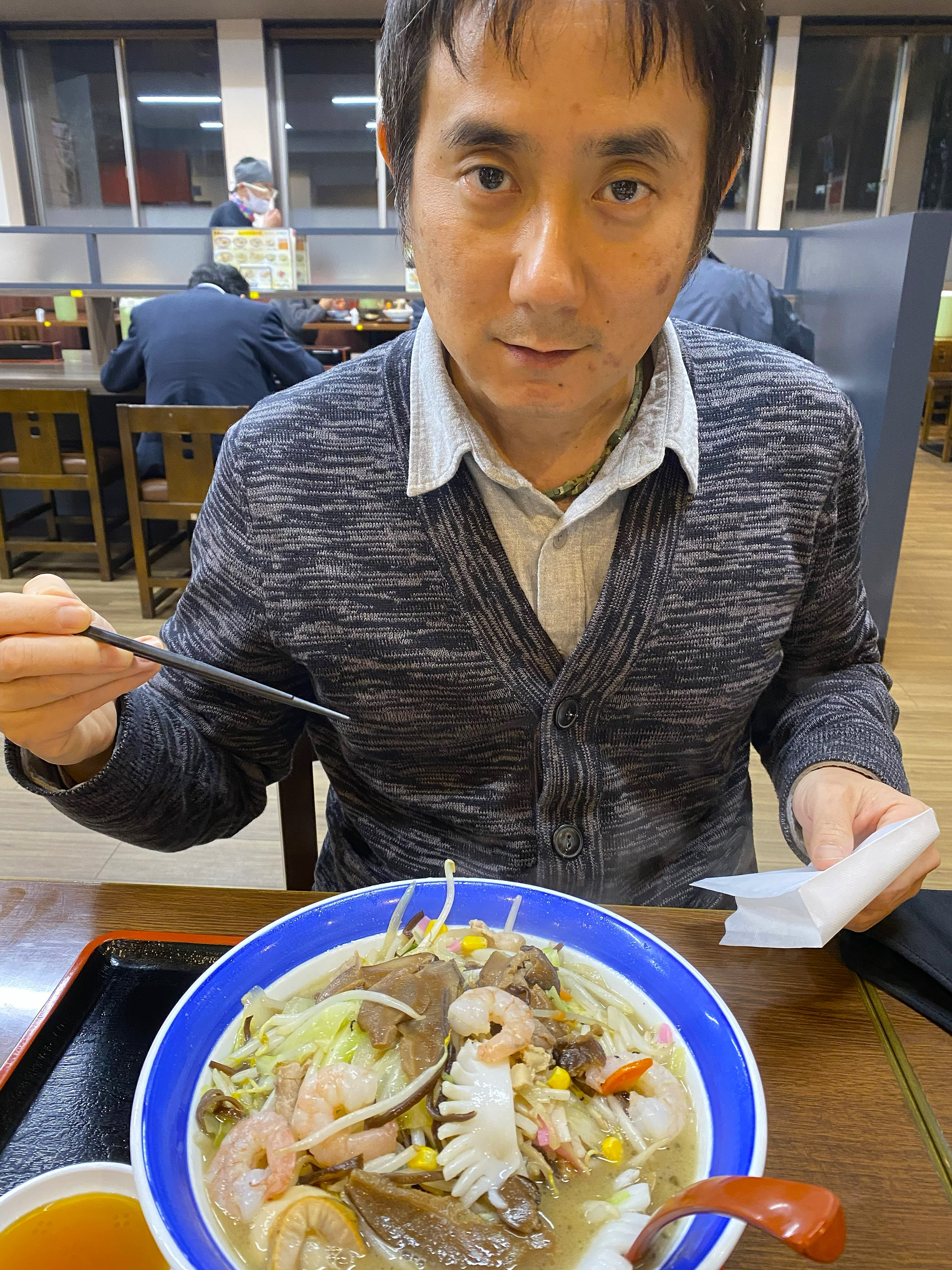
Imari champon. Shrimp, squid, pork, vegetables — everything in one bowl.
Arita Sera: The Porcelain District
This was the reason we came to Arita. 有田焼卸団地 — Arita Sera — is a wholesale porcelain shopping district at the edge of town: a long pedestrian promenade lined with dozens of shops, each representing different kilns and makers. Some are small specialty shops. Some carry work from multiple studios. The range goes from affordable everyday pieces to serious collector items. We had been told to budget a couple of hours. We spent most of the day.
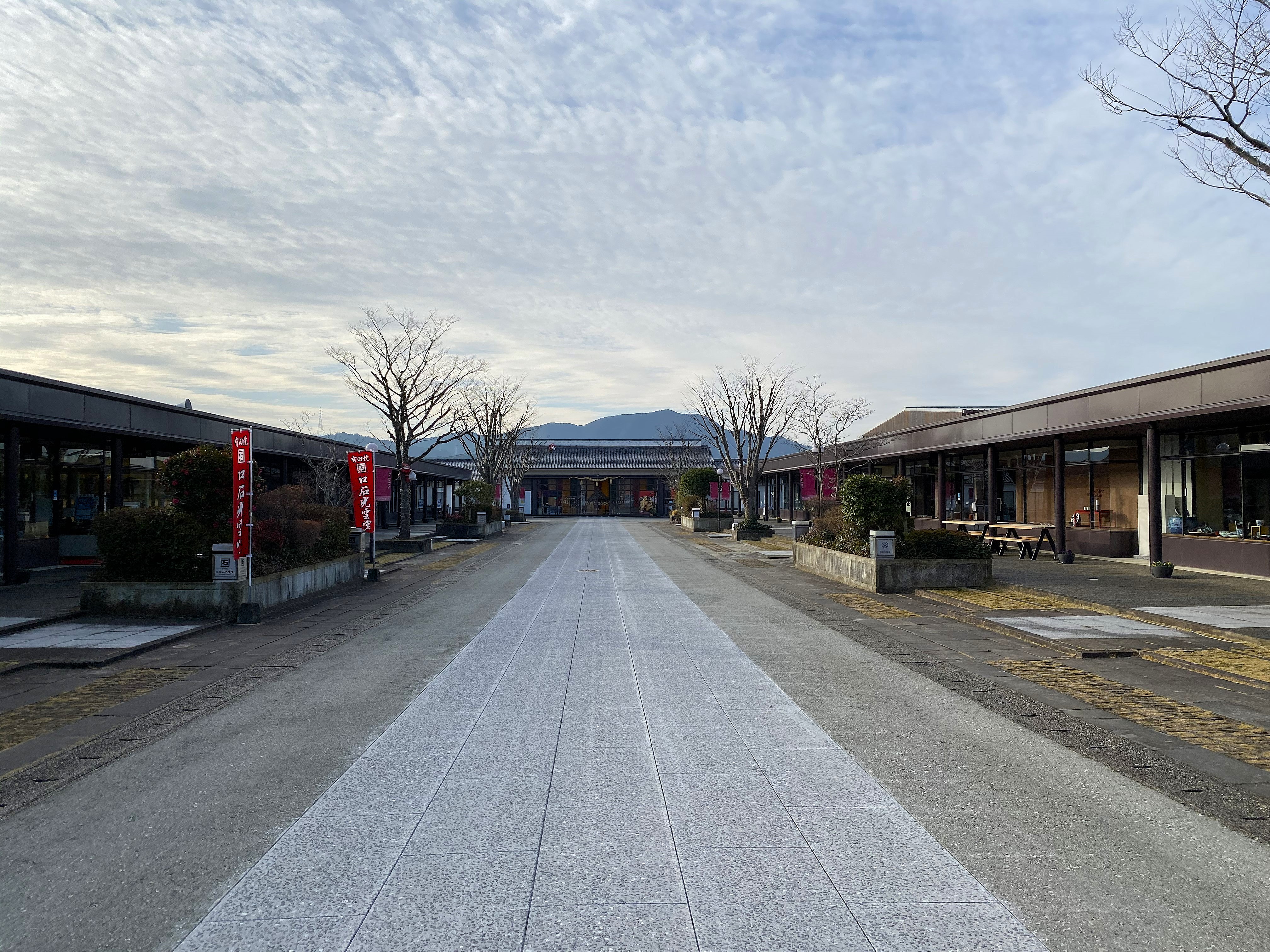
The Arita Sera promenade. It looks manageable from the entrance. It is not.
The shops vary considerably in style and approach. Some are dense with inventory — plates stacked in rows, cups crowding glass cases, shelves floor to ceiling. Others present their pieces like a gallery, with room to breathe between them. You learn quickly to slow down and look properly, because the differences between kilns — in glaze quality, brush technique, the whiteness of the clay body, the weight of the piece — become apparent once you start handling things.
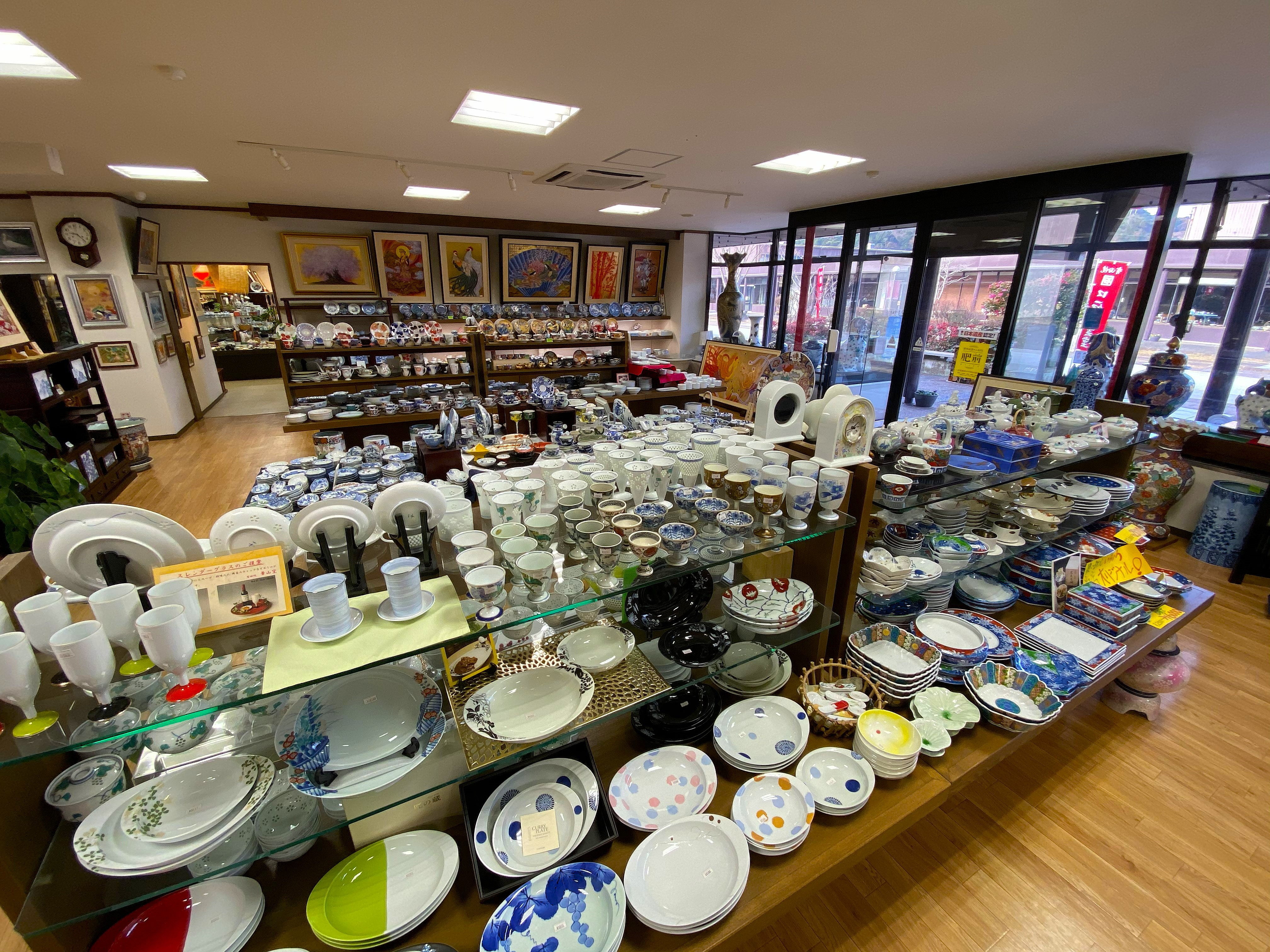
One shop. There are dozens like it, each with its own selection of makers and styles.
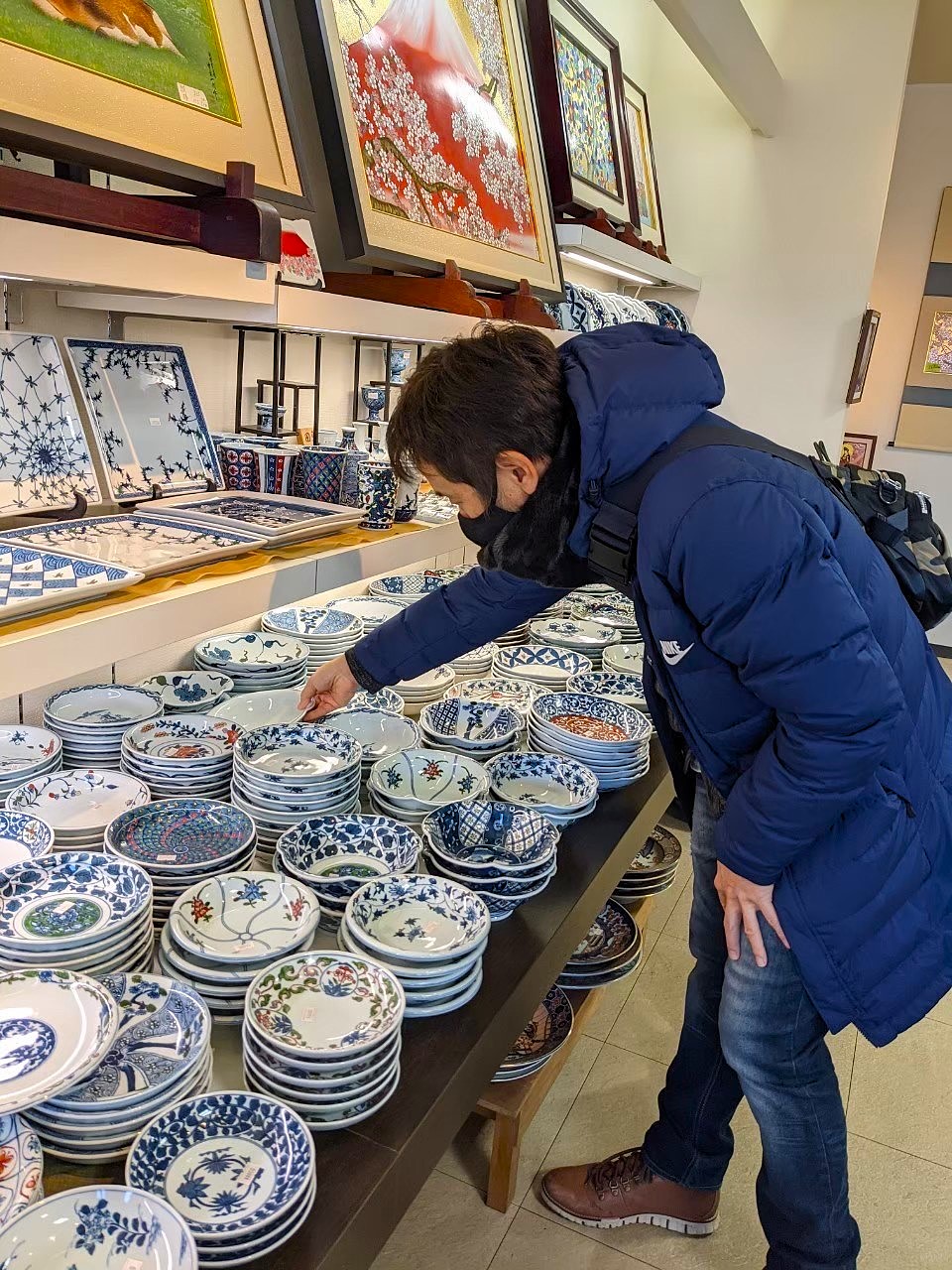
Taking time with each piece. The differences between kilns are real once you start looking.
Arita Sera is also where you find the famous porcelain toilet. The facility at the complex uses blue and white Arita-ware for the toilet tank, the base, and the paper holder — hand-painted landscape scenes, the same quality as the pieces in the shops. It is either the most or least appropriate use of Arita porcelain, depending on your perspective. Worth seeing regardless.
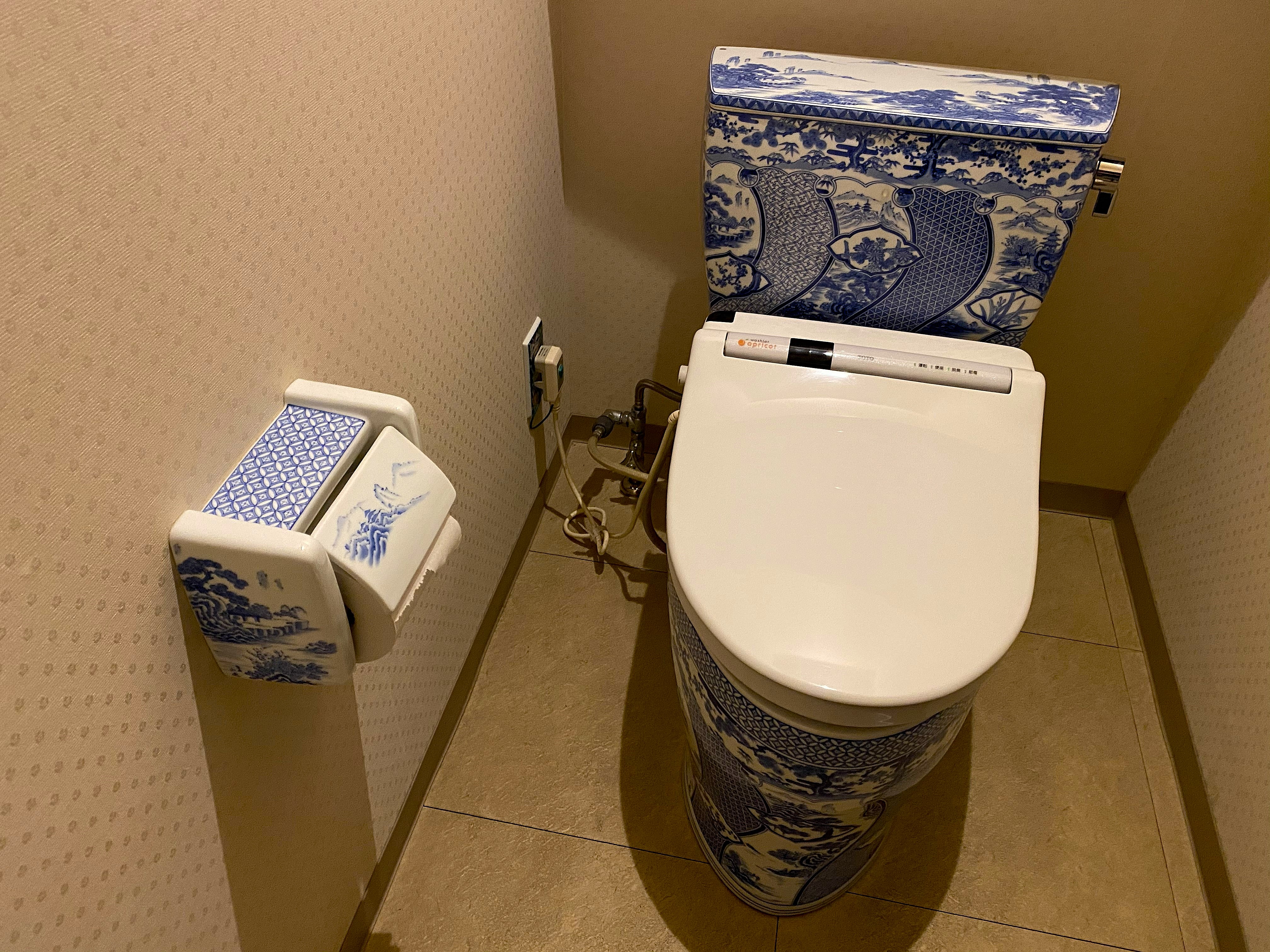
The Arita Sera toilet. Hand-painted blue and white porcelain. Possibly the most committed restroom in Japan.
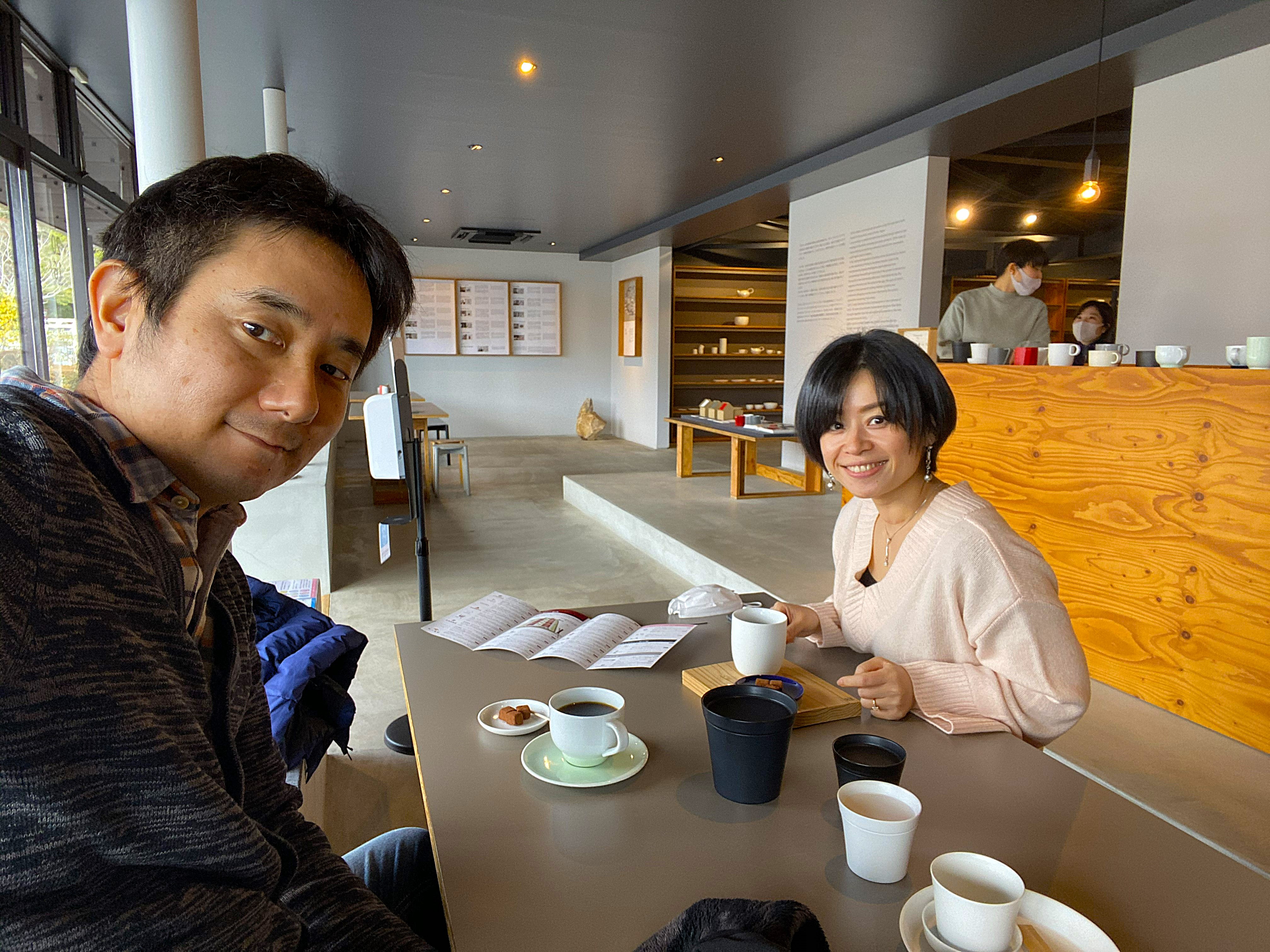
A coffee break mid-morning. The shops can wait a few minutes.
Kakiemon: The Top of the Mountain
If there is a hierarchy in Arita porcelain, Kakiemon (柿右衛門) sits at the top. The Kakiemon family has been producing porcelain since the 17th century, and the style they developed — sparse compositions, soft warm white ground, distinctive palette of coral red, sky blue, yellow and green, asymmetric designs drawn from nature — influenced European porcelain so directly that Meissen, Chantilly, Chelsea, and others all produced explicit Kakiemon-style pieces for their aristocratic clients.
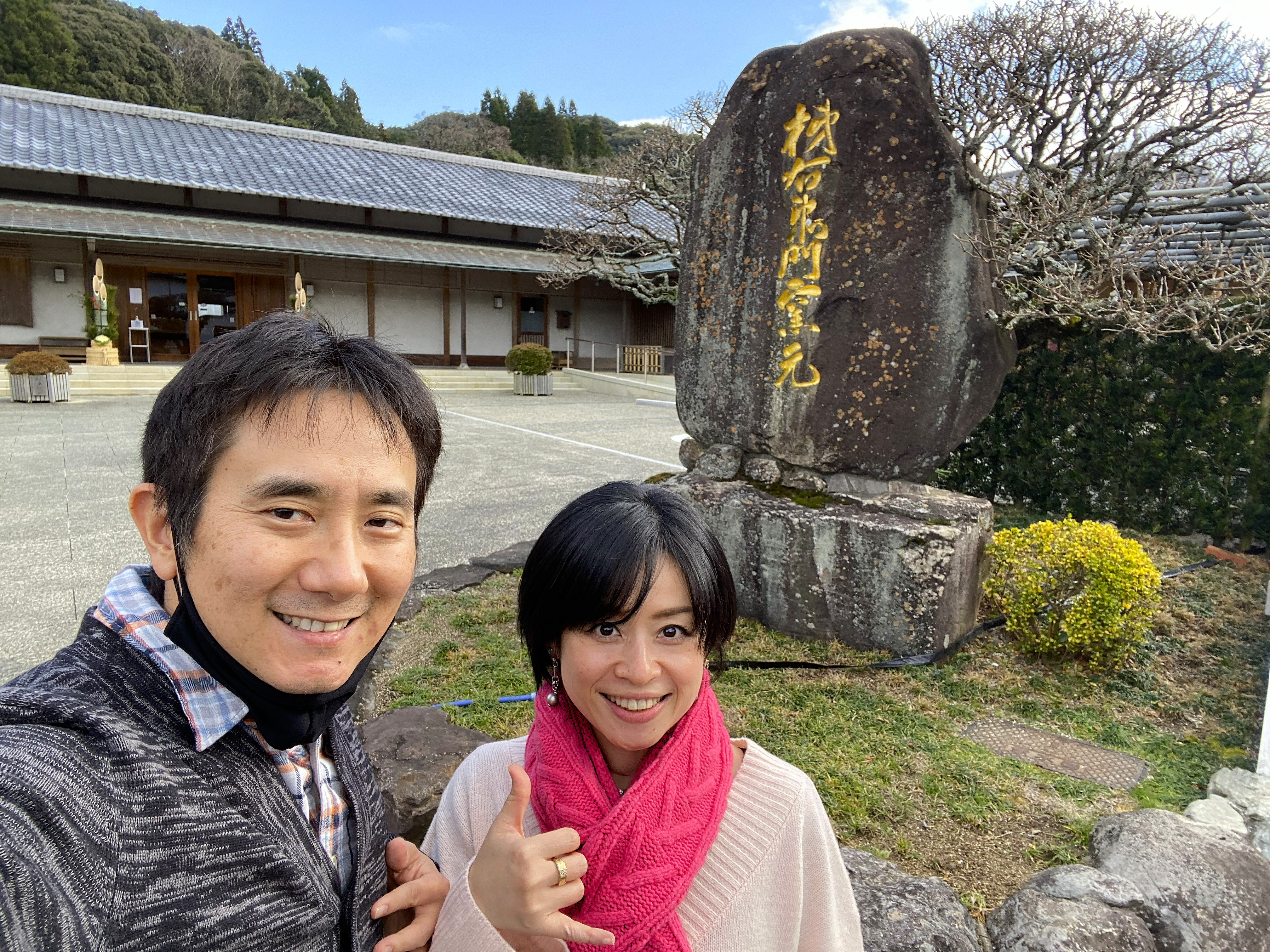
At the Kakiemon kiln entrance. The stone reads 柿右衛門窯元 — the Kakiemon kiln.
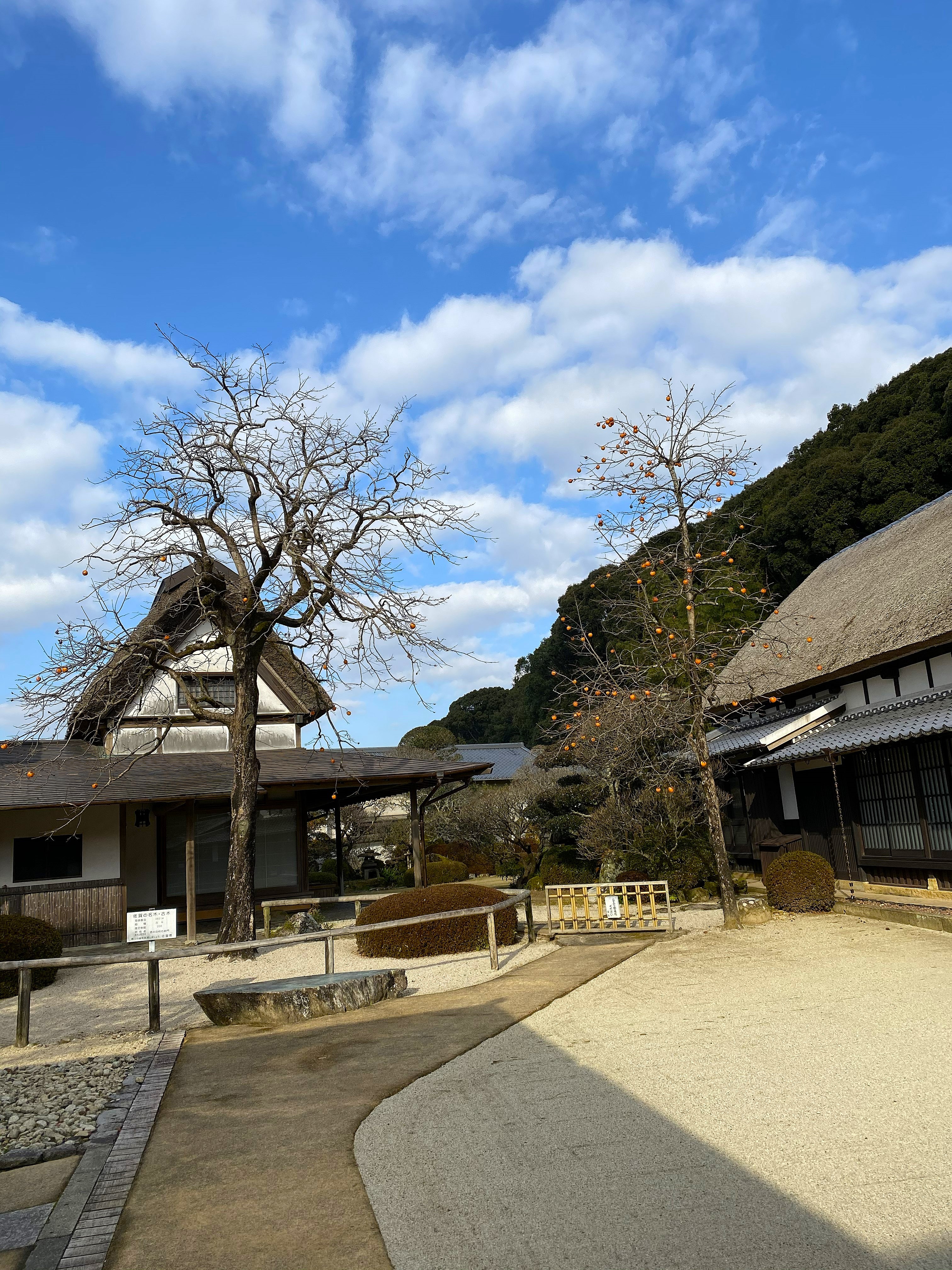
The Kakiemon compound. Persimmon trees in the garden — fitting, given that kaki (柿) means persimmon.
What limits Kakiemon production is the clay itself. The kiln uses a specific white clay called nigoshide — a milky, almost translucent white that forms the warm ground the colored enamels sit on — sourced from a single quarry with annual production limits. There is only so much of it. The work cannot be scaled. Each piece is hand-formed and individually decorated, and the prices reflect all of it.
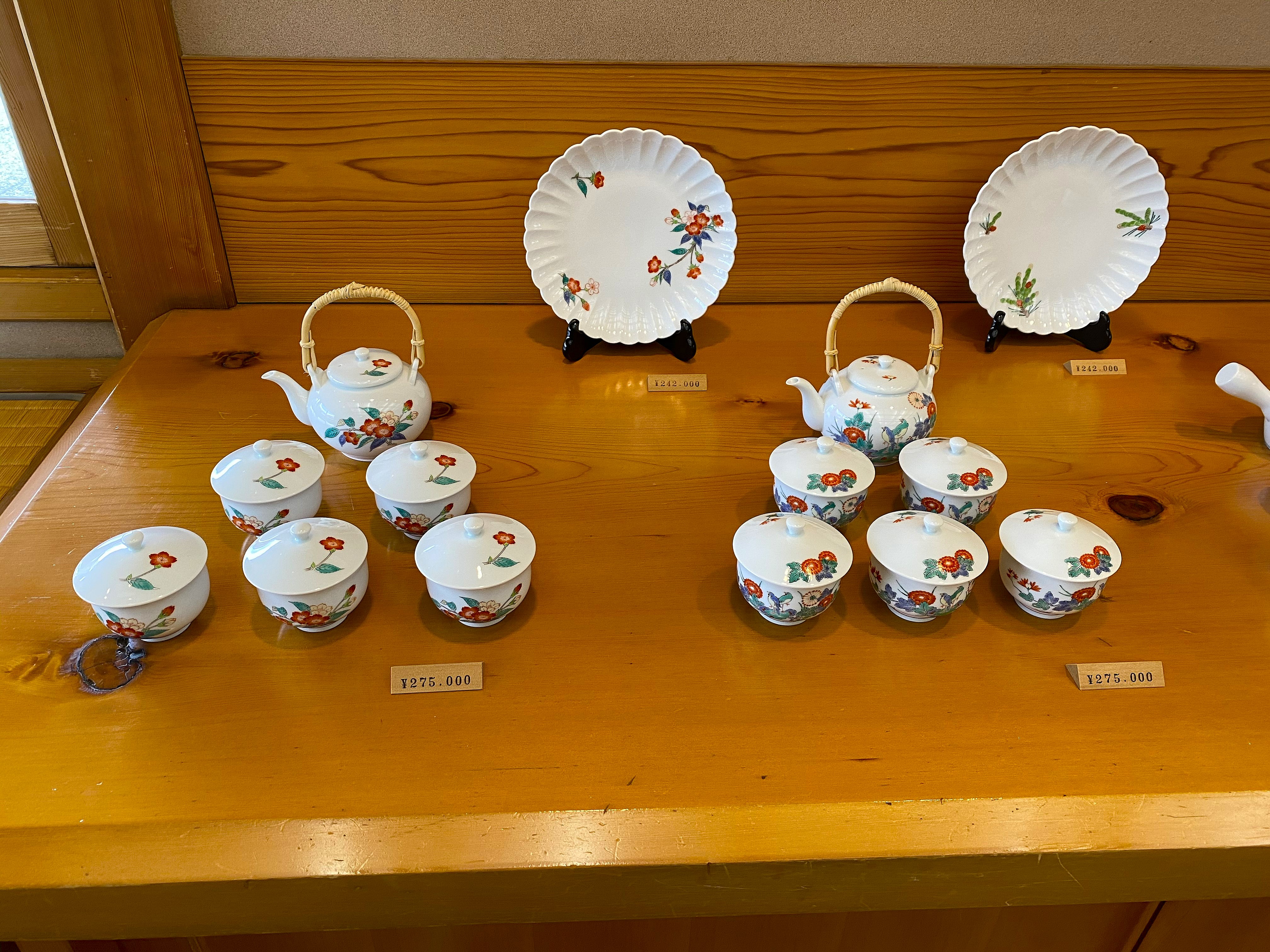
Two tea sets at ¥275,000 each. The plates behind them at ¥242,000 each. The quality is visible even in a photo.
The kiln's exhibition room shows the Kakiemon influence on European porcelain directly — original Edo-period Kakiemon pieces displayed alongside later Meissen reproductions of the same patterns. The pine-bamboo-plum-bird design was so prized in Europe that it was simply copied, pattern for pattern, onto Meissen clay. Looking at the two plates side by side — a 17th-century Kakiemon original and a contemporary Meissen reproduction — the differences are subtle but present. The Kakiemon original has a quietness that the European copy cannot quite capture.
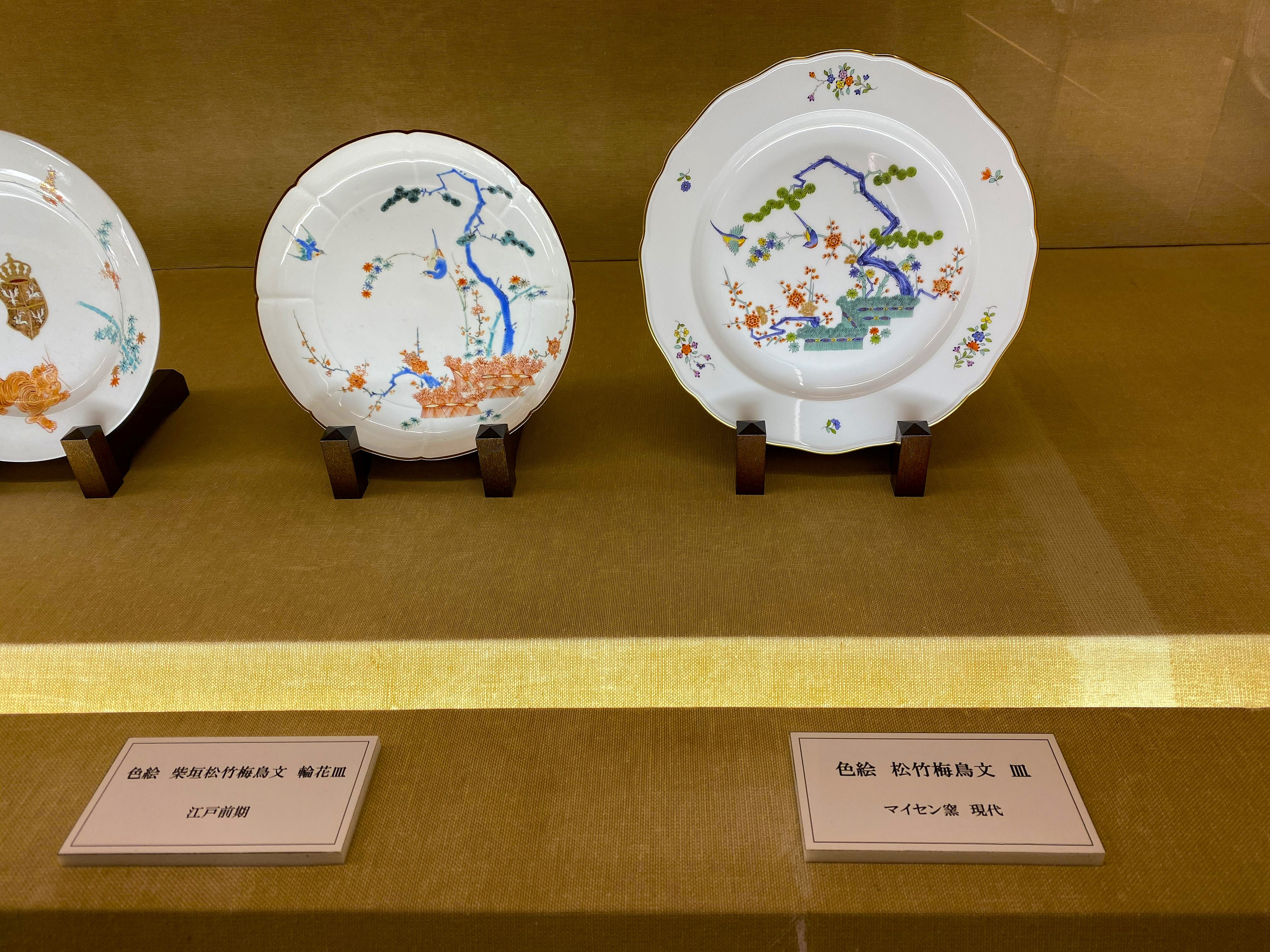
Left: an Early Edo period Kakiemon original. Right: the same pattern, reproduced by Meissen. The influence was direct and documented.
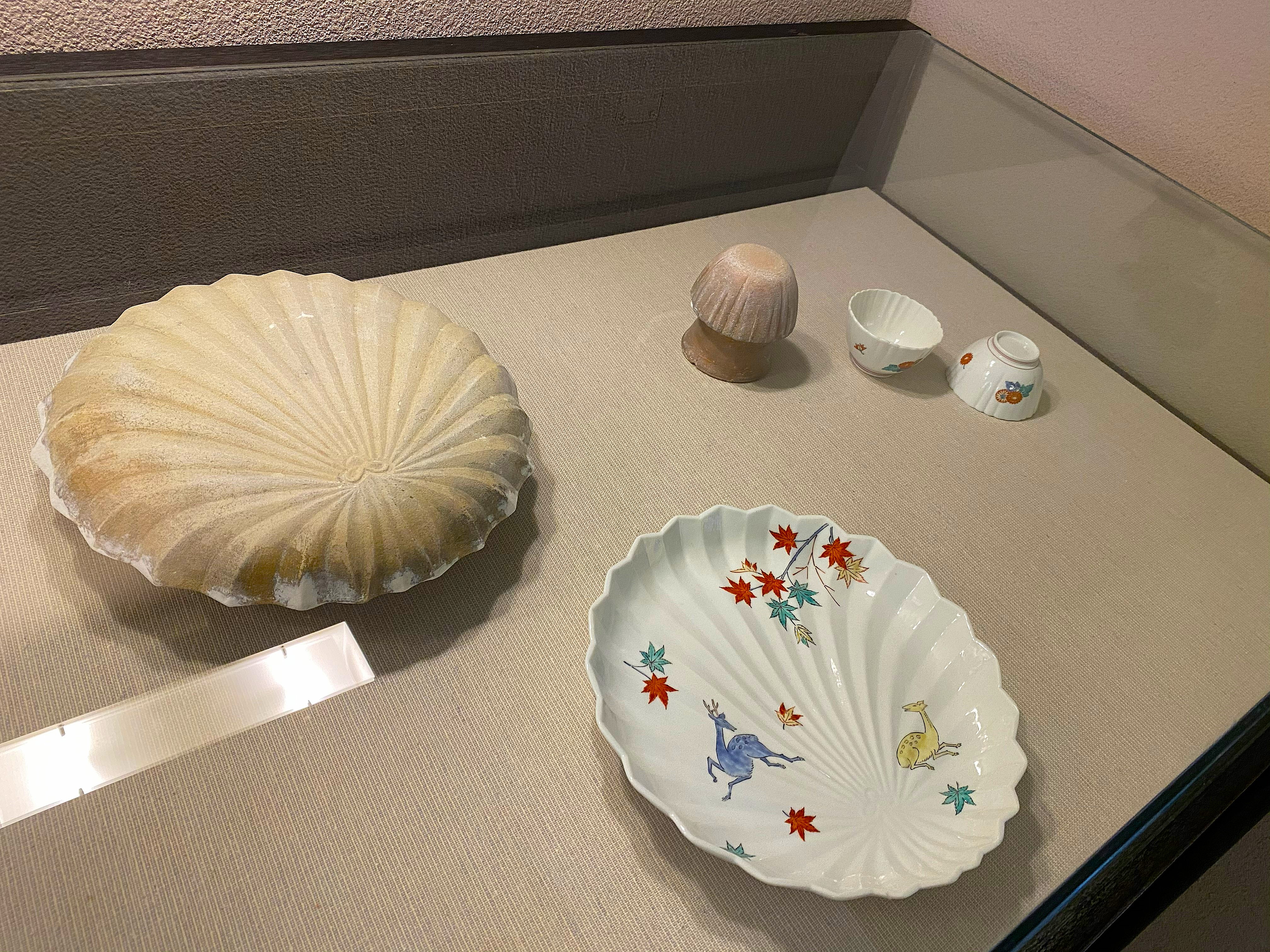
The molds used to shape Kakiemon pieces — a plate mold and a cup mold — alongside a finished piece painted with deer and autumn maple leaves.
Gen-emon: A Different Kind of Beauty
Gen-emon (源右衛門窯) is a few minutes from Kakiemon and a different aesthetic entirely. Where Kakiemon is spare and restrained — nature motifs on open white ground — Gen-emon works in a richer, more layered style: deep cobalt blues, complex repeat patterns, bold compositions that fill the surface of the piece. Both are Arita, both are hand-decorated, and both are exceptional. The choice between them says something about what you value in a plate.
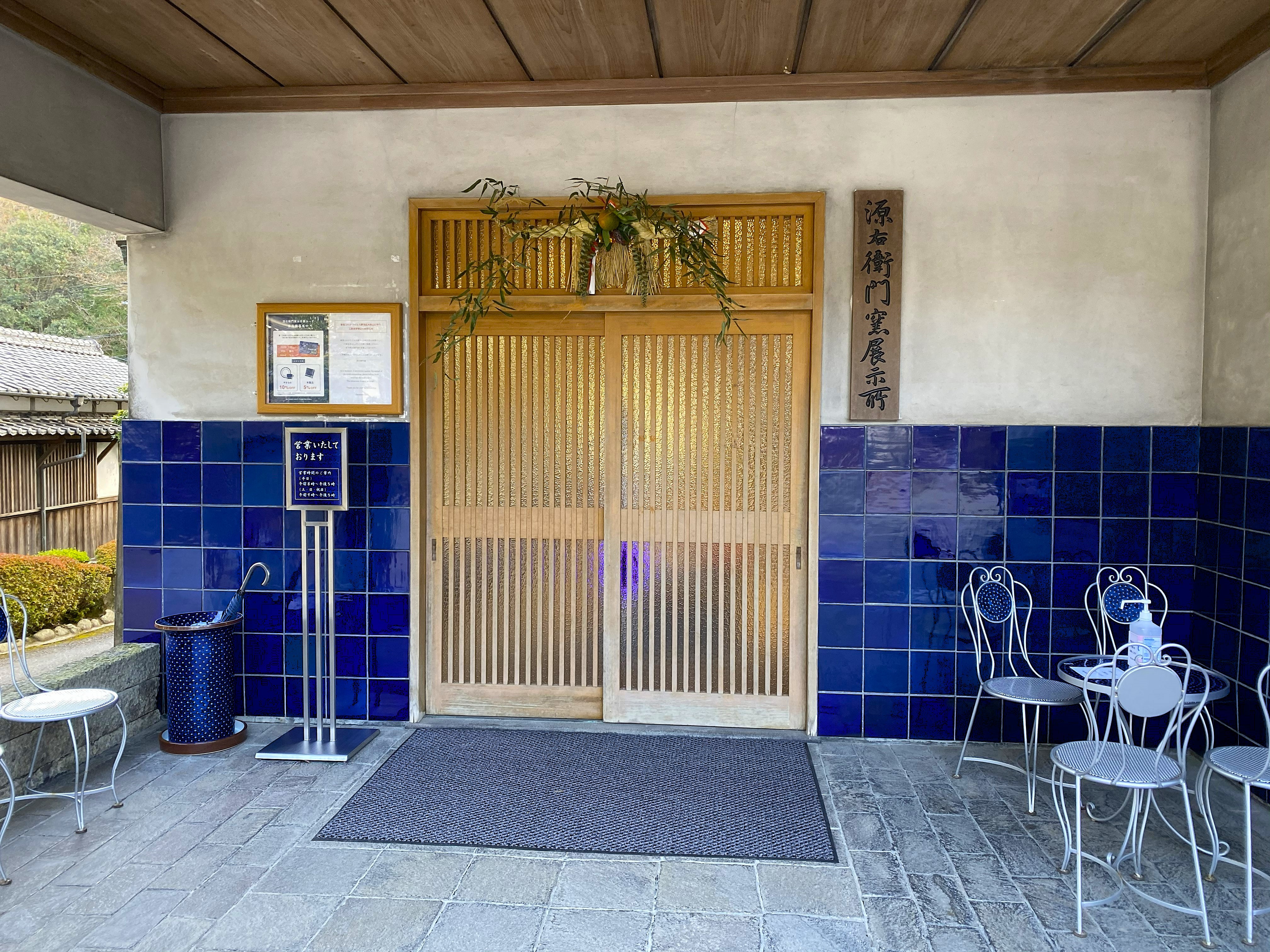
The Gen-emon entrance. Blue tile walls, pine arrangement above the door — the showroom is immediately serious.
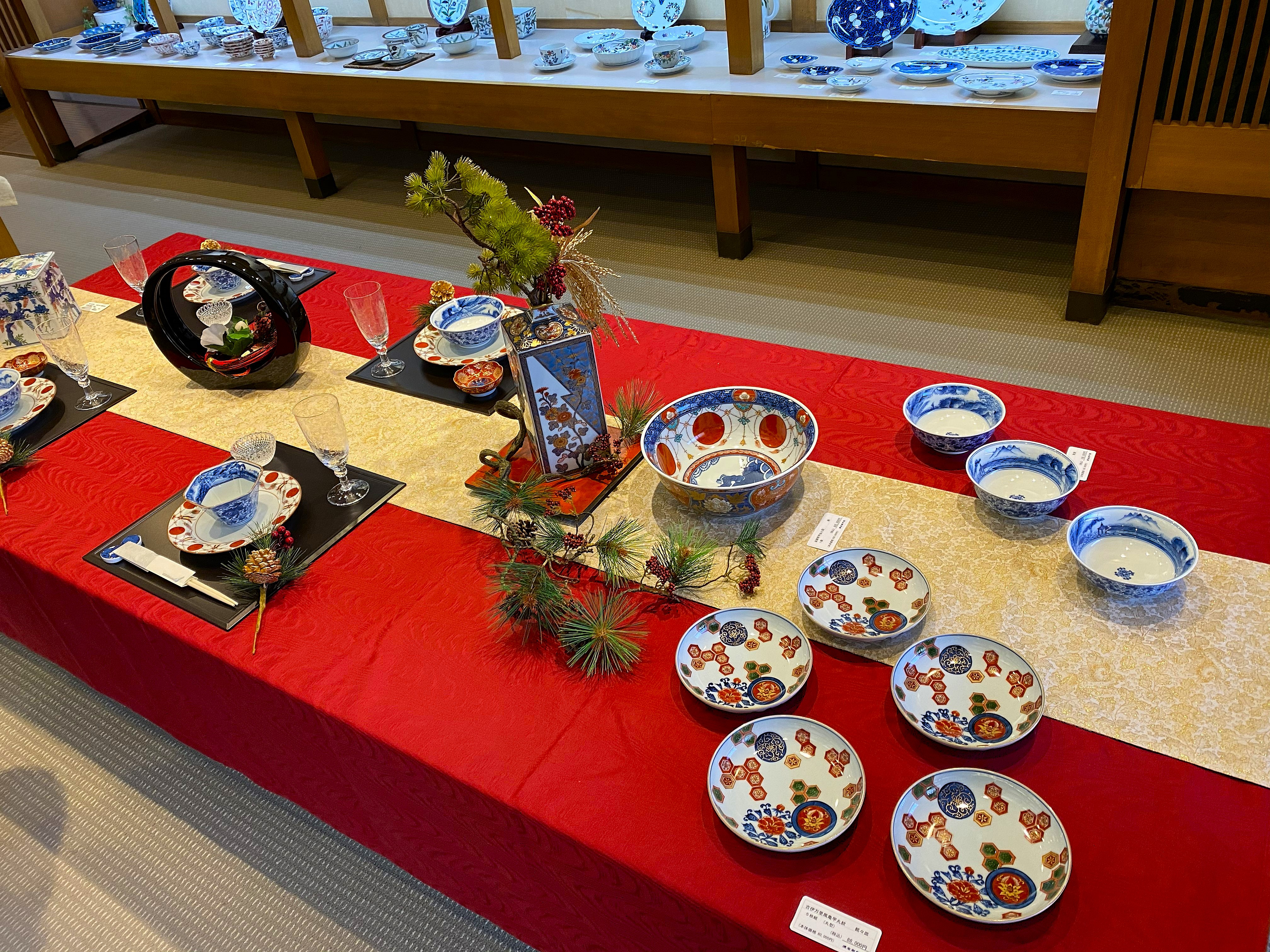
Gen-emon's showroom table setting. The depth of color and pattern density is signature Gen-emon.
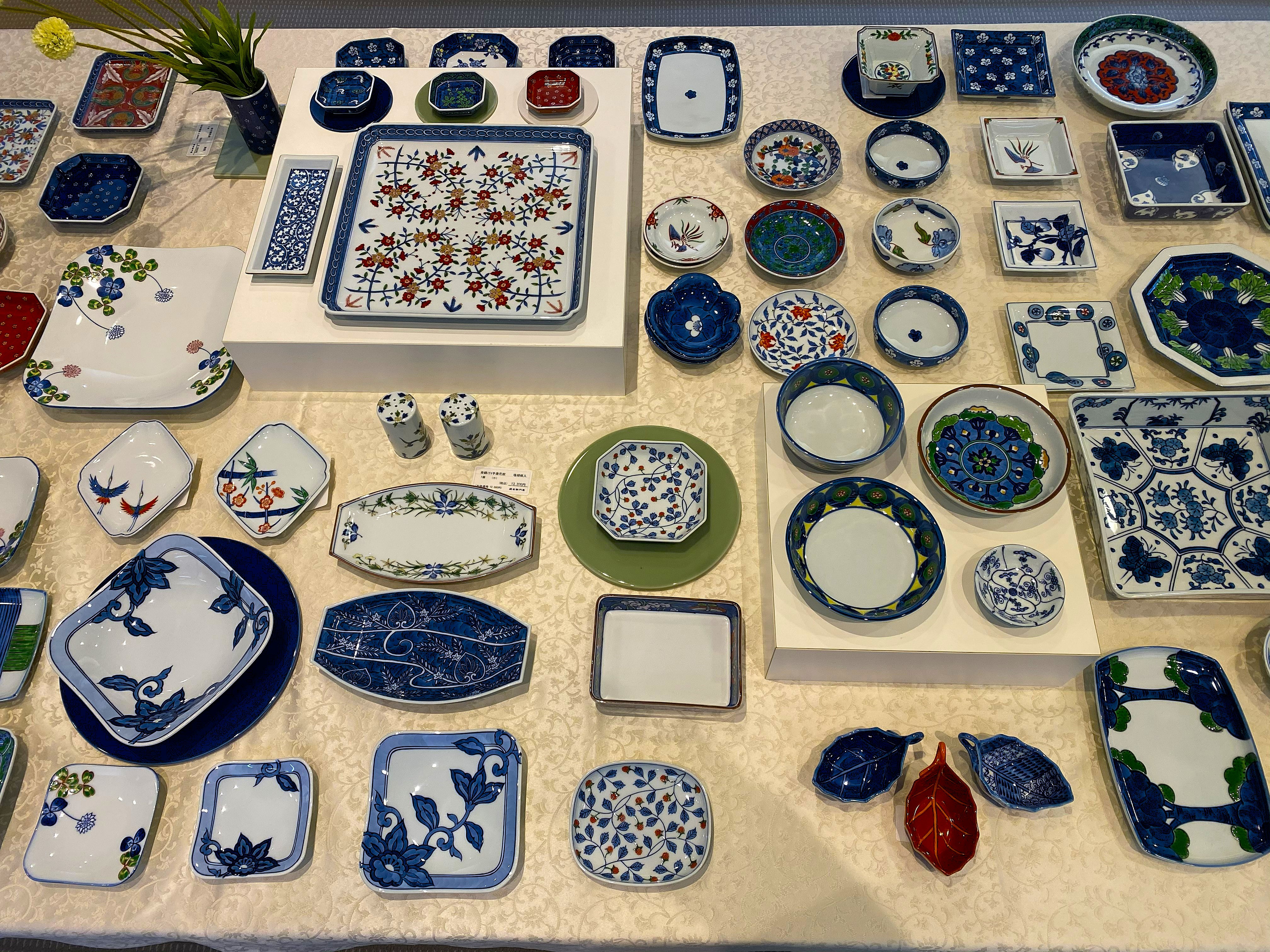
The Gen-emon showroom. Every piece is hand-decorated at the kiln.
My mother's taste runs toward Gen-emon. If money were no object, she would want Kakiemon — but at ¥275,000 for a tea set, that is a conversation for another day. Gen-emon is where she lands, and walking through the showroom I understood why. There is a richness and depth to the work that holds up the longer you look at it. We spent a long time looking, and I left with a few pieces.
A Brief Stop in Imari
We had wanted to spend more time in Imari. We did not. The hours at Sera, Kakiemon, and Gen-emon had run together in the way that happens when you are genuinely interested in something, and by the time we reached Imari city the light was already turning. We drove the main street, stopped at the porcelain-decorated bridge over the canal — blue and white tile panels depicting a dragon over waves, a porcelain vase set as a pillar cap — and noted that this town had its own distinct porcelain tradition worth a proper visit.
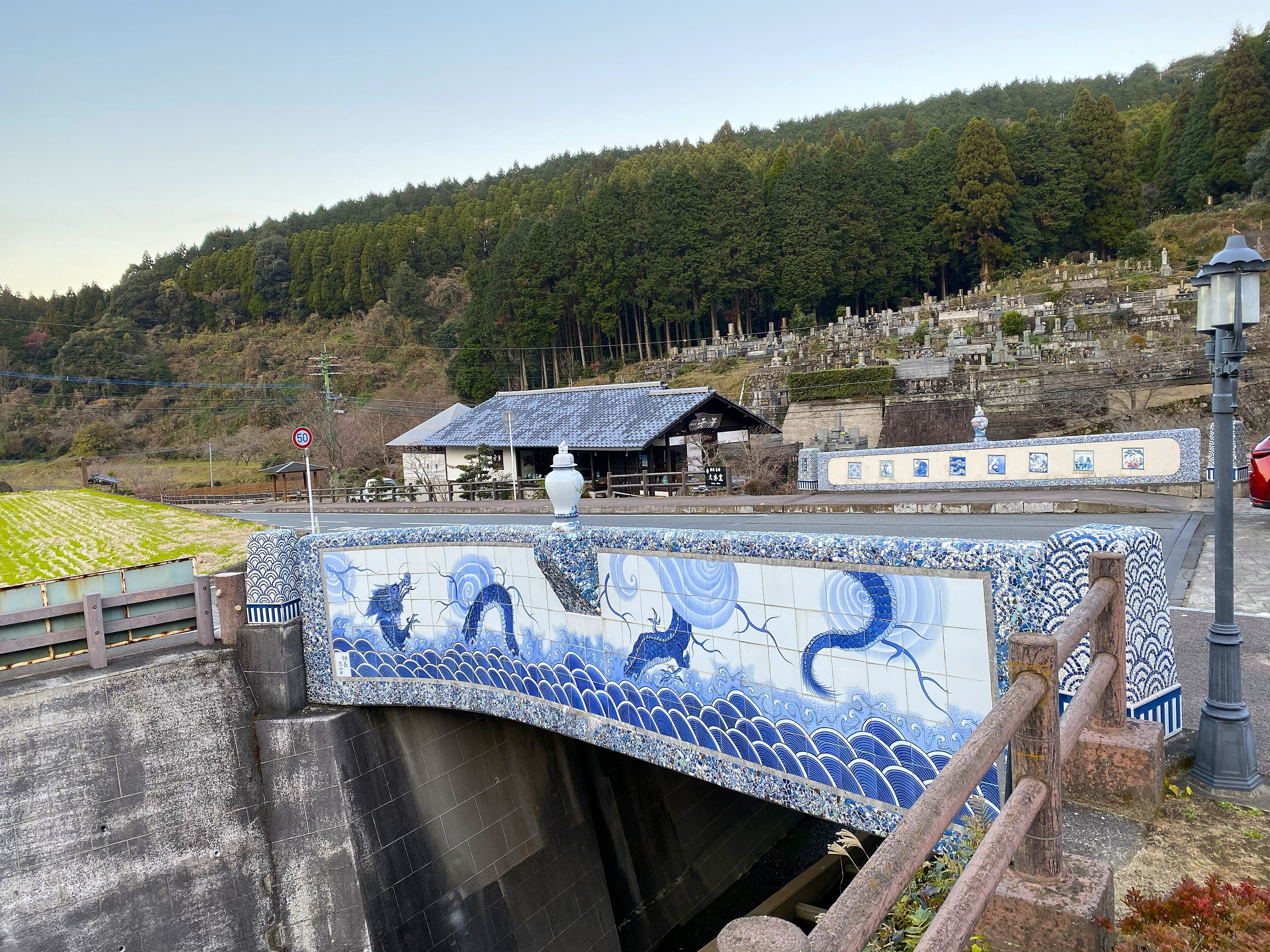
The Imari bridge. The entire structure is faced with blue and white porcelain tiles.
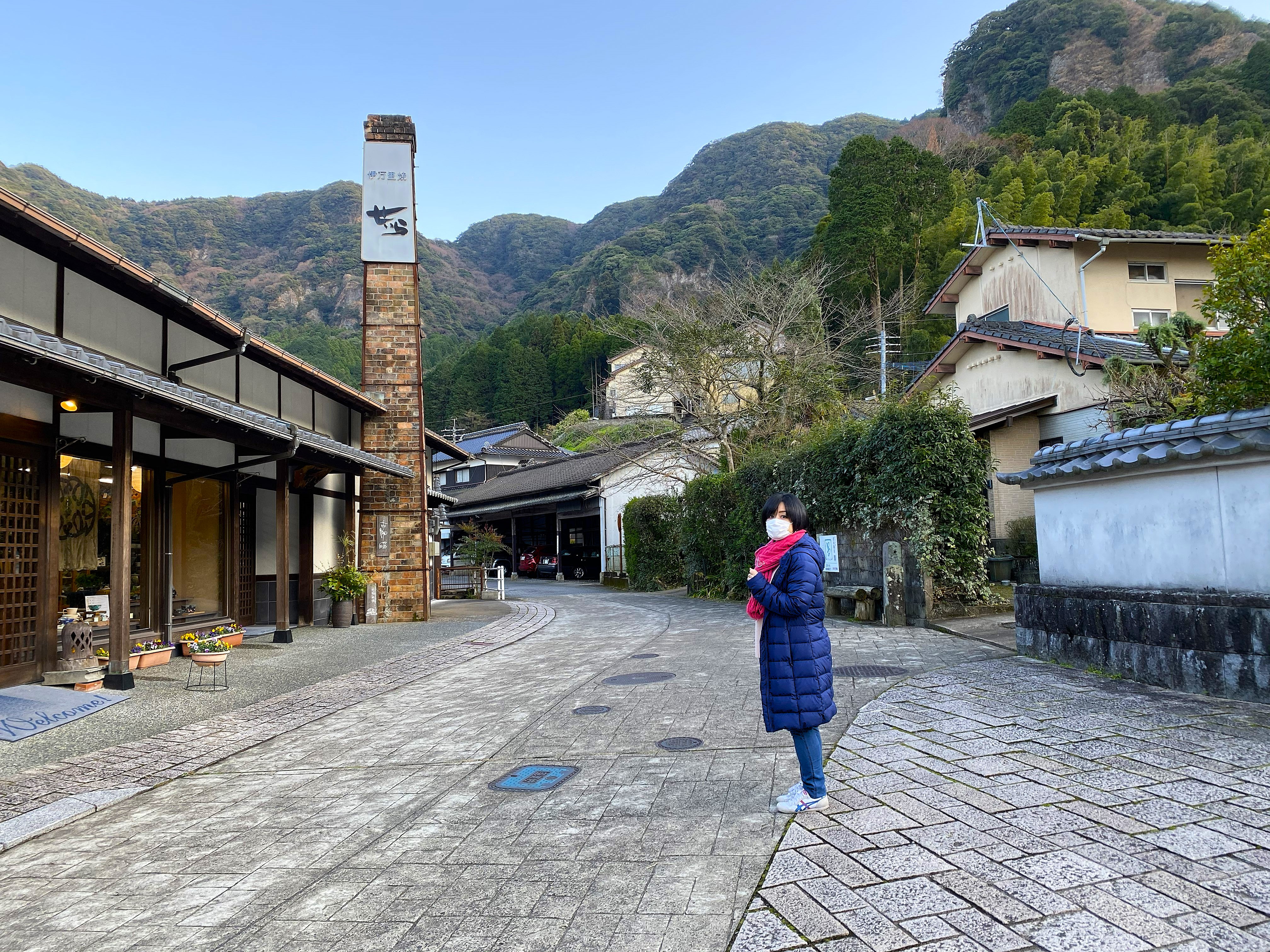
Ayumi on the Imari pottery street. The brick kiln chimney behind her marks the area. We vowed to come back properly.
Imari-yaki is not simply a regional version of Arita porcelain — it has its own character and history. Historically, Arita pieces were exported through Imari port, which is why European collectors called them "Imari ware" for centuries. Today the two names are used to distinguish styles: Arita tends toward the refined, Imari toward the bold and layered. We had been here for an hour. It deserved more. We will be back.
Arita Sera: 有田焼卸団地, Arita-cho, Nishimatsuura-gun, Saga Prefecture. Free parking. Budget significantly more time than you think you need.
Kakiemon: 柿右衛門窯, Nishimatsuura-gun, Arita-cho. The showroom and museum are open to the public. The persimmon trees in the garden are there because kaki (柿) means persimmon — the kiln name and the tree are the same character.
Gen-emon: 源右衛門窯, Arita-cho. A short drive from Kakiemon. The showroom displays the full current collection. International shipping available.
Chidori Imari Champon: A local champon restaurant in Imari city. Casual, inexpensive, and good — the kind of place locals eat at regularly.
Yoshinogari Historical Park: Off Route 385 in Yoshinogari-cho, Kanzaki-gun, Saga Prefecture. A worthwhile stop on the drive from Kumamoto to Arita. Allow 90 minutes to two hours.
Fukuoka: The Last Night
From Imari we drove north to Fukuoka — about 90 minutes on the expressway. Fukuoka is the largest city in Kyushu and, by most measures, one of the best food cities in Japan. Ramen, tonkotsu broth, mentaiko, and motsu-nabe all have deep roots here. We had a reservation for motsu-nabe and not much time to waste.
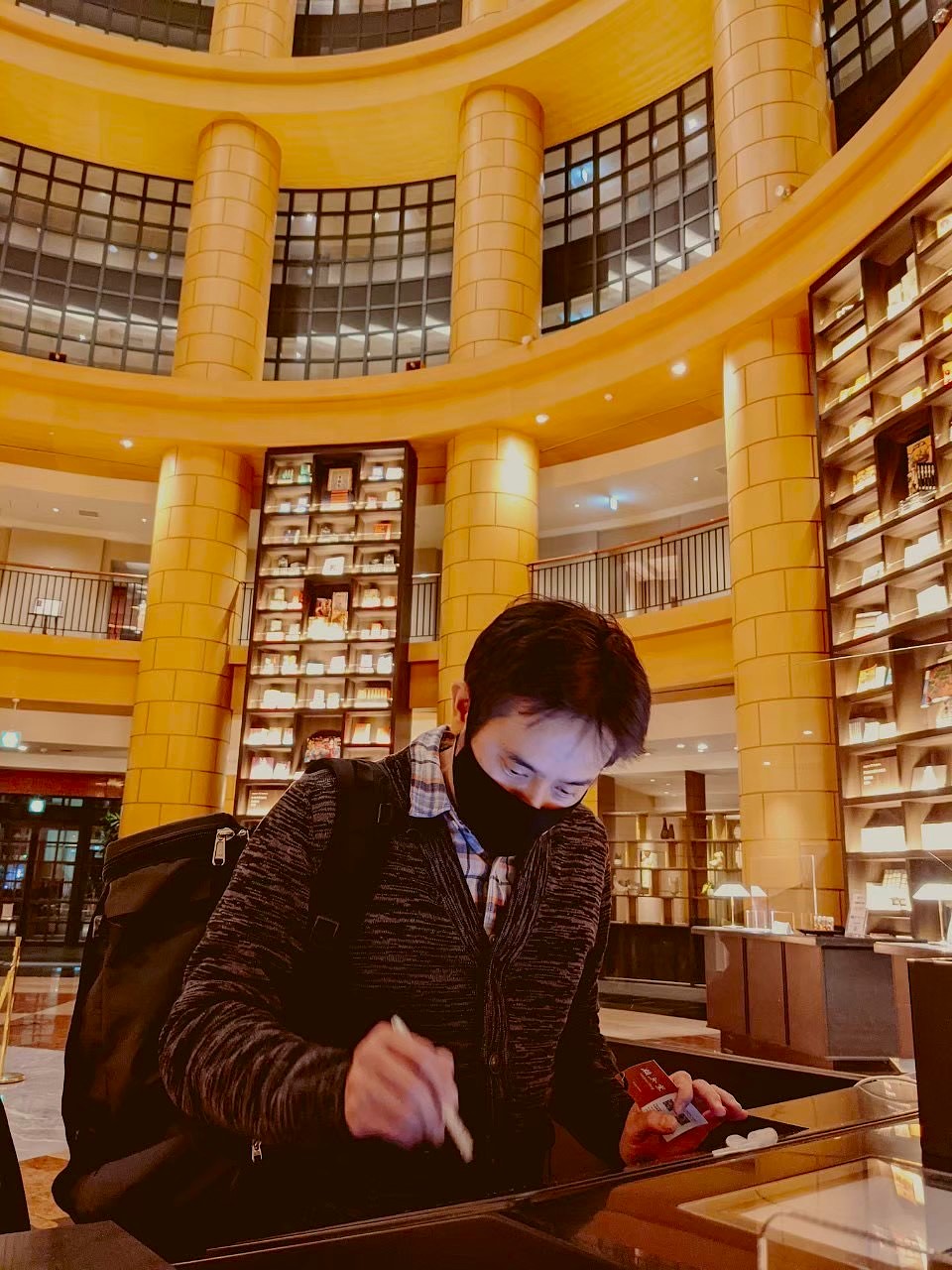
Checking in at The Basics Fukuoka — formerly the Hyatt Regency, rebranded in 2020 with the library-themed lobby as the centerpiece. The bookshelves go several floors up.
Motsu-nabe
Motsu-nabe is Fukuoka's other signature hot pot — beef or pork offal simmered with cabbage, chives, garlic, and tofu in a miso or soy broth until everything is soft, rich, and deeply flavored. The offal collagen melts into the broth as it cooks, giving it a body that stays with you. We went to 博多もつ鍋 おおやま (Hakata Motsunabe Ooyama) — one of Fukuoka's most well-known motsu-nabe restaurants, with a secret miso broth they've been refining for decades. It is the kind of food that makes complete sense on a cold December night after three days of driving.
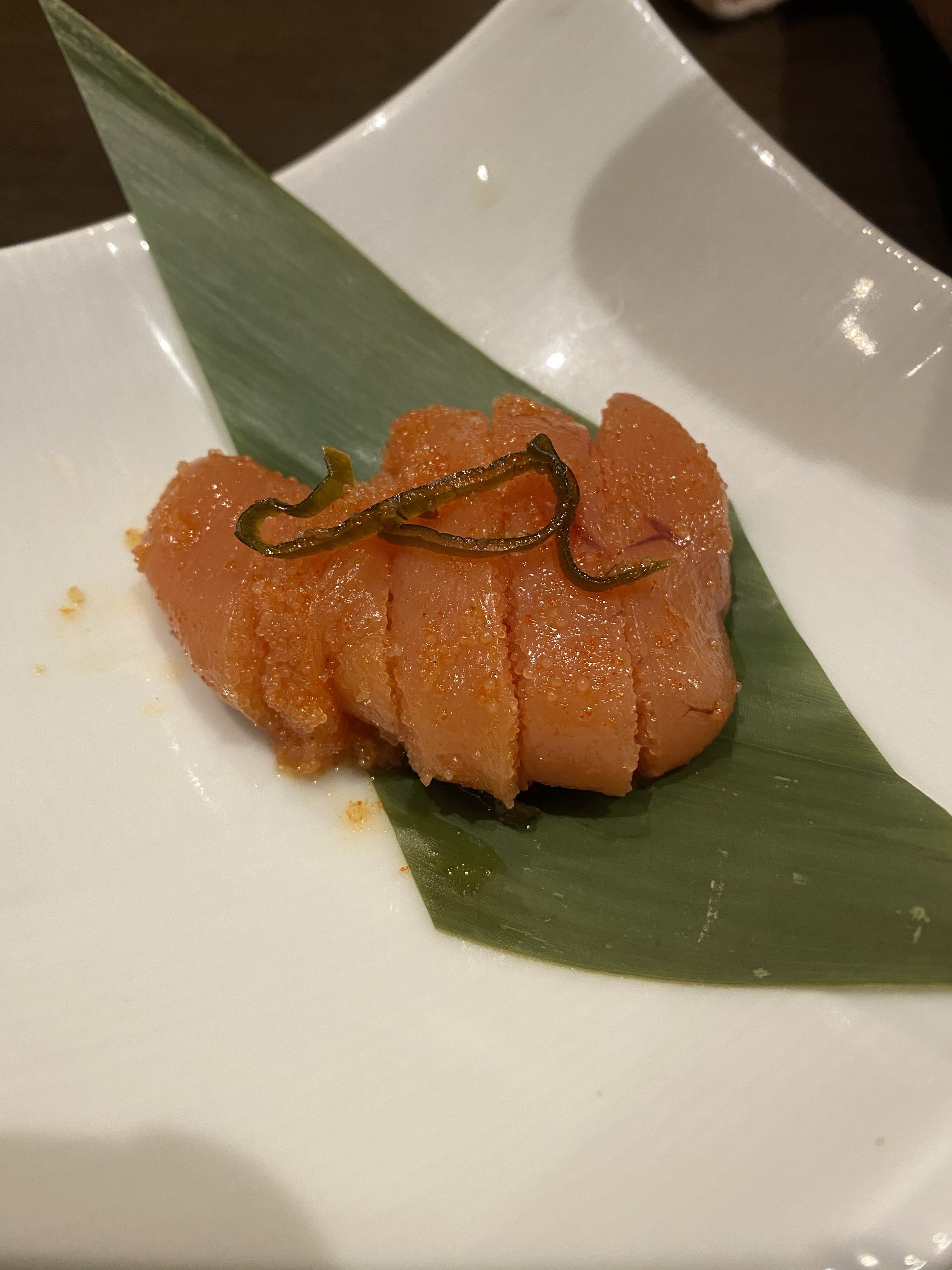
Mentaiko — Fukuoka's famous spicy cod roe. One of the starters before the nabe.
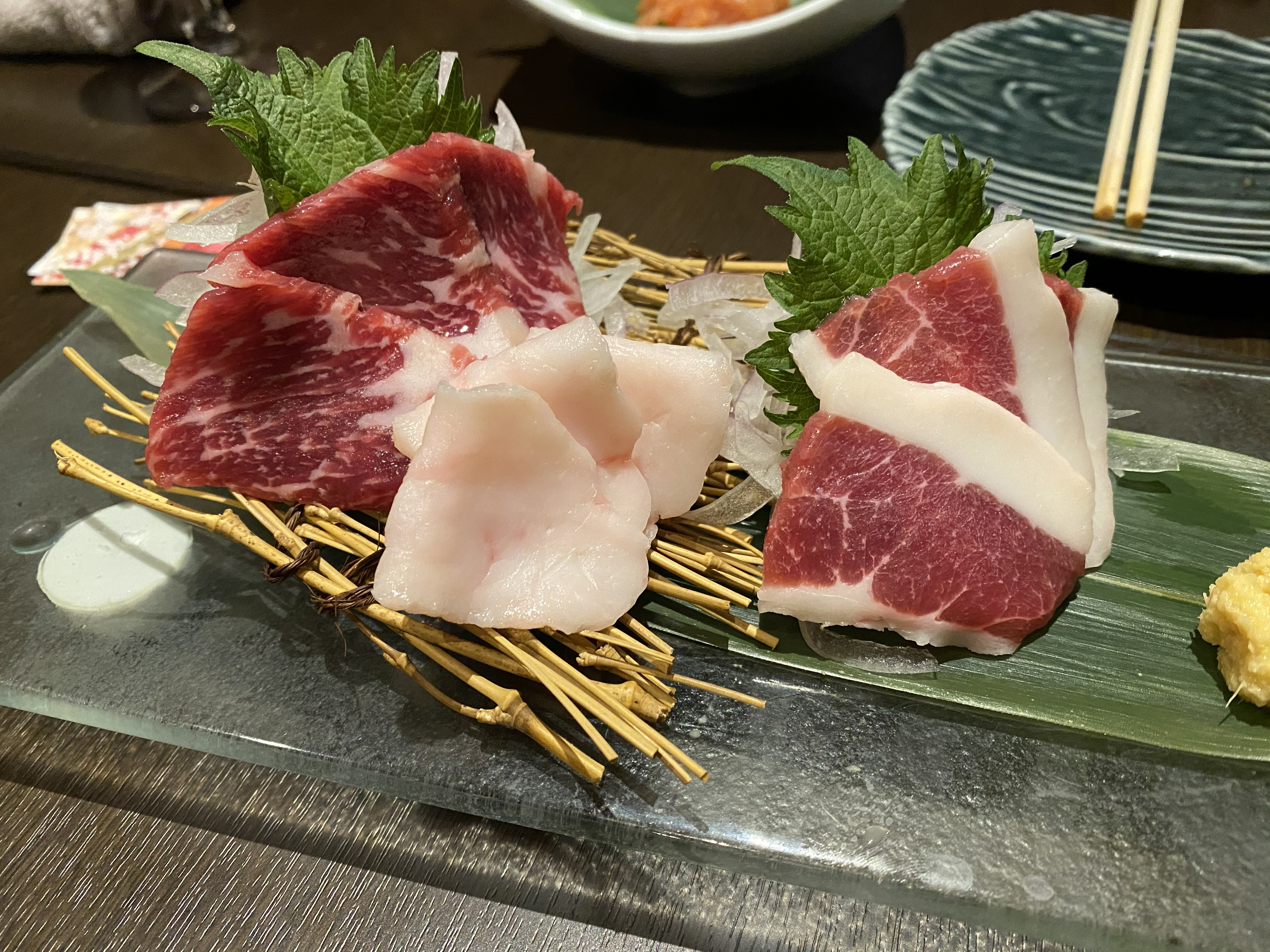
Horse sashimi (basashi) — a Kyushu specialty. Rich, clean flavor, served with ginger and Kyushu soy sauce.
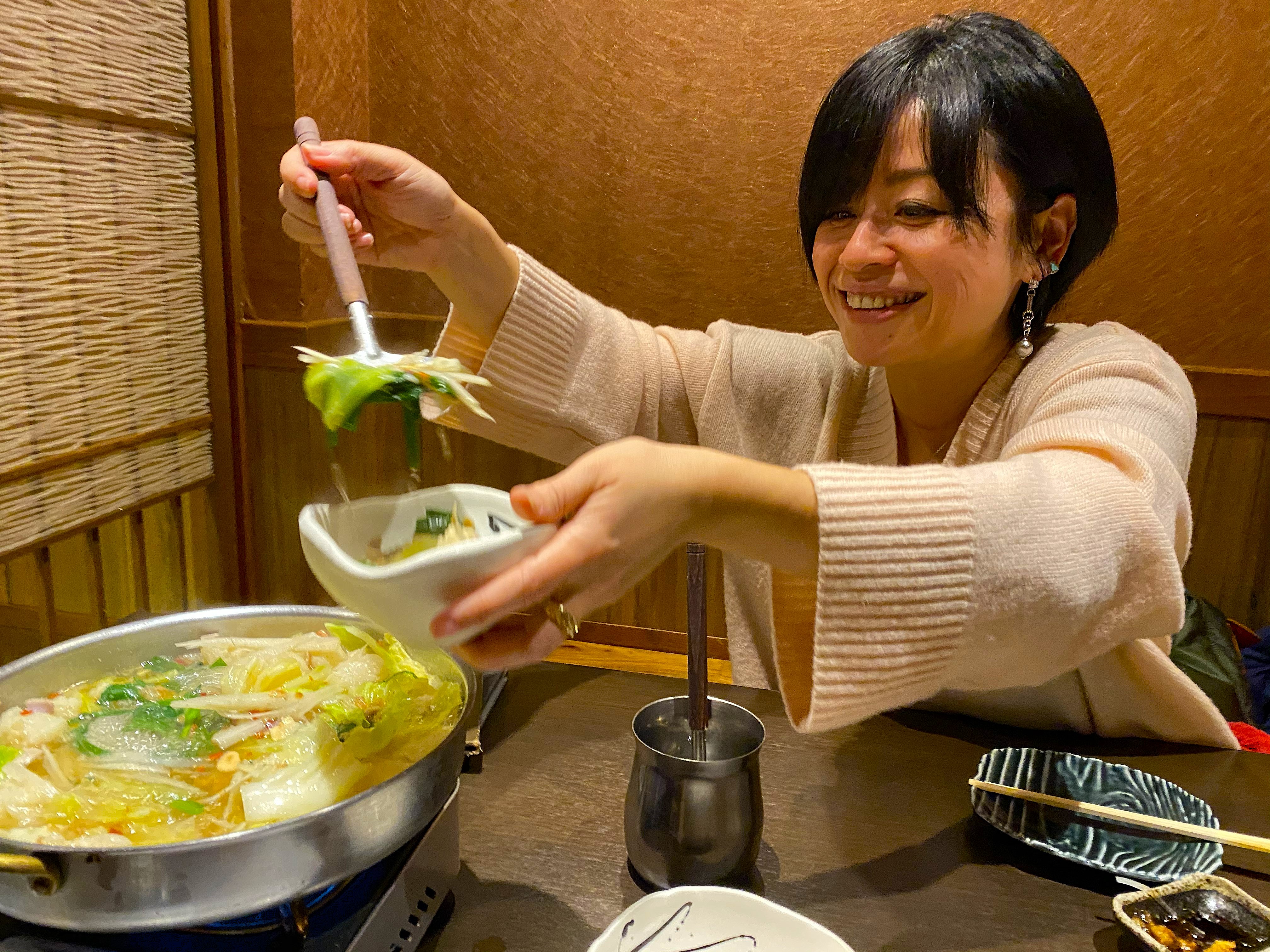
Ayumi serving from the nabe. The broth had been going for a while by this point.
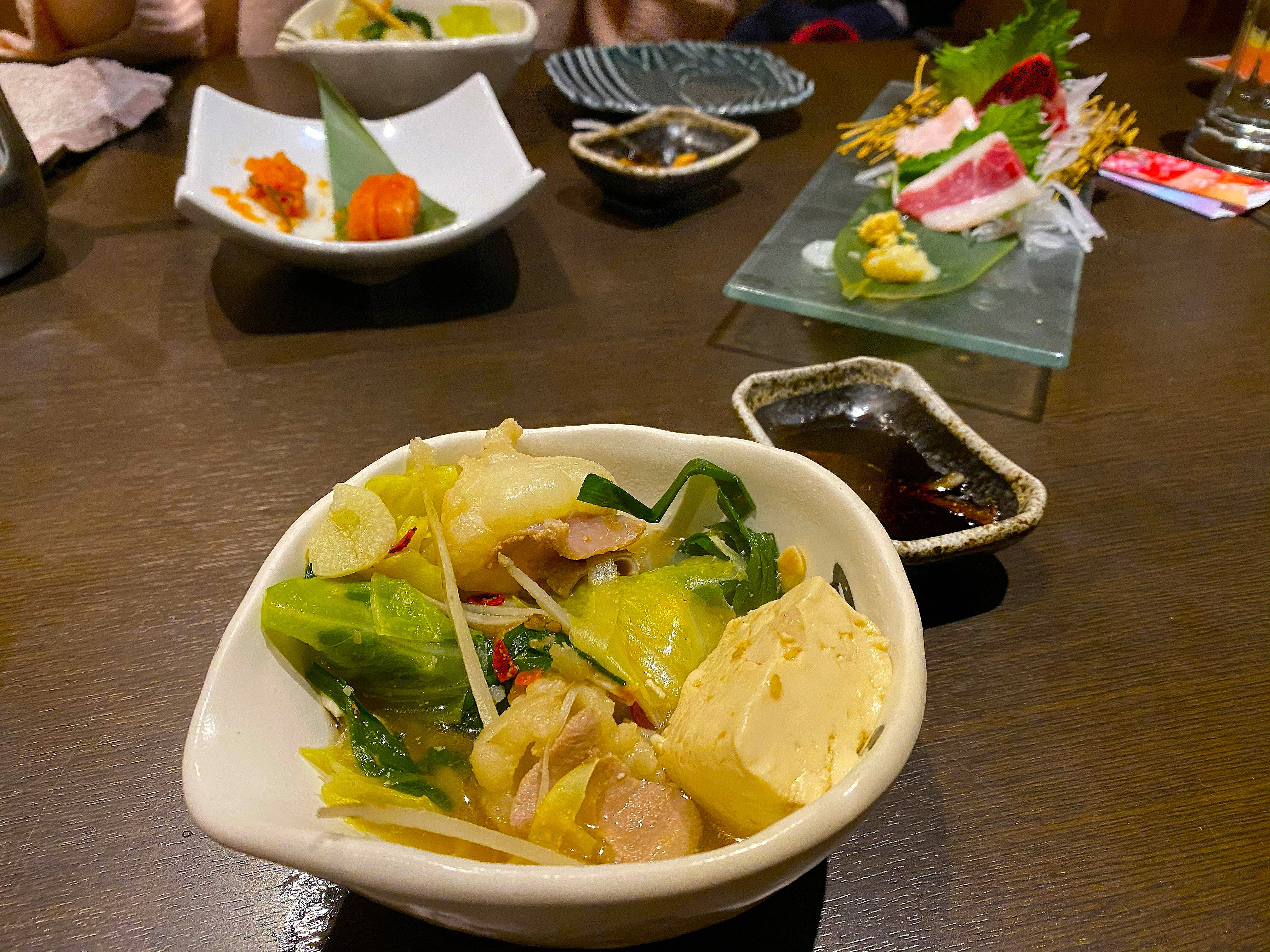
The full table. Motsu-nabe, basashi, mentaiko. A proper Fukuoka closing to a Kyushu trip.
That was the last dinner of the trip. The next morning we headed back to Tokyo. Kyushu in December had covered more ground than expected — a shrine in the forest, a caldera above the clouds, two days in porcelain country, and a city that feeds people well. Imari still owes us a proper visit.
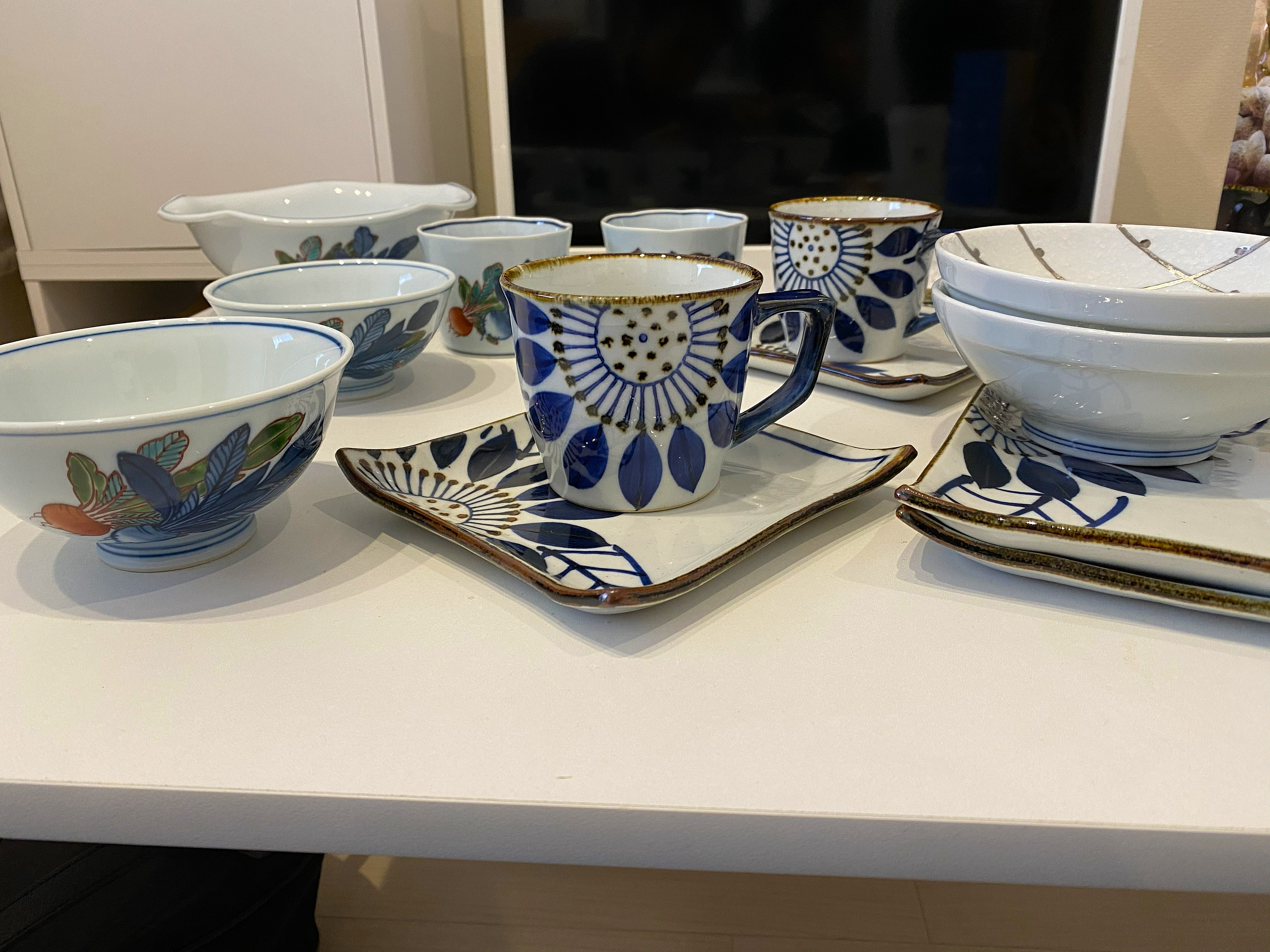
What came home — from Arita Sera and Gen-emon. All shipped back to Tokyo via Kuroneko. The mug and tray were the first things I picked up and the last things I put down.
The Basics Fukuoka: Hakata-ku, Hakataeki Higashi 2-14-1. The hotel was the Hyatt Regency Fukuoka before March 2020. The signature feature is the rotunda lobby with bookshelves rising several floors — 5,000 books available to borrow. Seven-minute walk from Hakata Station.
博多もつ鍋 おおやま (Hakata Motsunabe Ooyama): Multiple locations in Fukuoka. The main branch is near Gofukumachi Station on the Fukuoka city subway. Order the miso flavor — it's what 90% of guests get, and it's the right call. Horse sashimi (basashi) is a signature side. Reservations recommended.
Mentaiko: Spicy marinated pollock roe — Fukuoka's most famous export. Buy a set to bring home. It keeps well refrigerated.