Otaru is a port town that peaked in the herring boom and never quite let go of its character. Canal-era warehouses, one of Hokkaido's best sushi counters, a sea cave glowing blue, and a mountain with a wall of demon masks. Two days was barely enough.
We caught the 8:40PM Japan Airlines flight out of Haneda and touched down in Chitose at 10:15PM. Checked into a Sapporo hotel and picked up the Orix rental at the Sapporo Minami 6jo site at 8AM the next morning. Forty minutes of gentle hills later, the Sea of Japan came into view. Otaru earned its reputation.
The Museum, the Seafood, and the Port
The Otaru Museum anchored the morning — a restored locomotive cab you can climb into, brass gauges and all. Ayumi took the controls.
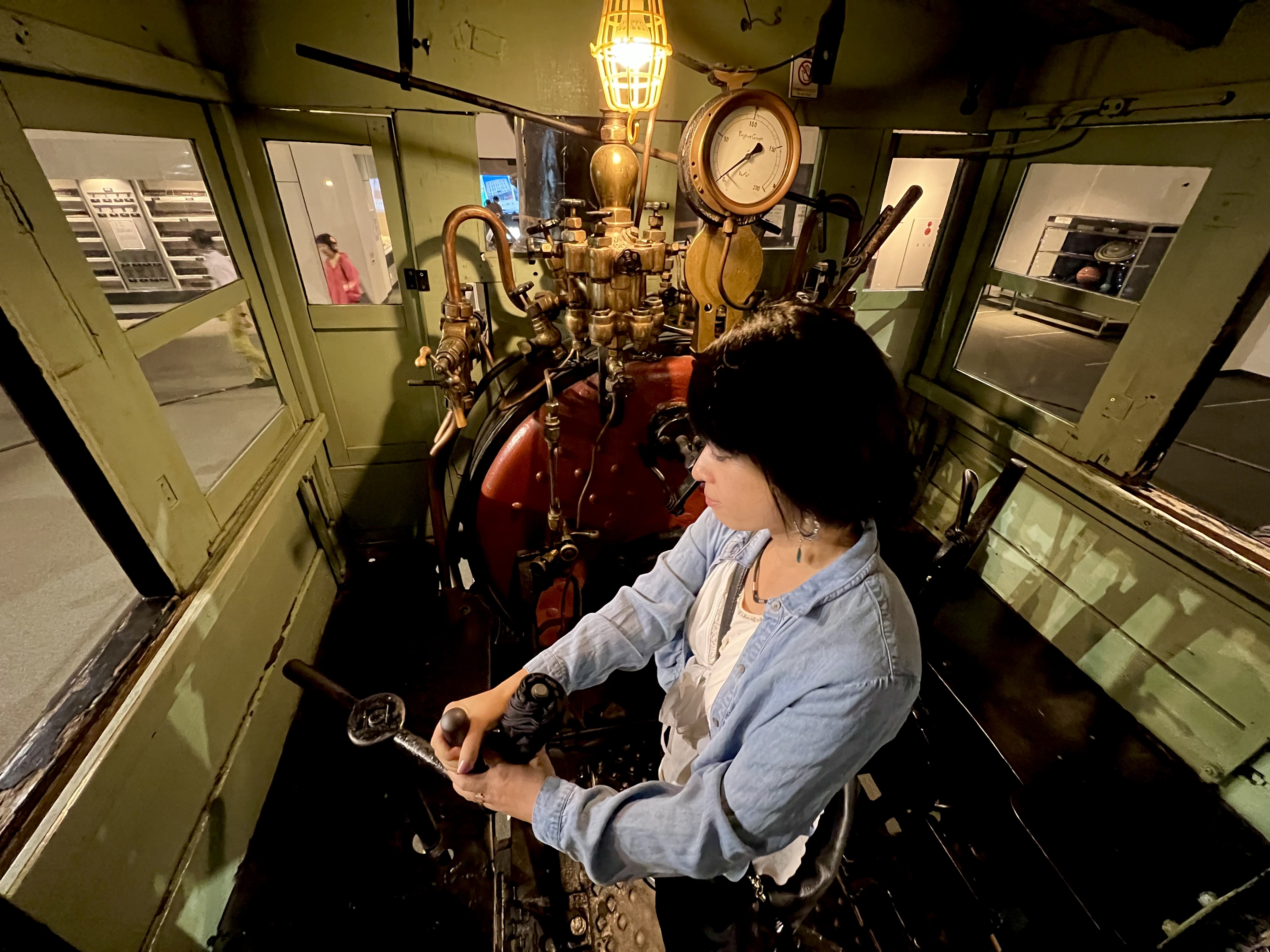
Ayumi at the controls inside the Otaru Museum.
Then lunch at Masazushi. Hokkaido uni, ikura, scallop, crab — the seafood here operates at a different level than what travels to the mainland. This is the meal you come to Otaru for.
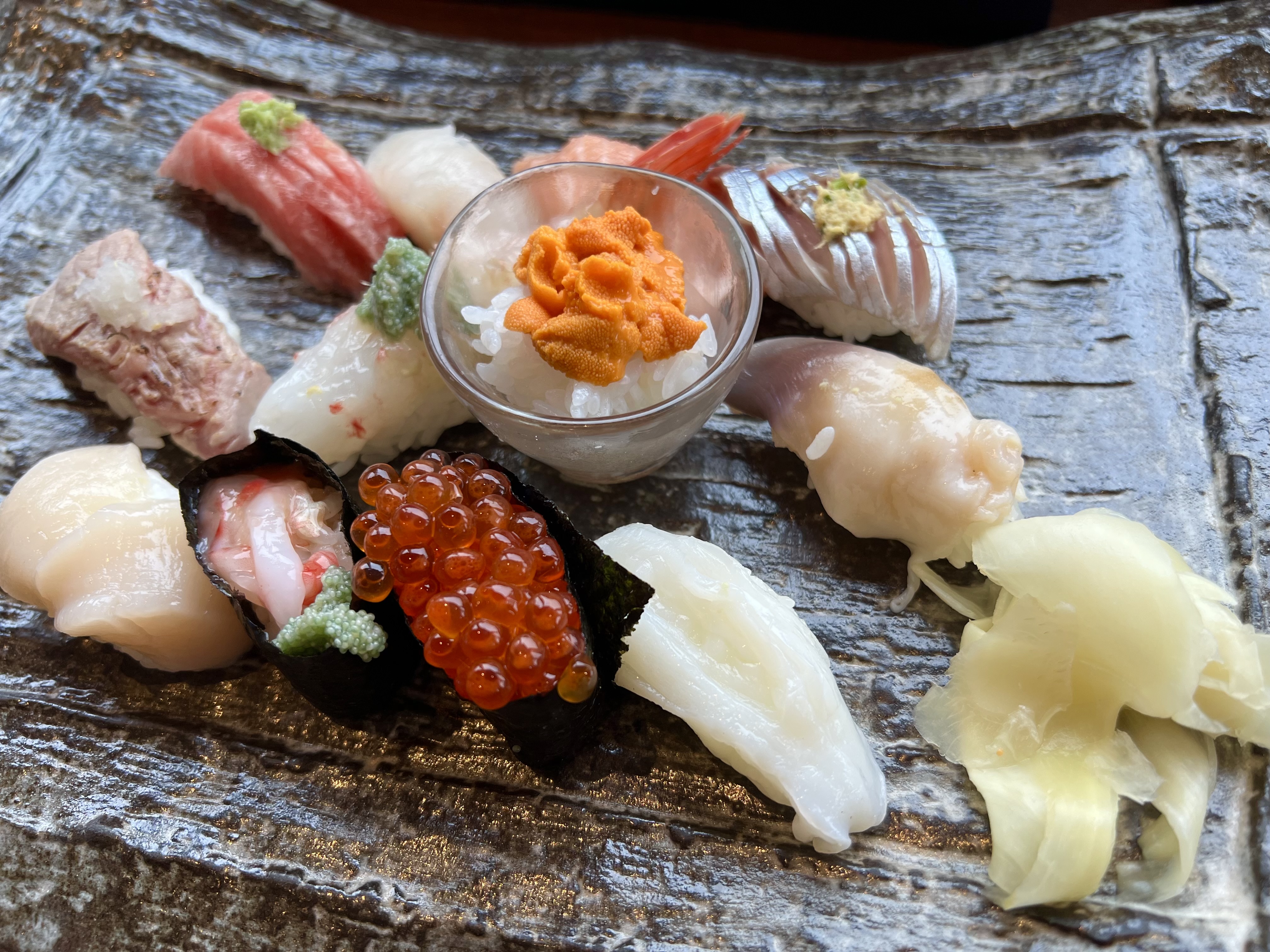
Masazushi, Otaru. The moriawase speaks for itself.
Tengu Yama
After checking into the Otaru Grand Hotel, we drove up Tengu Yama. The museum at the top has an entire wall of traditional tengu and oni masks from Hokkaido and Tohoku — which explains both the mountain's name and what's sold in the gift shop. Ayumi found a kitsune mask. I put it on. Then we stepped outside.
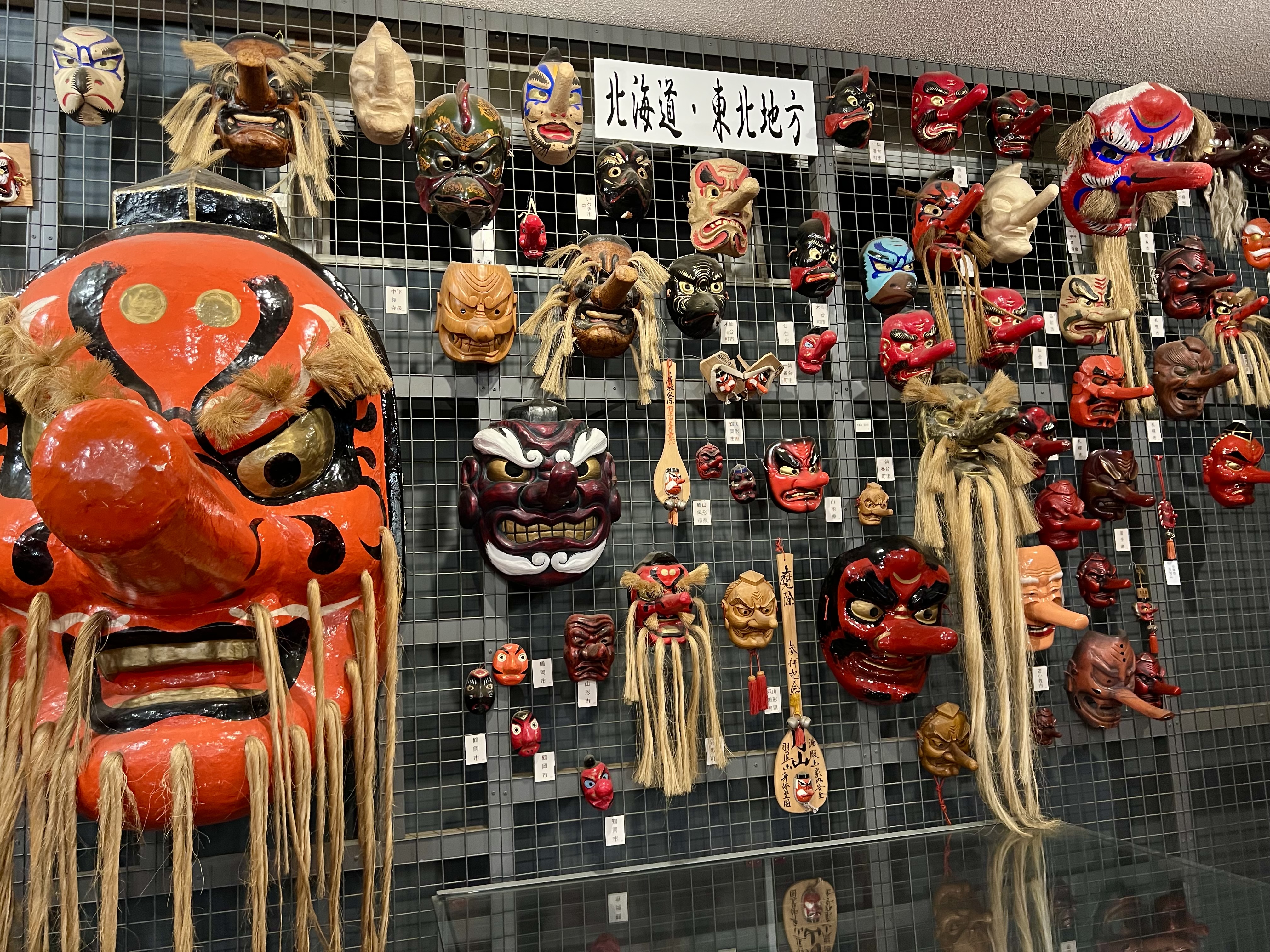
The mask collection inside the Tengu Yama museum — Hokkaido and Tohoku. The gift shop sells smaller versions.
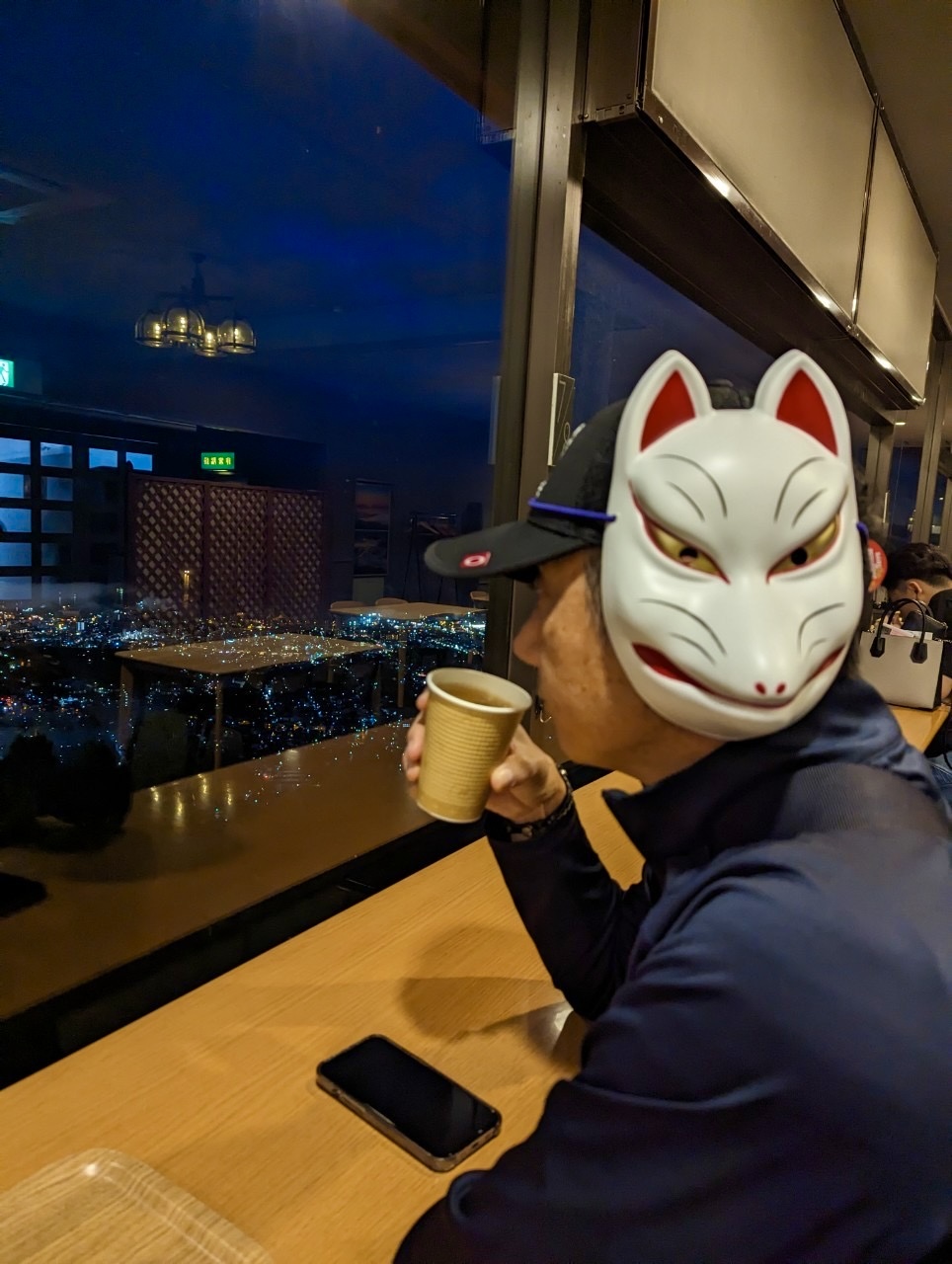
Kitsune mask from the gift shop. Otaru below. A good Saturday night.
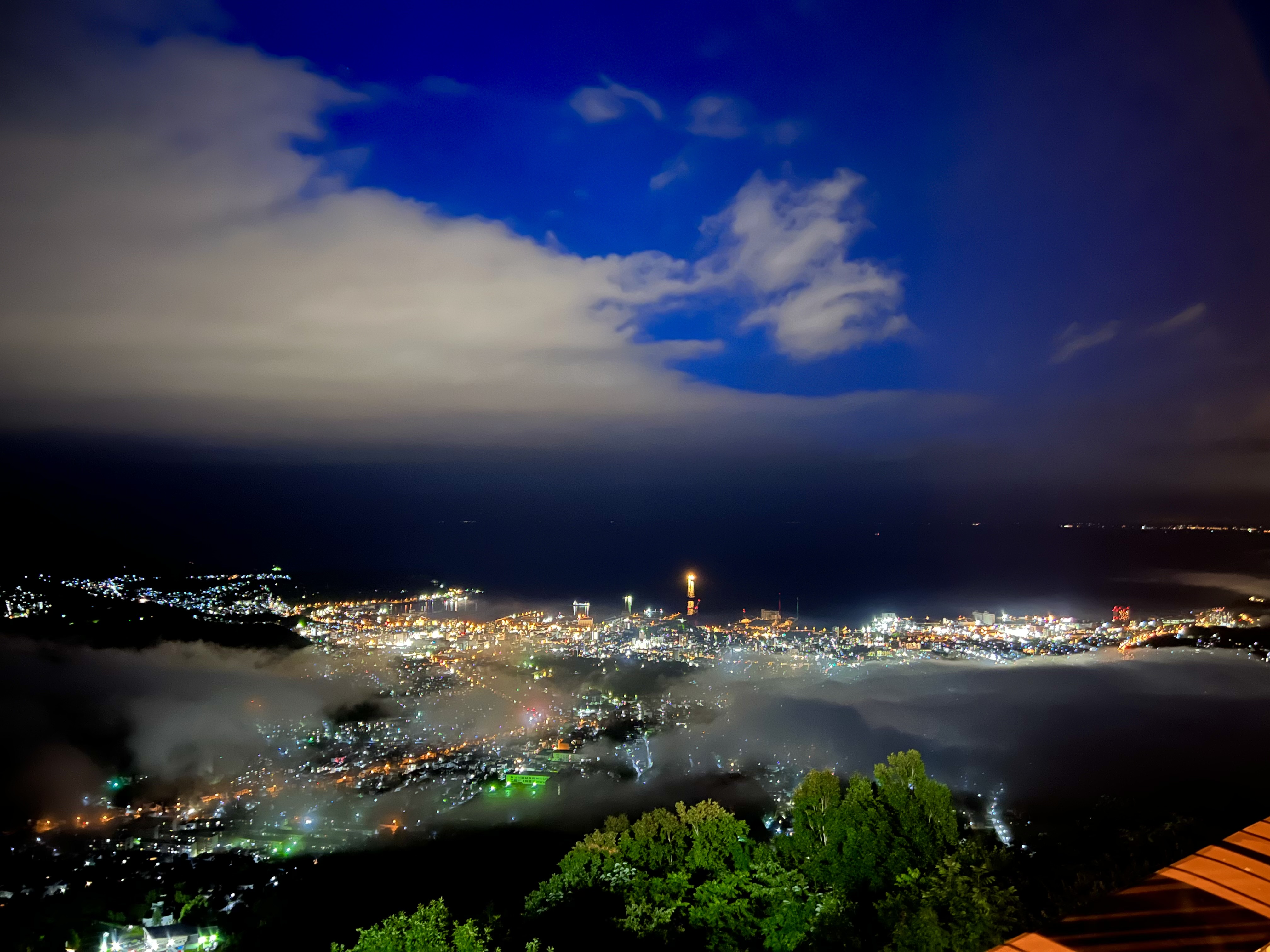
Otaru from Tengu Yama. The fog was rolling in off the sea. This is what you drive up for.
Jingisukan at the No-Name Place
Dinner was at a Genghis Khan spot near the hotel — no English signage, a couple of regulars at the bar, lamb and vegetables piled on a domed iron grill in the center of the table. Jingisukan is a Hokkaido thing — you won't find it done like this anywhere else in Japan. The kind of meal that only works at a place like this.
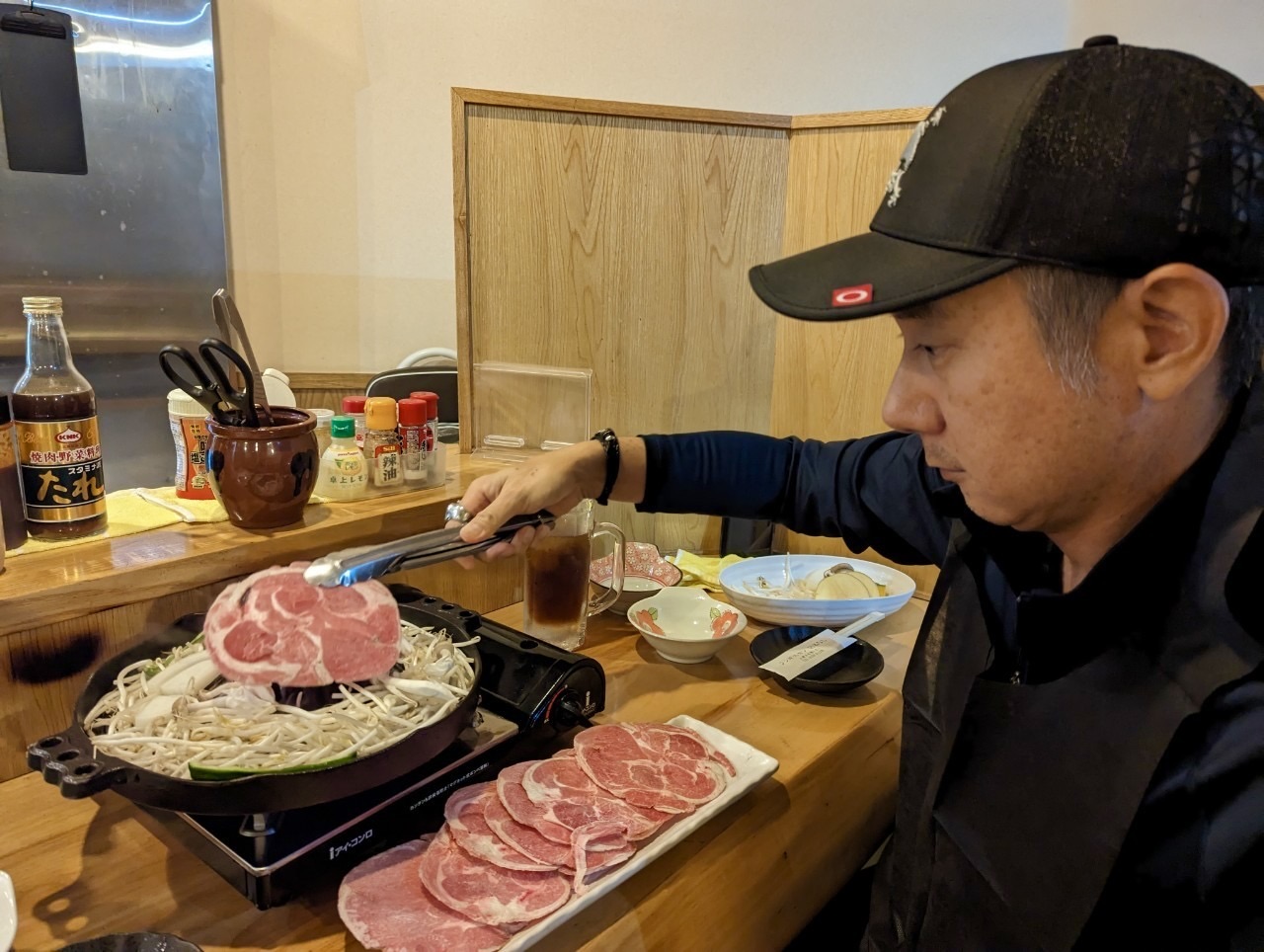
The lamb-to-bean-sprout ratio is the whole game. Get it right early.
The Blue Cave and Sakaemachi
Up early for the Blue Cave cruise — 小樽青の洞窟クルーズ. Ayumi and I strapped on life vests and boarded at the Otaru waterfront. The boat works its way along the coast past dramatic volcanic cliffs before reaching the cave, where light filters through the water and bounces off the walls in a shade of blue that's impossible to photograph accurately and worth seeing in person.
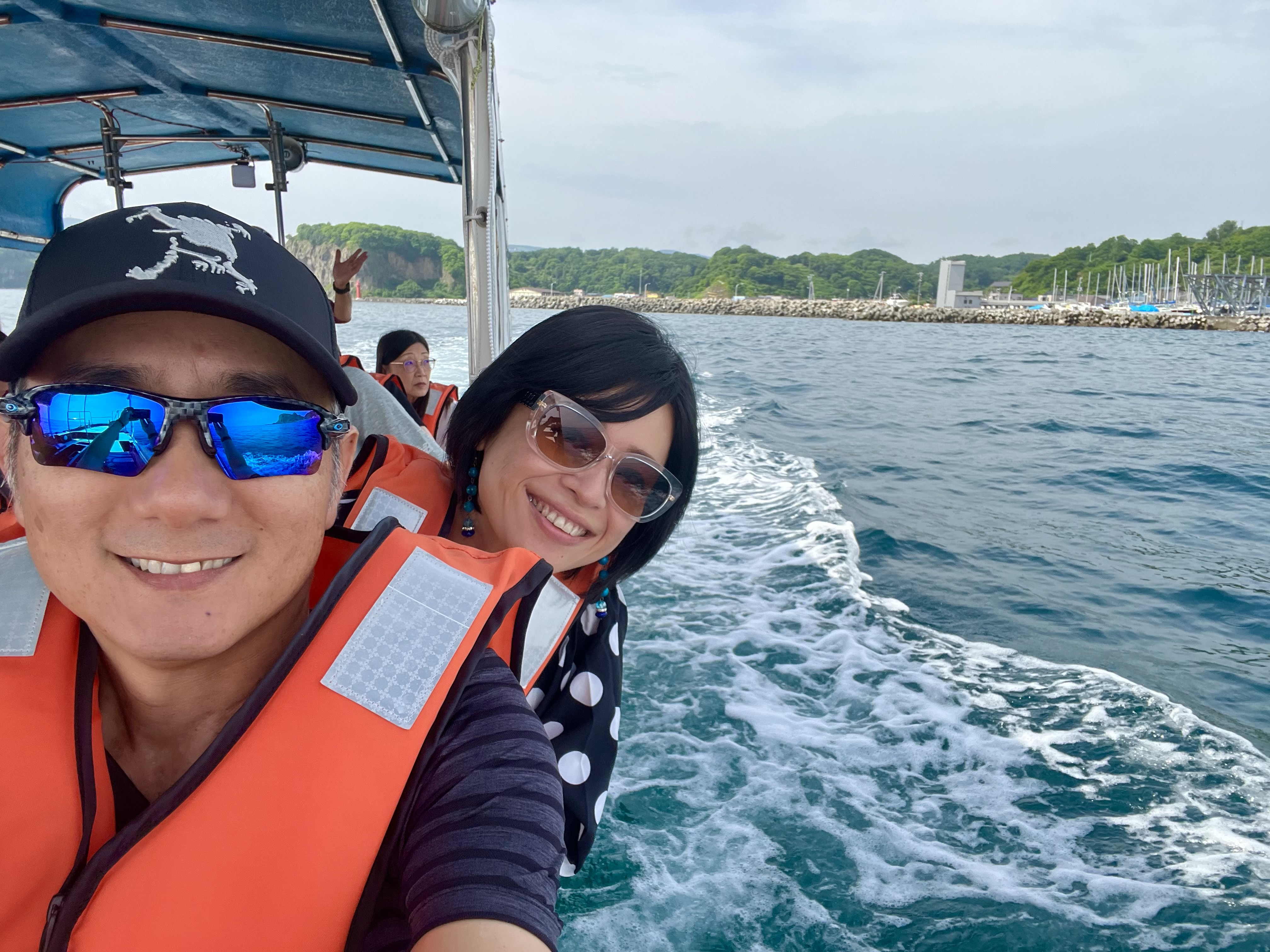
On the boat out of Otaru with Ayumi. The harbor disappears fast once you clear the breakwater.
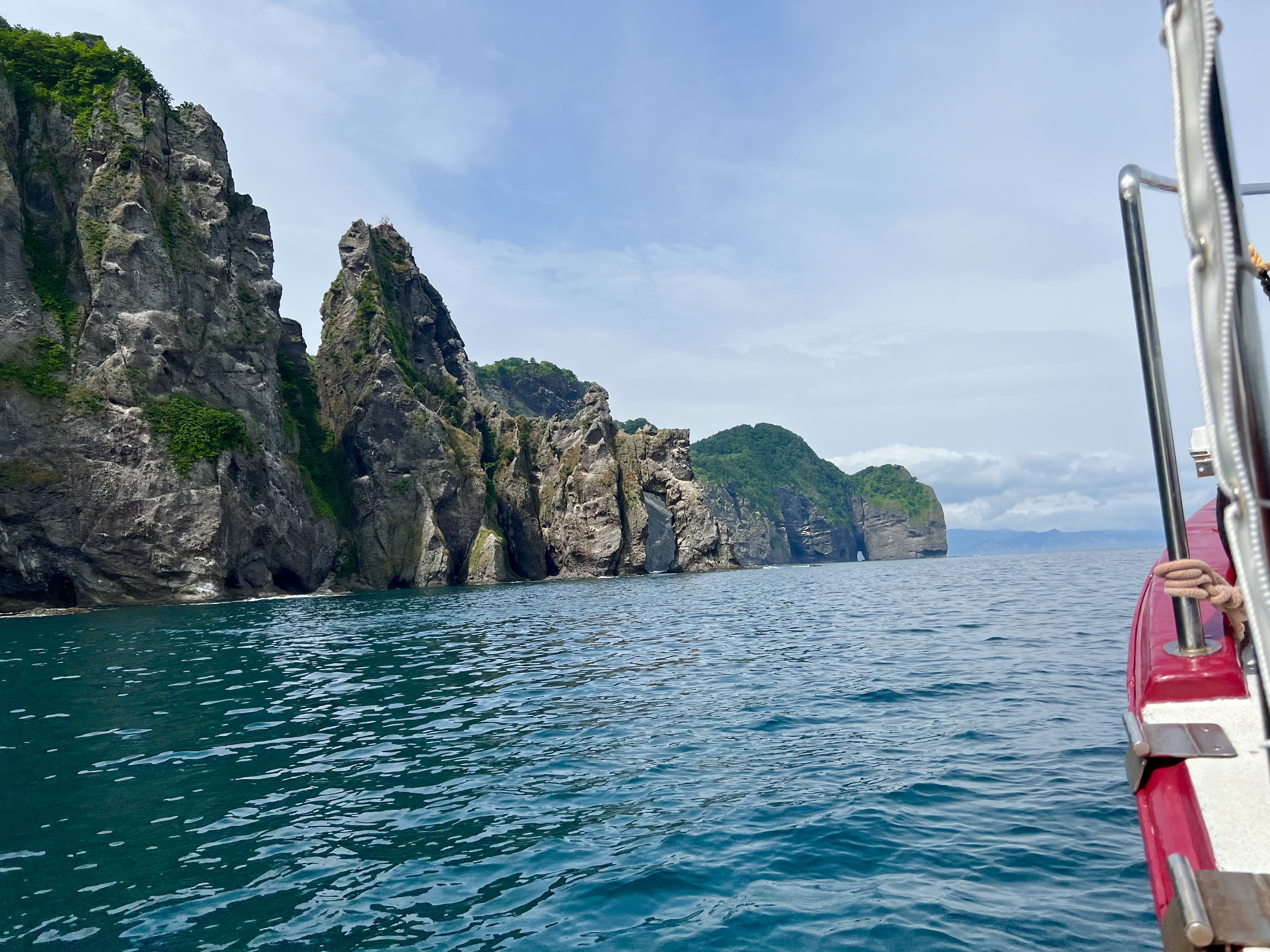
The coast heading toward the cave
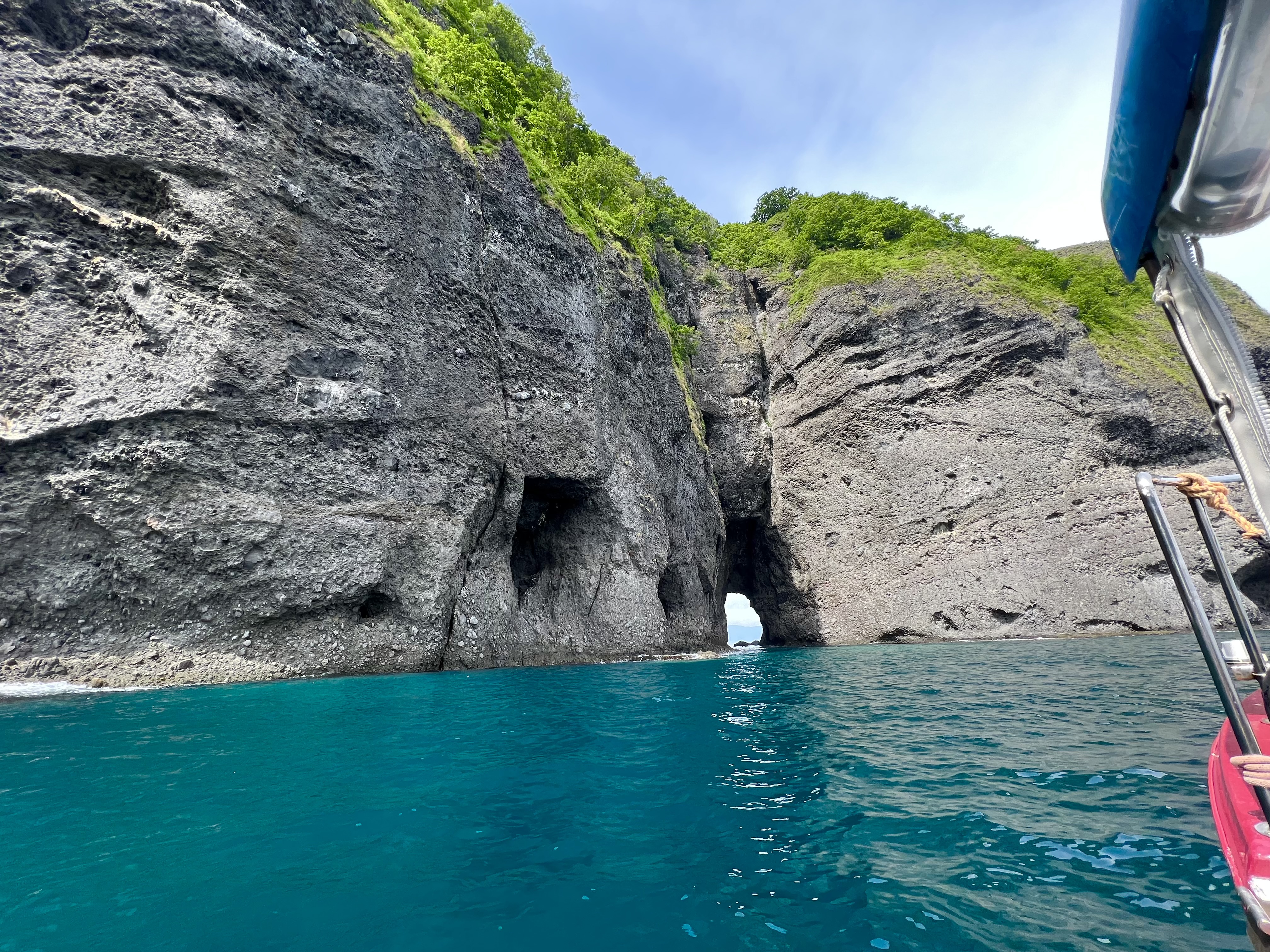
Two openings in the rock face
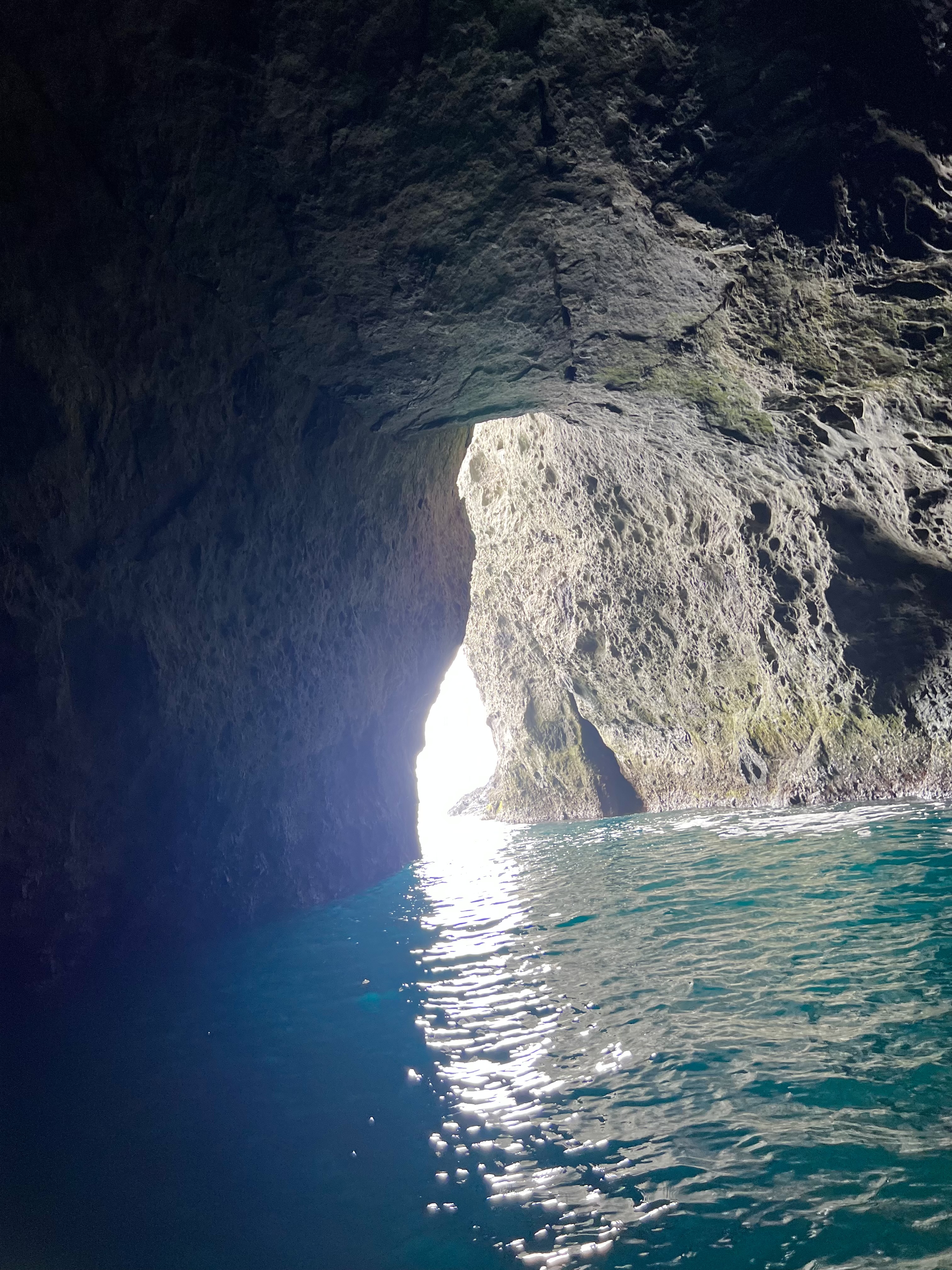
The blue inside the cave is not retouched. That's just what it looks like.
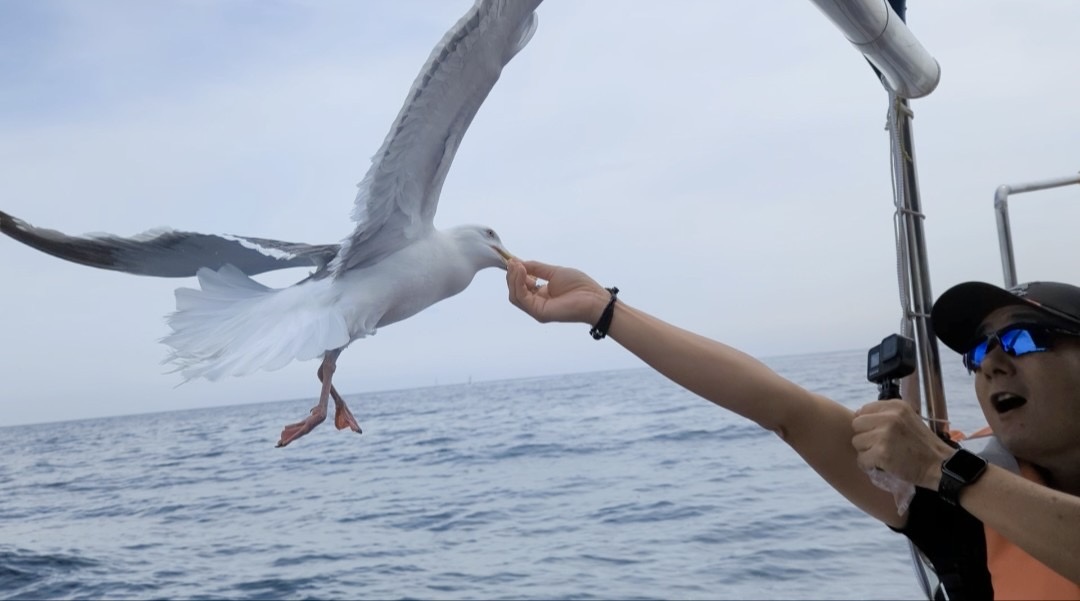
The gulls are committed. So was I.
Sakaemachi and the Umbrella Alley
Back in Otaru, we spent the afternoon on Sakaemachi — the main shopping street running from the canal toward the music box district. First stop: Kitakaro. Hokkaido soft serve, white chocolate confections, and a strawberry mochi with a whole fresh strawberry inside — sweet, juicy, the kind of fruit that makes you realize what strawberries are supposed to taste like. This is why people come to Otaru.
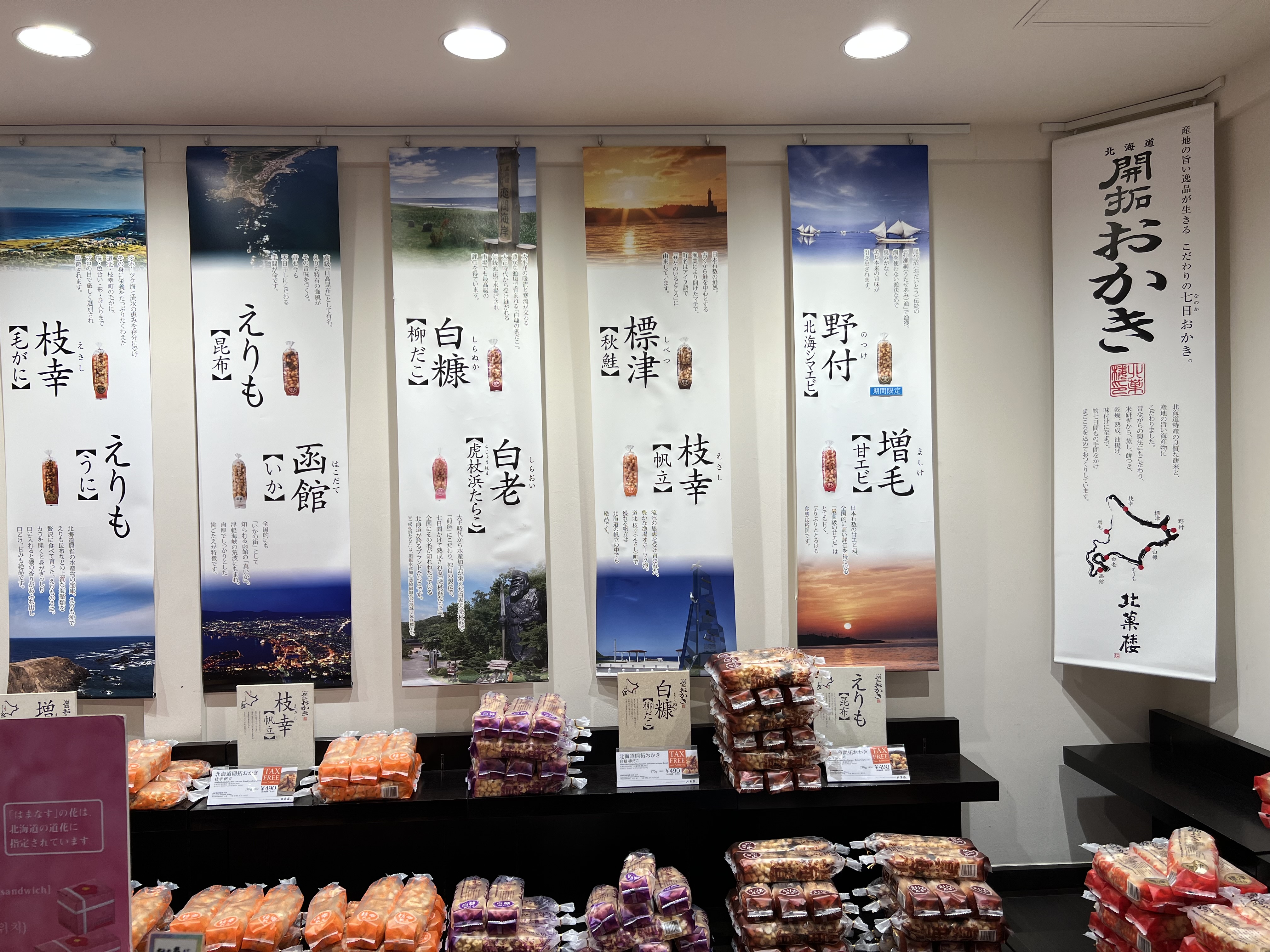
Kitakaro stocks regional Hokkaido specialties you won't find in Tokyo. Buy for the flight home.
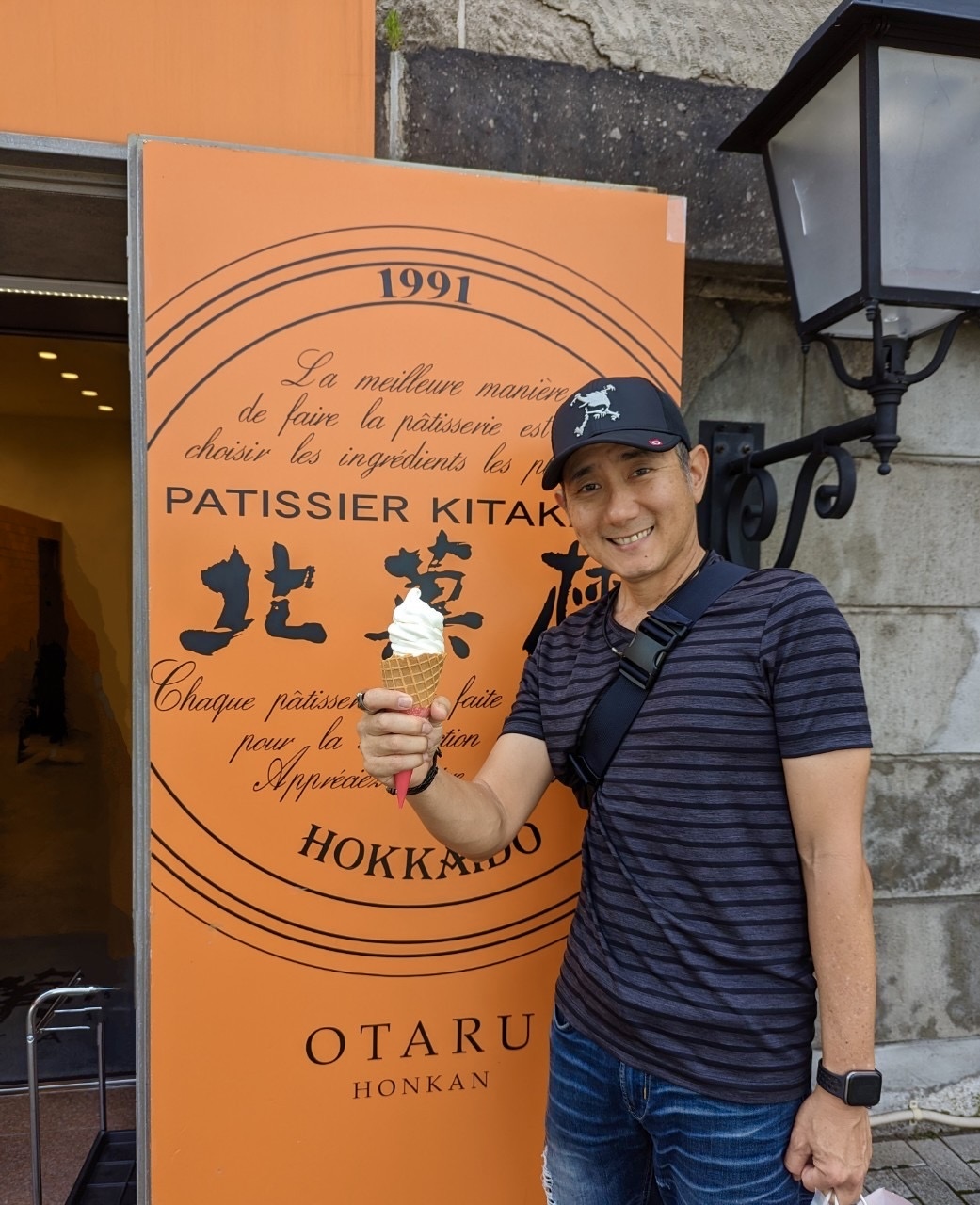
Kitakaro soft serve. Hokkaido milk. Worth the line.
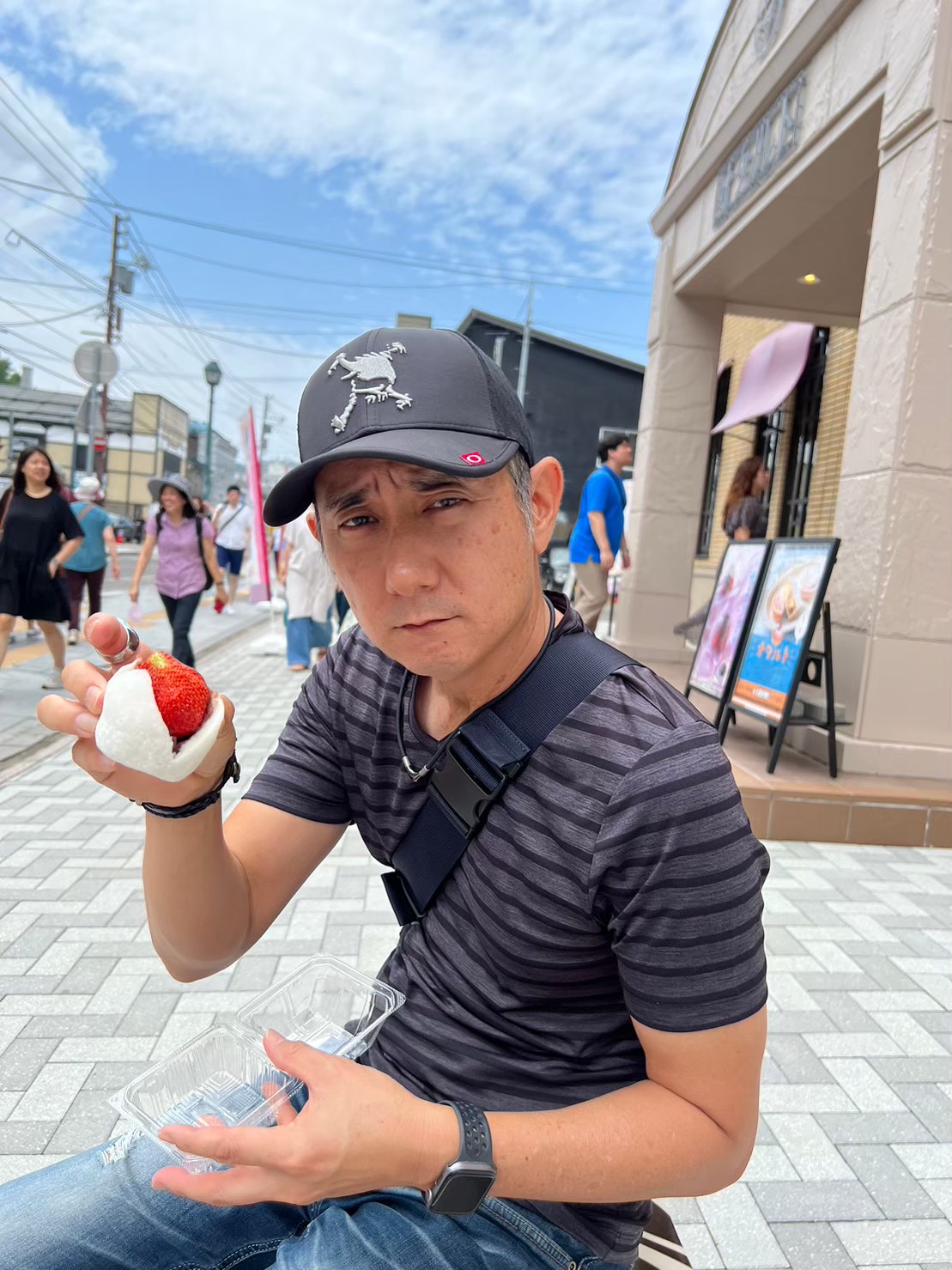
Strawberry mochi. That expression means it was good.
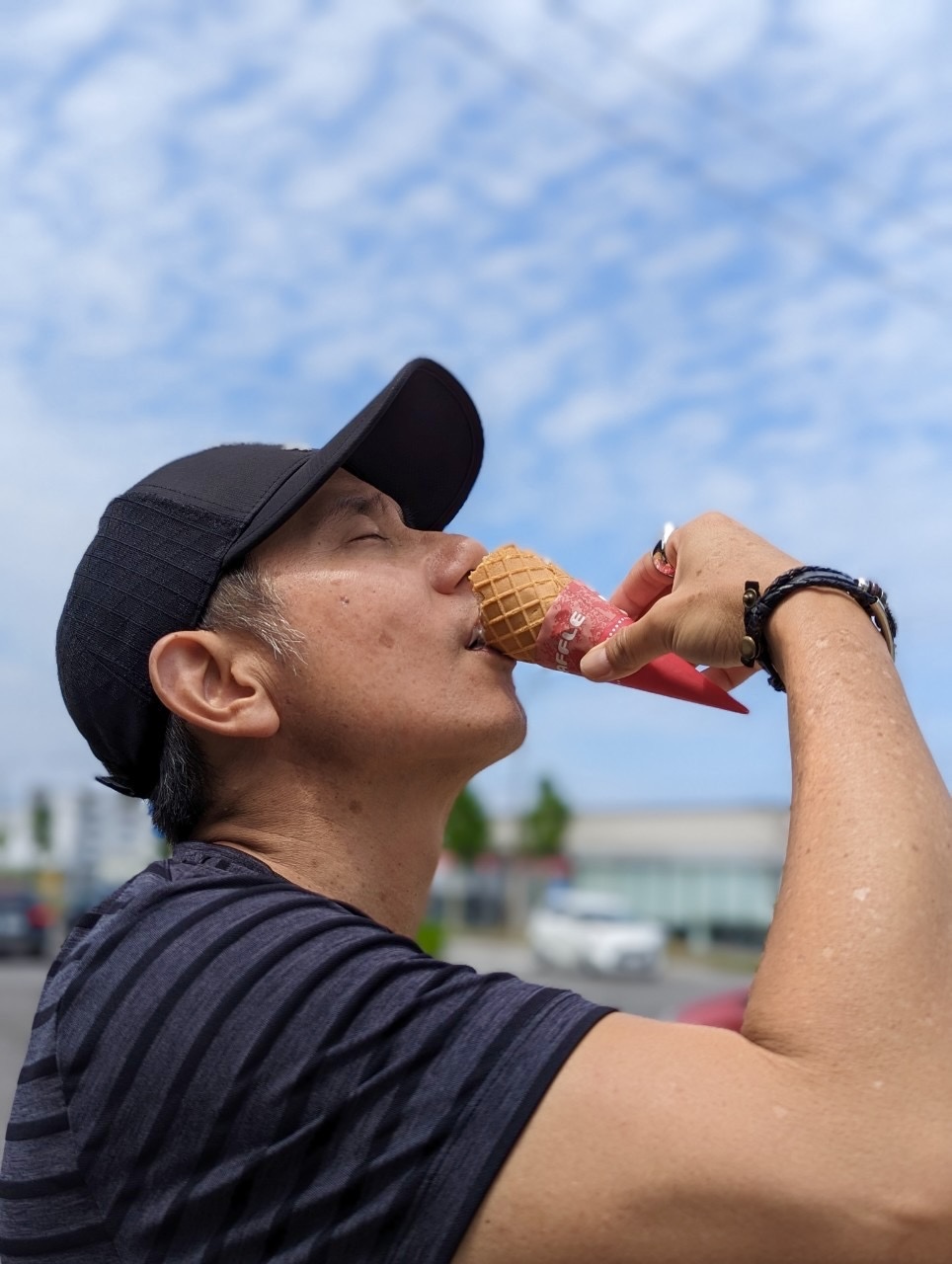
The money shot.
Then the canal-side stalls — grilled ika and hotate in the shell, eaten standing at the counter.
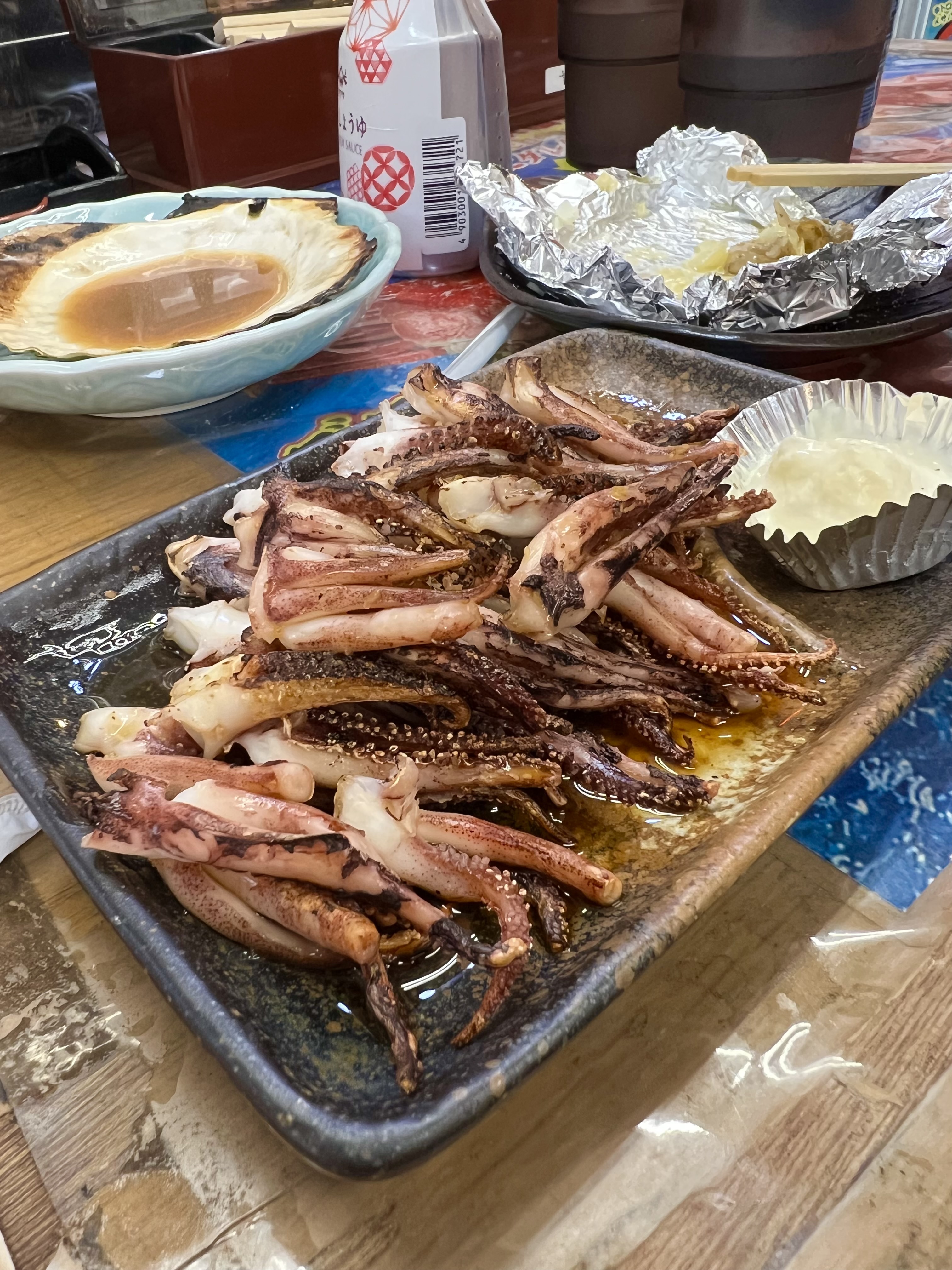
Grilled ika — squid done right, right off the grill
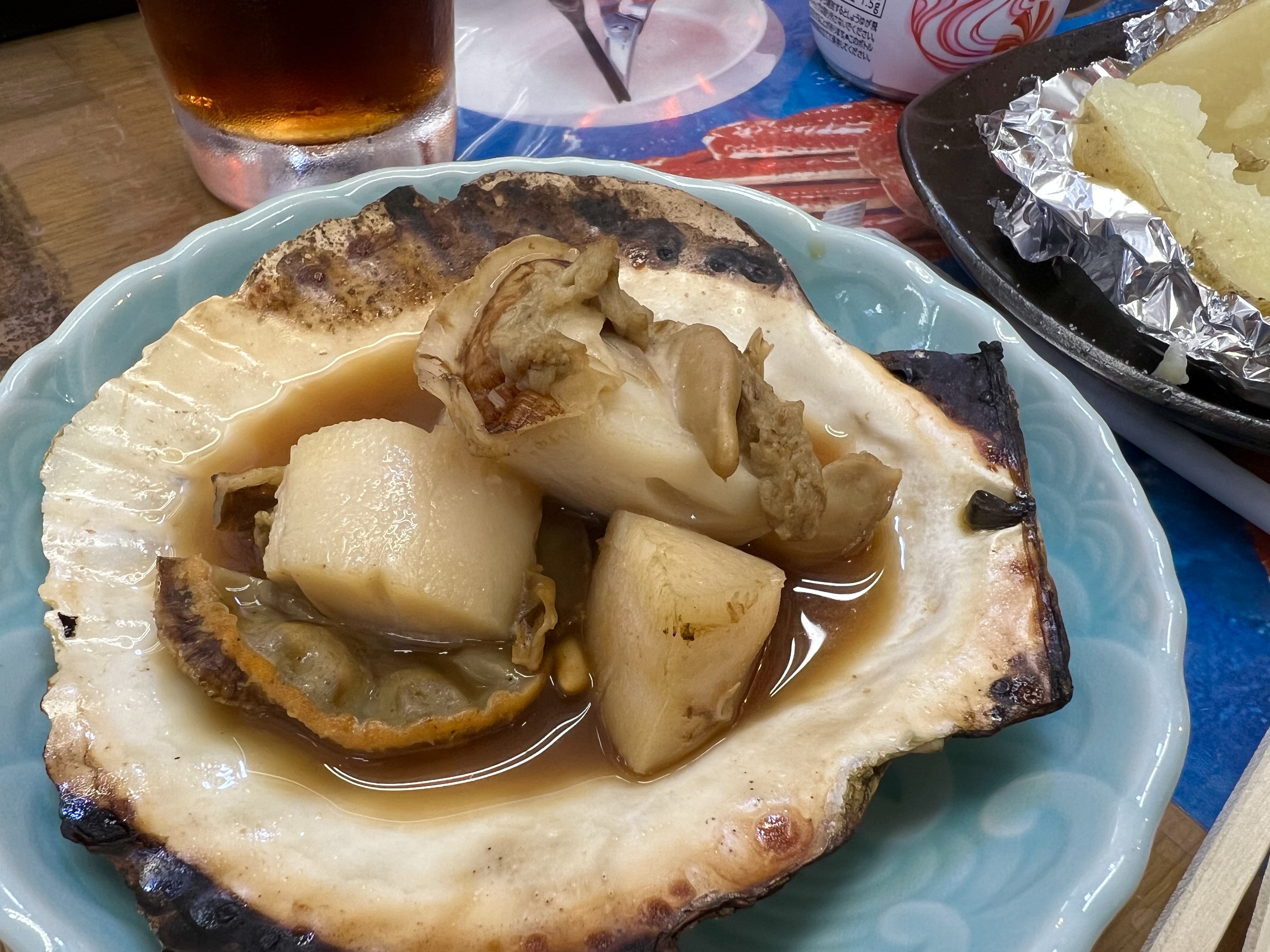
Hotate in the shell — Hokkaido scallop, buttered, grilled
The umbrella alley caps the afternoon — a covered arcade where hundreds of hand-painted Japanese parasols are strung overhead, turning the alley into something between a street and a festival. The photos don't do it justice. Stand in the middle and look up.
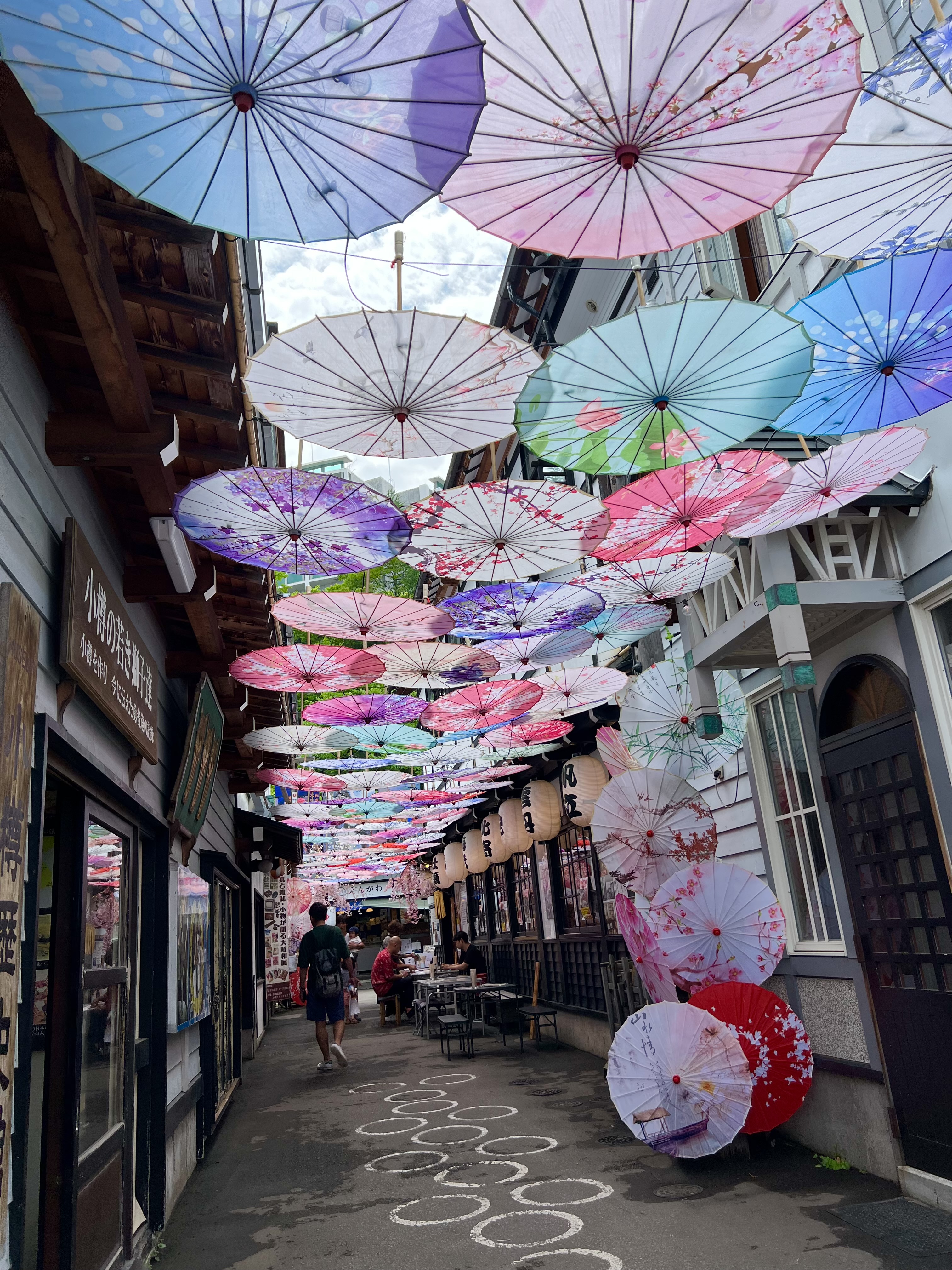
The umbrella alley on Sakaemachi. Lanterns below, parasols above, old wooden shopfronts on both sides.
Then we loaded the car and headed south toward Niseko.
Getting there: Japan Airlines flies Haneda to Chitose. Pick up a rental car — Otaru is 40 minutes from the Sapporo Minami 6jo Orix site.
Seafood: Masazushi for lunch. The grilled ika and hotate at the canal stalls after the cruise.
Blue Cave cruise: Reservation required, sea conditions permitting. Book in advance.
Tengu Yama: You can drive up. The mask museum is worth a stop. Go at dusk — the fog rolling in over the city is the whole point.
Sakaemachi: Kitakaro for Hokkaido soft cream and regional snacks. Umbrella alley is worth 20 minutes.