Matsushima has been considered one of Japan's three most scenic views for centuries. Matsuo Bashō came here in 1689 and reportedly couldn't find words for it. We came for the oysters and the curry bread — and stayed for the bay.
The trip started as a Joke Bear pilgrimage. Nagano Joke Bear — the round, expressionless bear created by the same illustrator behind Chiikawa — has a travel comic called Mogo Mogu Tabearuki Kuma, where Joke Bear goes from town to town eating local specialties. Joke Bear came to Matsushima. We followed.
We left Tokyo on the 7:00AM shinkansen to Sendai, then switched to the local Senseki line for the final leg into Matsushima-Kaigan. The whole trip from Tokyo runs just over an hour and a half. By mid-morning we were on the waterfront with the entire day ahead of us.
The Bay and Its Islands
Matsushima Bay holds over 260 pine-covered islands — some barely large enough for a handful of trees, others with walking paths and temples. The islands protected this part of the Tohoku coast from the worst of the 2011 tsunami; the damage here was significantly less than surrounding areas. The bay has been considered one of Japan's three views (日本三景, Nihon Sankei) since the Edo period, alongside Amanohashidate in Kyoto and Miyajima near Hiroshima.
The most famous literary account of Matsushima comes from Matsuo Bashō, who visited in 1689 during his journey documented in Oku no Hosomichi (The Narrow Road to the Deep North). His haiku diary, written while traveling through the Tohoku and Hokuriku regions, is one of the most celebrated works in Japanese literature. When Bashō arrived at Matsushima, the view reportedly left him unable to compose a poem — an unusual silence for someone who had been writing haiku for the entire journey. He wrote that a single word, "Matsushima," said everything that needed to be said.
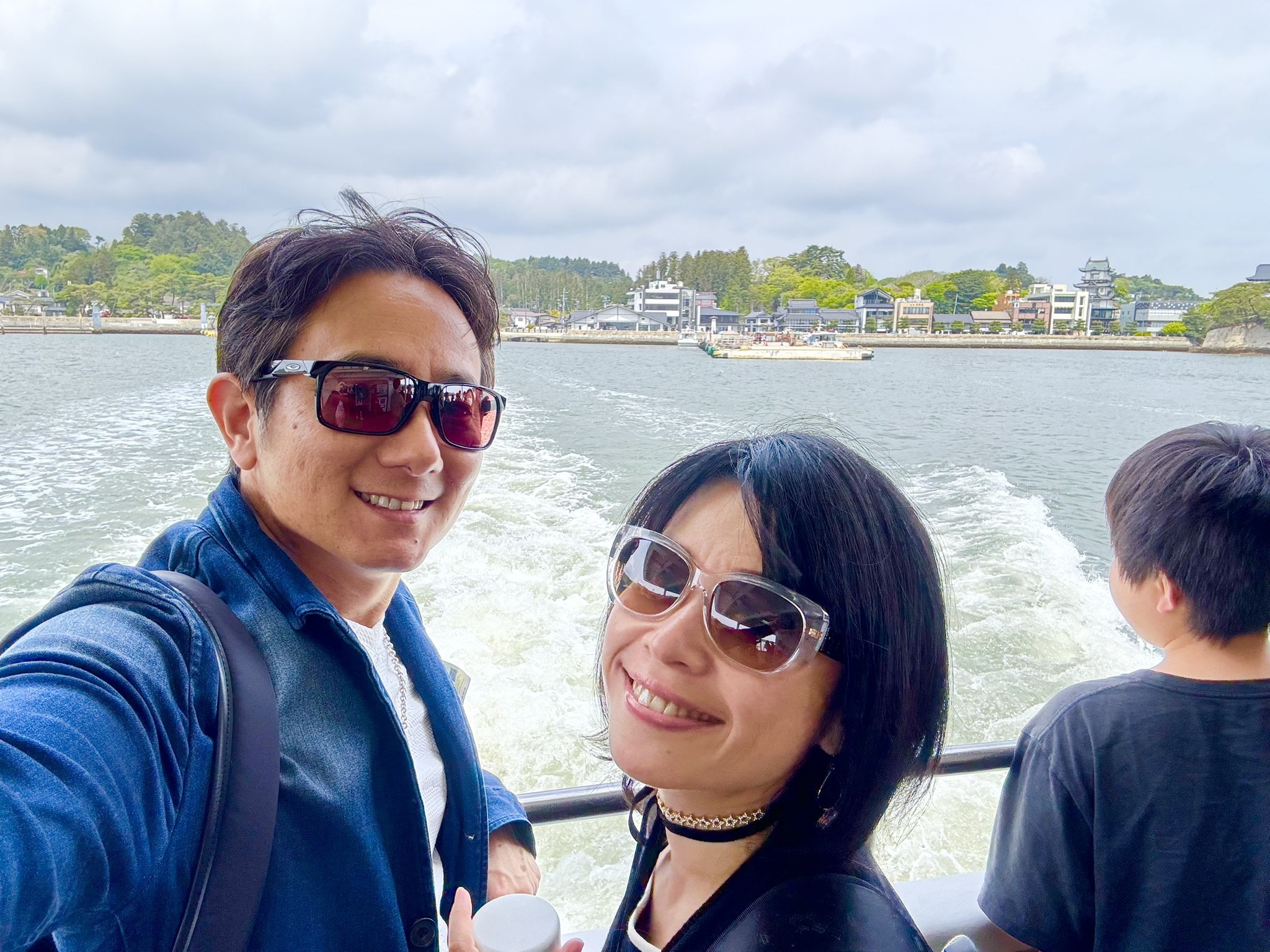
On the ferry with Ayumi. The Matsushima waterfront disappears behind us as we head out into the bay.
We took the sightseeing ferry from Matsushima pier — about 50 minutes round trip, looping through the outer islands before returning. The boat weaves between the islands close enough to see the pine trees rooted into the rock faces, their roots gripping the stone at improbable angles. On a clear day the view stretches for miles. We went in late April and got an overcast sky, which gave the bay a quieter, more contemplative feel — fog softening the far islands into silhouettes.
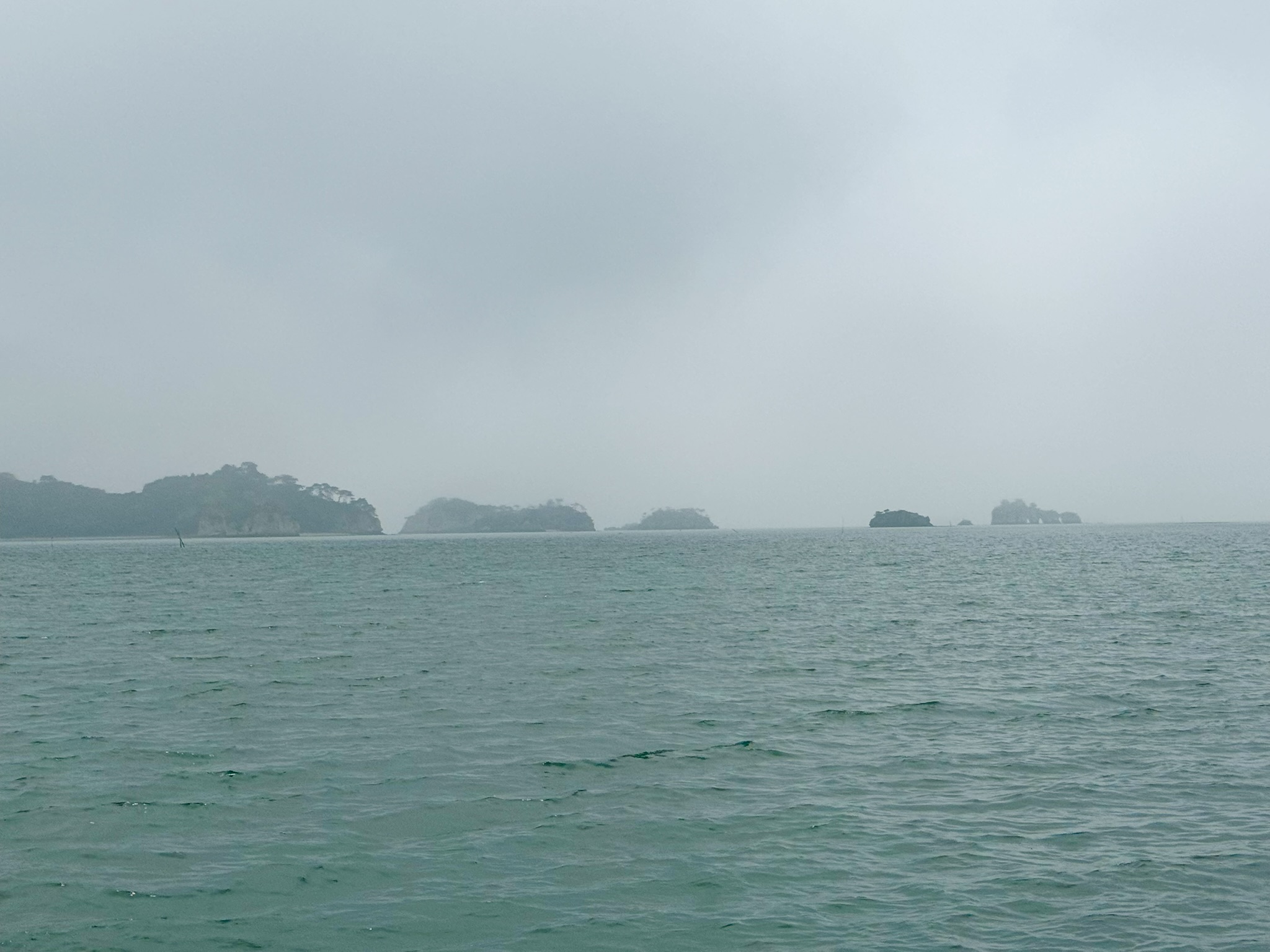
The outer islands in the mist. Fog on the bay turns it into something out of a scroll painting.
Fukuurajima Bridge
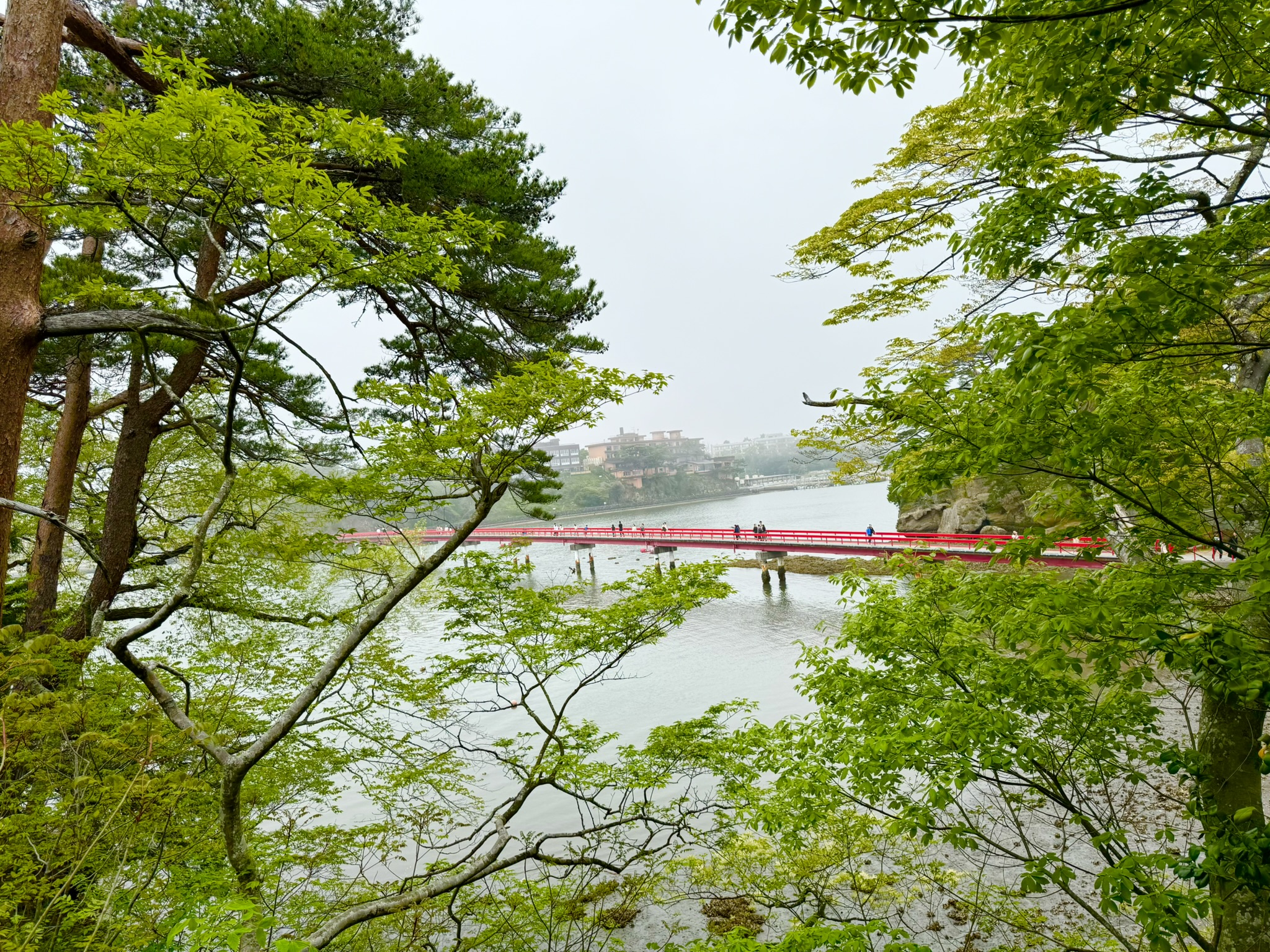
Fukuurajima is a small island connected to the mainland by the red Fukuura Bridge — 252 meters of red-painted iron spanning the bay. You can walk the whole island in about 30 minutes on forested paths, but most people stop at the bridge itself. The view from the island looking back at the red bridge framed by pine trees is one of the defining images of Matsushima. We took the shot from the island side looking back at the arch.
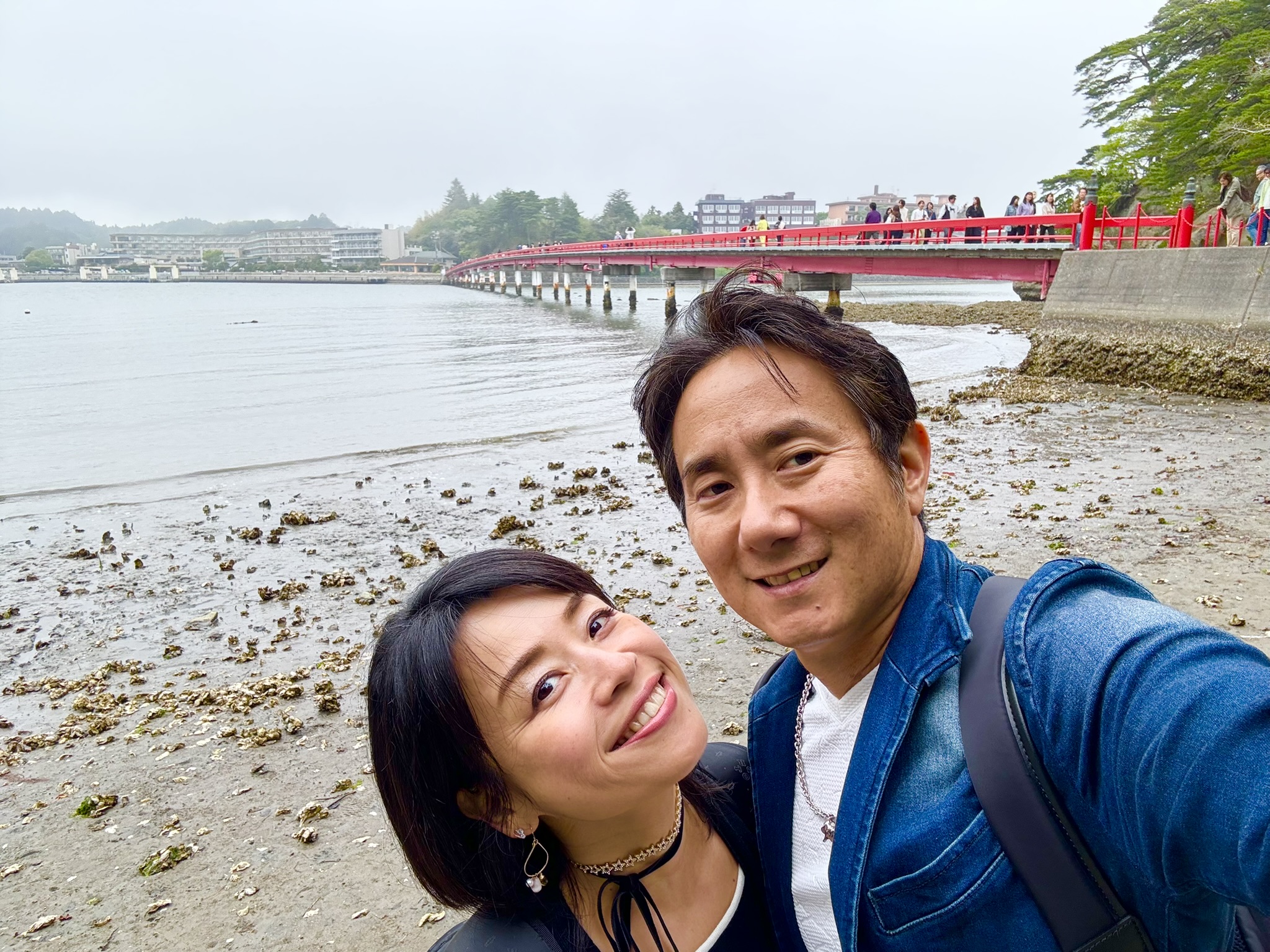
Fukuura Bridge from the island side. Red iron over grey water.
Bay Oysters and Beef Tongue
Matsushima bay oysters are not the raw, refined kind you'd order at a Tokyo counter. They're big, briny, and meant to be grilled — served in the shell with soy, charred at the edges. Miyagi Prefecture is one of Japan's top oyster-producing regions, and the restaurants along the waterfront take it seriously. We ate at Bay Oysters, which is exactly what Joke Bear did in the comic. Grilled oysters and beef tongue — the local Sendai specialty that follows you from the shinkansen station all the way through Tohoku.
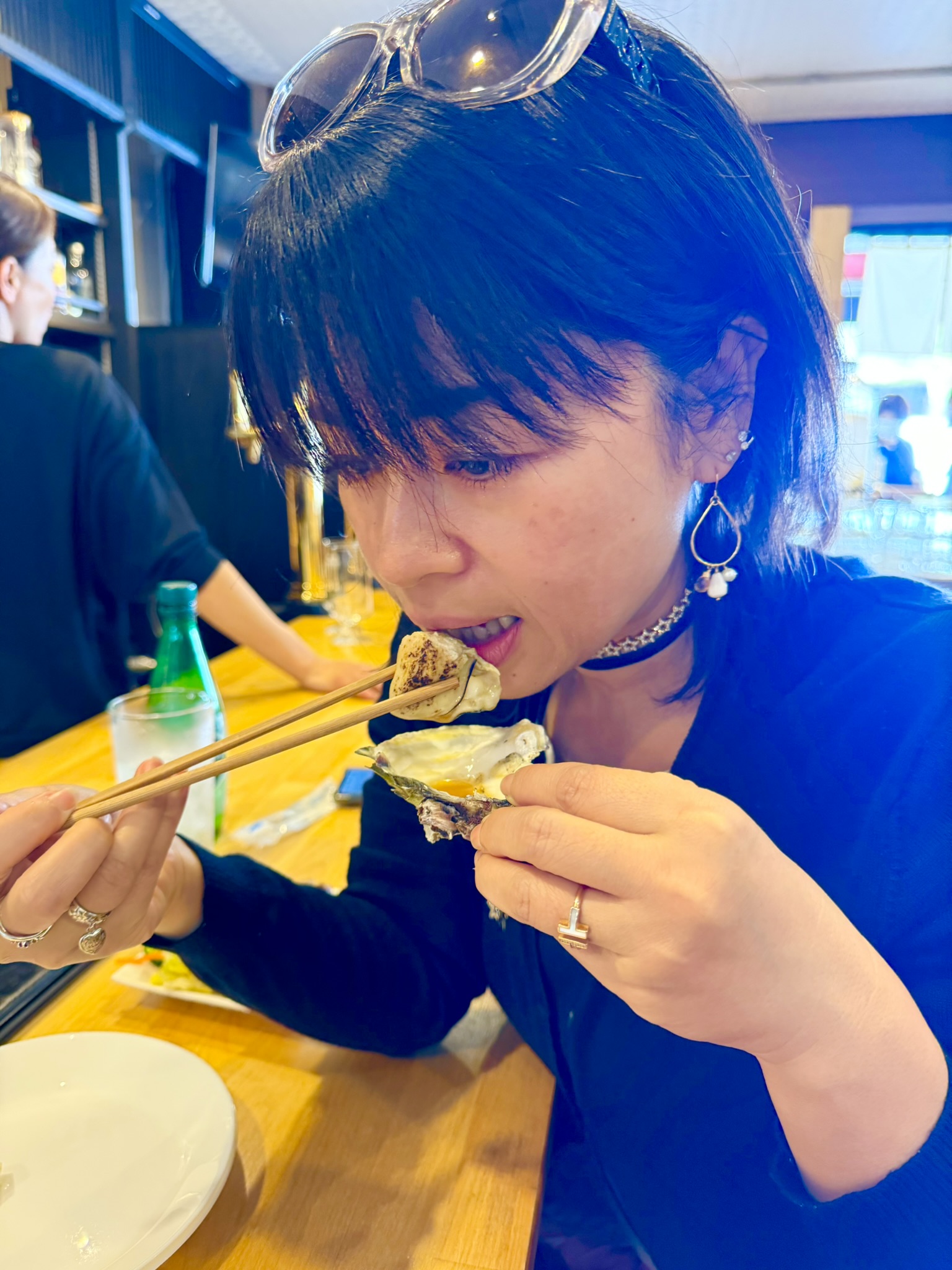
Ayumi working through the Matsushima bay oysters. These are serious oysters.

Pensée and the Curry Bread
Pensée is a bakery that has been operating in Matsushima since 1989. Their oyster curry bread — 牡蠣カレーパン, kaki curry pan — won a national curry bread award and is the reason most people stop here. The shop sits right on the main street near the waterfront, tucked beneath a traditional red-pillared structure, and there's almost always a line. The bread is a deep-fried roll filled with a thick, dark curry loaded with Matsushima bay oyster. It costs 380 yen. It's worth it.
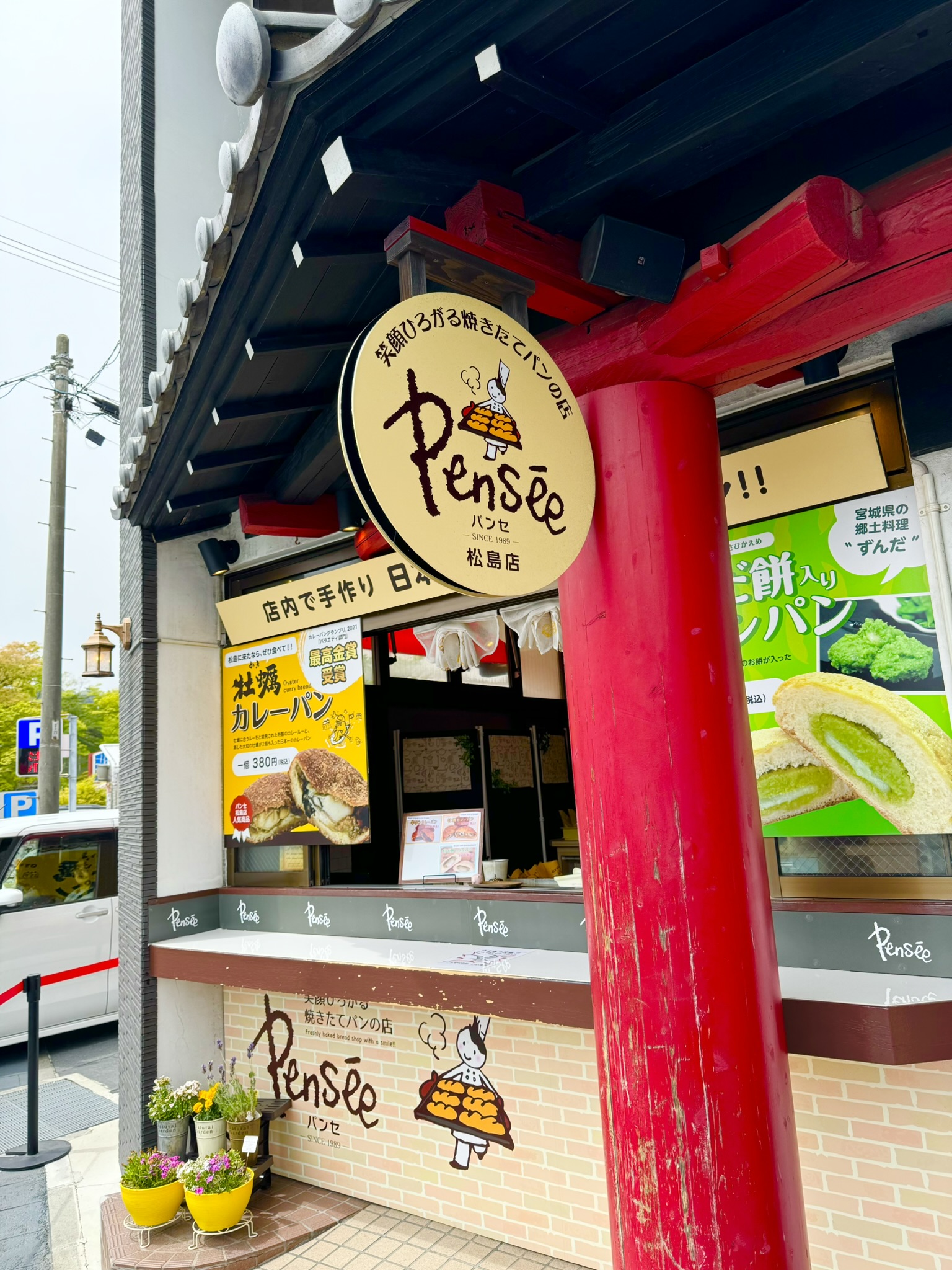
Pensée, Matsushima. The kaki curry pan is 380 yen. It won a national award. The line moves fast.
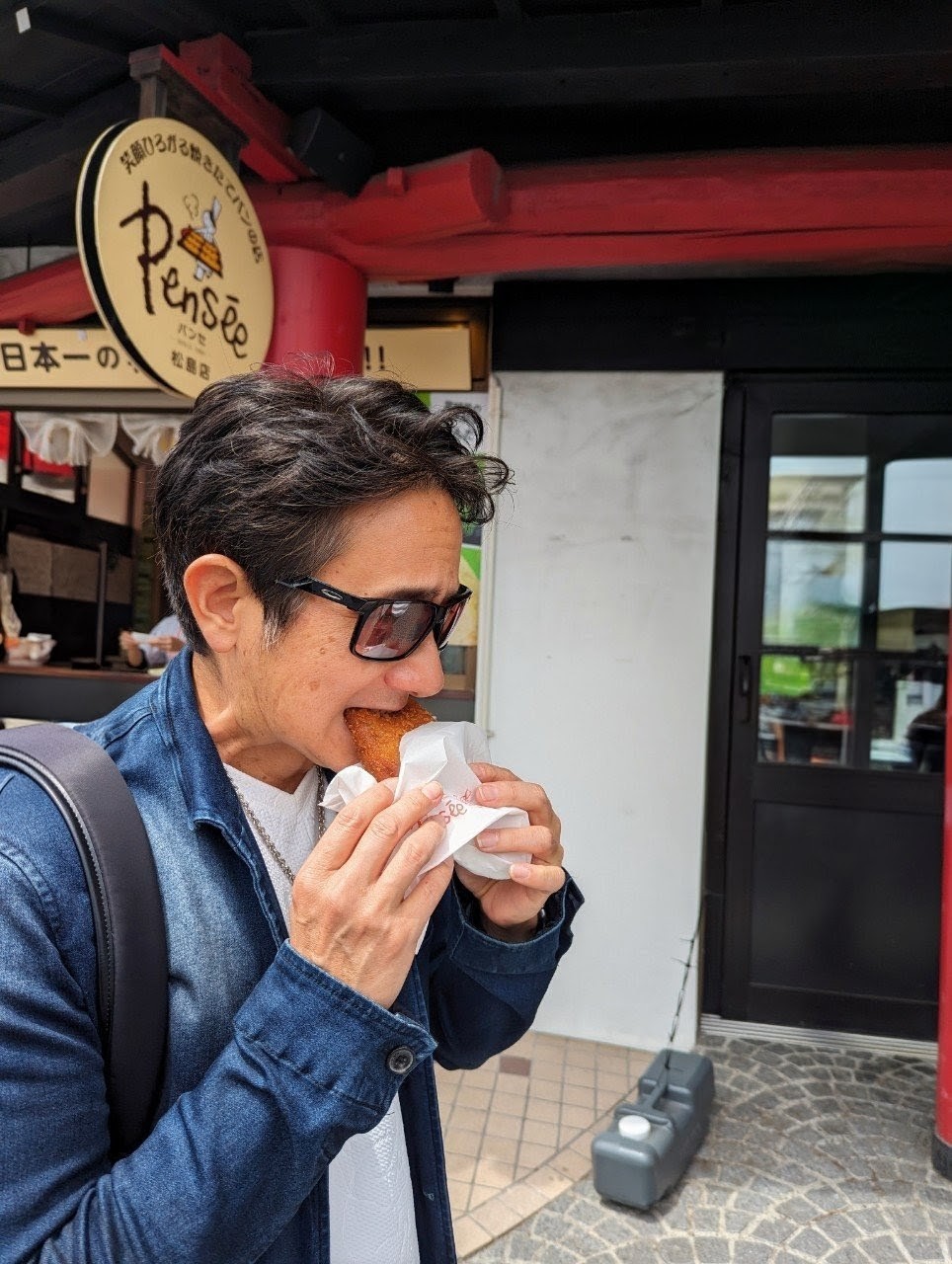
The kaki curry pan at Pensée. Same move as Joke Bear.
Zuiganji and the Cedar Path
Zuiganji is the main temple complex in Matsushima — a national treasure, originally founded in 828 and rebuilt to its current form in 1609 by Date Masamune, the powerful daimyo who ruled this region of Tohoku. The approach from the gate to the main hall runs through a corridor of towering sugi cedar trees, some of them centuries old. On an overcast day the path is dim and quiet, the moss bright green between the roots, the scale of the trees making everything else feel small.
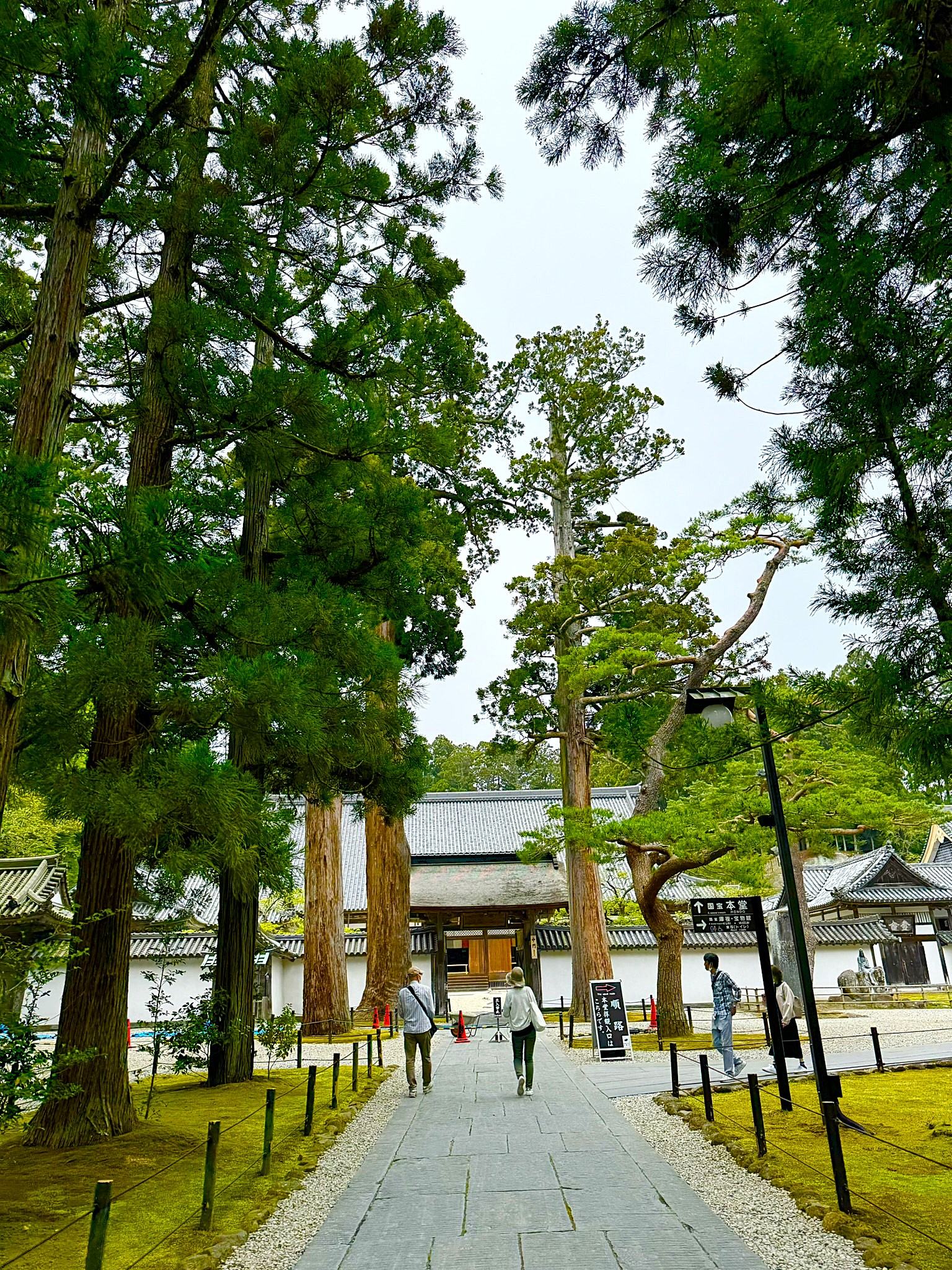
The approach to Zuiganji. The sugi cedars are old enough that you stop talking when you walk in.
The main hall and adjacent treasure museum contain a collection of Date clan artifacts — painted screens, lacquerware, and historic documents. The cave corridors along the approach path — carved directly into the cliff face — were used by Buddhist monks for meditation and memorial rites, and some are still lined with stone Buddhist figures and memorial plaques.
Shokado Kashiten and the Custard Pudding
Shokado Kashiten is a small café and sweets shop in Matsushima known for two things: castella cake and the custard pudding. The pudding is a classic Japanese-style purin — firm, egg-rich, topped with a generous pour of dark caramel — served on a chrome pedestal dish the way Japanese coffee shops have been doing it for decades. The castella comes on a wooden board, cut thick. We ordered both.
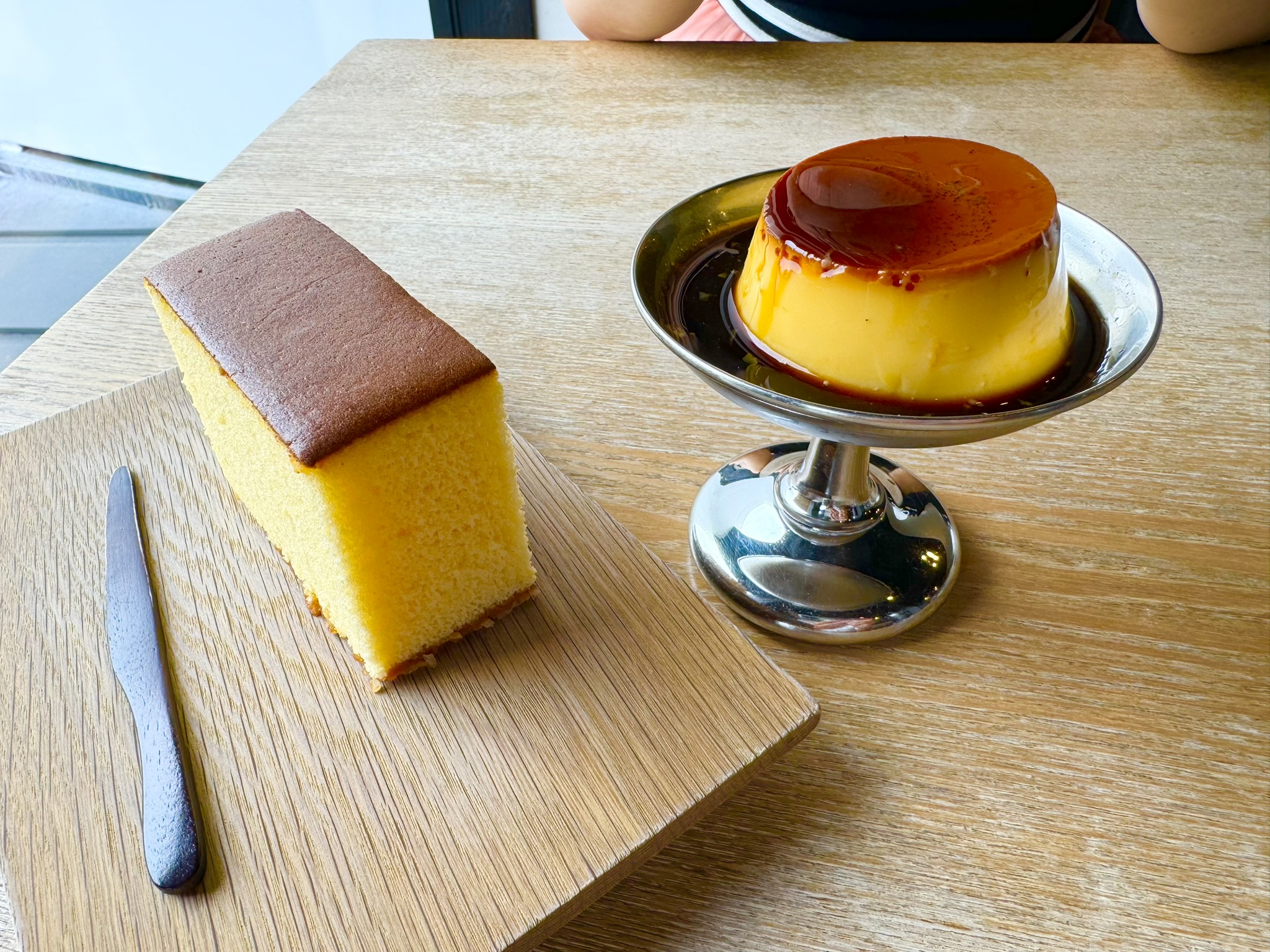
Shokado Kashiten. Castella and custard pudding. The chrome pedestal is doing a lot of work.
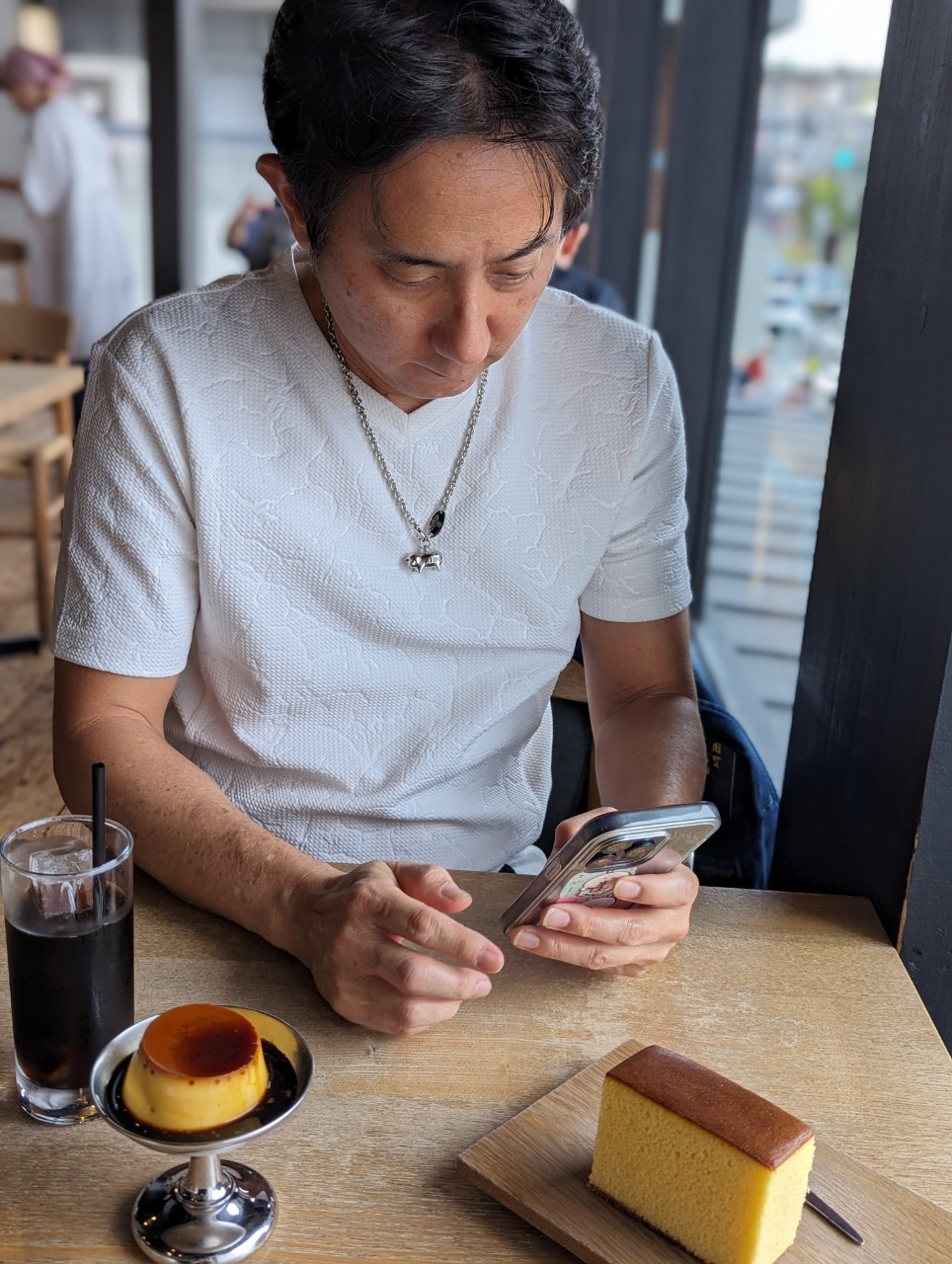
Documentation before consumption. Priorities.
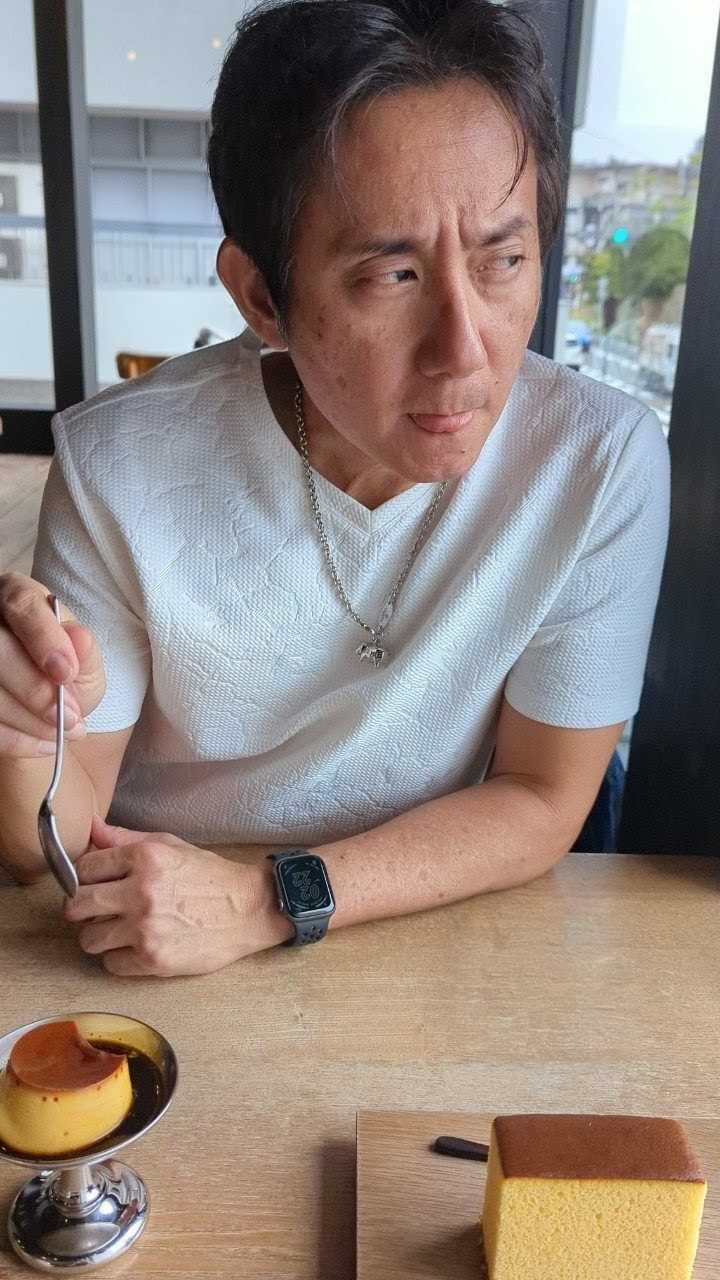
The purin. It held up to the Joke Bear standard.
Zunda Mochi on the Train Home
Zunda mochi is a Tohoku specialty — mochi covered in a sweet, bright green paste made from edamame. The flavor is earthy and sweet at the same time, the texture of the paste slightly coarser than red bean. The famous version in the region comes from Zunda Chaya at Sendai Station, but you'll find it at shops throughout Matsushima too. We picked up a bag from 菓匠三全 (Kashosanzen) for the train. Joke Bear ate zunda mochi in the comic. Same.
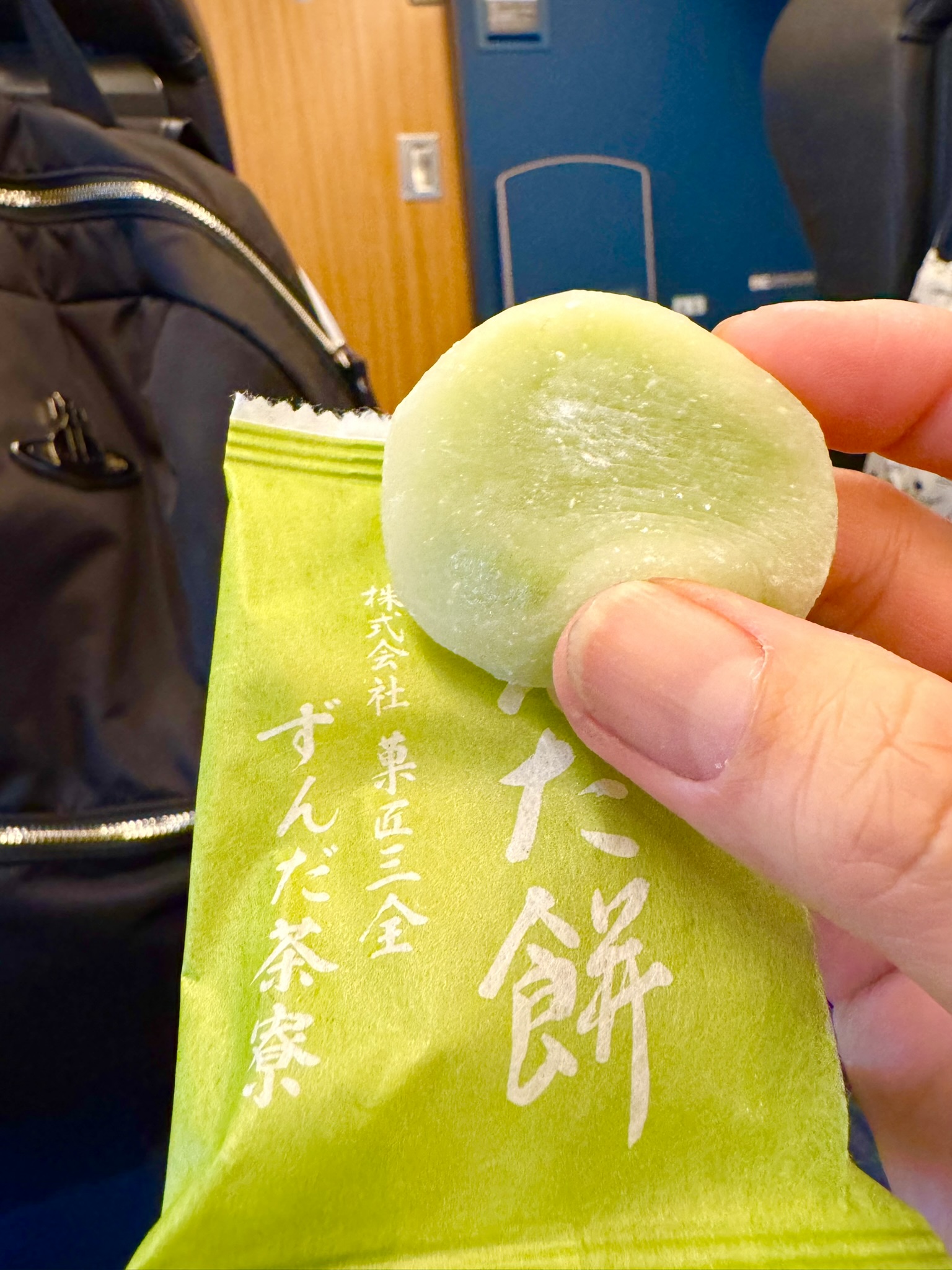
Zunda mochi from 菓匠三全. Earthy, sweet, the right way to end a day in Tohoku.
Getting there: Shinkansen to Sendai (under 90 minutes from Tokyo), then the Senseki Line to Matsushima-Kaigan. Total travel time from Tokyo: about 1 hour 45 minutes.
Ferry: Sightseeing ferries depart from Matsushima pier. The standard course is about 50 minutes. No reservation needed — buy tickets at the pier.
Bay Oysters: Grilled Matsushima oysters and Sendai beef tongue on the waterfront strip. Order the full set.
Pensée: Get the kaki curry pan (牡蠣カレーパン). 380 yen. Eat it immediately outside. That's how it's done.
Zuiganji: Admission is charged for the main hall and treasure museum. The cedar approach path is free. Spend the time on the path.
Shokado Kashiten: Custard pudding and castella. Order both. Sit by the window — the bay is right there.
Zunda mochi: Pick up at Sendai Station on the way back — Zunda Chaya is the standard. Or grab a bag from any of the sweets shops near the pier.